



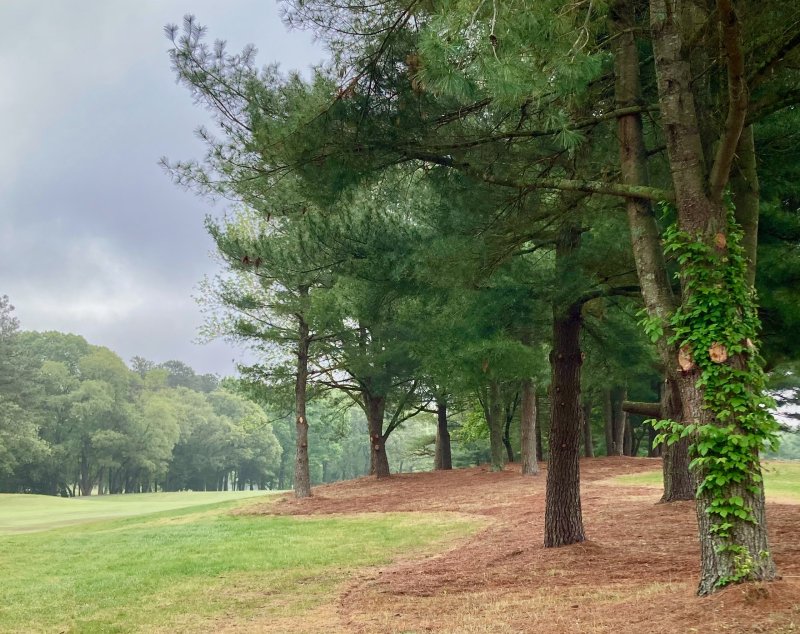
Managing Trees on Golf Courses
Trees enhance the aesthetic of golf courses, but there’s a point at which they can hinder play.
Golf is typically played on grassy areas, but trees compete for the essential sunlight and air that grass needs to thrive. Therefore, it is sometimes necessary to trim or remove trees to maintain optimal conditions for the grass.
Operators of golf courses in the Cape Region share this perspective. I have reported on tree management practices at various local courses, including Southern Delaware GC, Kings Creek Country Club, The Rookery, and Old Landing Golf Course prior to its transformation into a residential area.
I spoke with Superintendent Bill Leedom about tree management at Seaview Resort, which hosts the ShopRite LPGA Classic presented by Acer, particularly on its Pines course.
The Pines course, noted for its dense tree coverage, is utilized for the large pro-am event and sees numerous rounds played from April to November before closing for the off-season. Leedom highlighted that extensive tree removal was necessary to improve visibility and reduce underbrush, using a forestry mulcher to manage debris.
“I trimmed the trees as high as possible—up to 30 feet,” Leedom explained, emphasizing that maintaining a challenging environment is key. Players should have the option to make strategic plays, not just easy shots.
To better manage the tee box conditions, Leedom utilizes the SunSeeker app. “Tees at the Pines have consistently struggled due to shading from nearby trees,” he noted. “If we remove or manage certain trees, we can enhance sunlight exposure, which is vital for grass health.”
Leedom’s approach to tree removal is strategic; he delineates which trees to remove based on their impact on sunlight using the app, ensuring that money spent on removal is effective and purposeful. Similarly, Rehoboth Beach CC Superintendent Alan Fitzgerald appreciates the SunSeeker app for its assistance in addressing tree-related challenges. He has had notable success managing tree issues from previous administrations and is now looking to optimize light and air circulation.
The club has enlisted an arborist to conduct a thorough tree inventory, laying the groundwork for maintaining healthy trees while planning for future replacements. Fitzgerald mentioned the importance of preparing for the loss of trees by collaborating with a golf course architect to identify plantable areas that will ensure long-term sustainability.
This article is part of an ongoing series focusing on golf course maintenance.
