



Ryan Gosling’s Unique Co-Actor: A Puppet
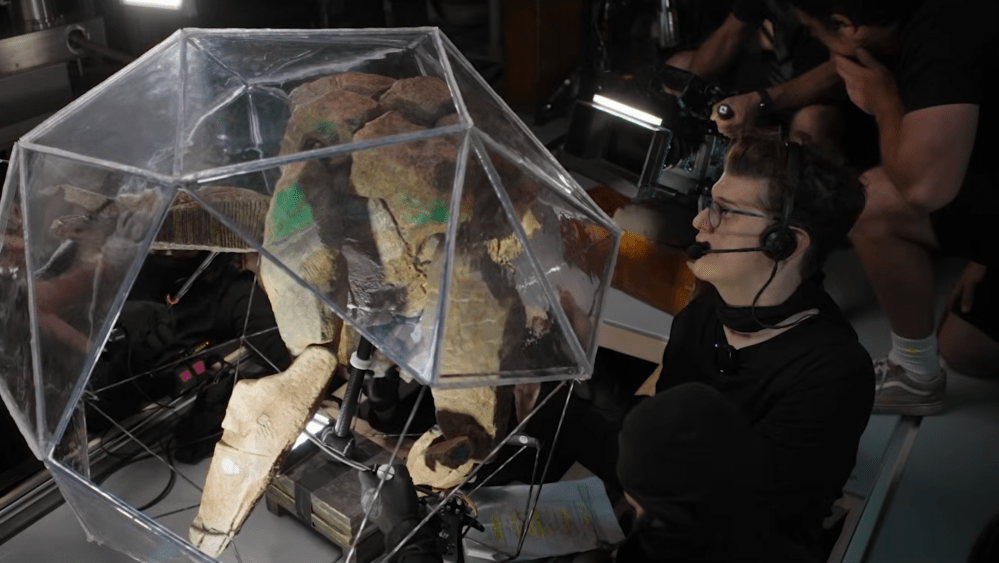
In “Project Hail Mary,” Ryan Gosling doesn’t just act against a green screen; he interacts with a sophisticated puppet operated by James Ortiz. Ortiz, known for his work in Broadway, was integral during the six-month shoot in London, as directors Phil Lord and Christopher Miller chose to prioritize practical effects over digital ones.
Creating Connection with the Puppet
“Actor to actor, I didn’t want Ryan to ever feel like he was alone in this,” Ortiz shared. He emphasized the importance of Gosling having a relatable presence rather than facing an emotionless puppet.
Rehearsing for Authenticity
Before introducing the puppet, Ortiz and Gosling rehearsed each scene to establish their blocking. Ortiz noted, “That would be our one chance to check in with each other, see each other’s eyes, and work out the beats before layering the puppet in.”
Lunch Break Conversations
While on set, the two often bonded over lunch, frequently discussing their mutual love for Batman. Ortiz recounted, “I can’t express how much I adore ‘Batman Forever,’ and on my last day, Ryan surprised me with a gift that reflected his thoughtfulness and attentiveness.”
Introducing Rocky, the Star Creature
Rocky, a spider-like creature communicating through whale songs, plays a crucial role in “Project Hail Mary.” Ortiz helped craft a character who, despite lacking a traditional face, resonates with audiences. He described Rocky as highly intelligent yet reminiscent of a nervous younger sibling wanting to fit in.
Collaboration and Innovation
Neil Scanlan, who created Rocky, encouraged Ortiz to bring his own flair to the character. Ortiz contributed to the puppet’s design for smoother operation, ensuring adjustments were made for the puppeteers. Moreover, the set was designed to allow for easy manipulation of Rocky, with both animatronics and CGI utilized for certain scenes.
The Voice of Rocky and a Sense of Belonging
Although Rocky doesn’t speak English, Ortiz provided voice lines from a sound booth to aid Gosling’s performance. Ortiz imagined Rocky’s voice as a mix of various digital sounds, which eventually won over the directors. Despite some technical hurdles, Ortiz appreciated how Lord and Miller consistently included him in the creative discussions, treating him as an integral member of the ensemble.
