



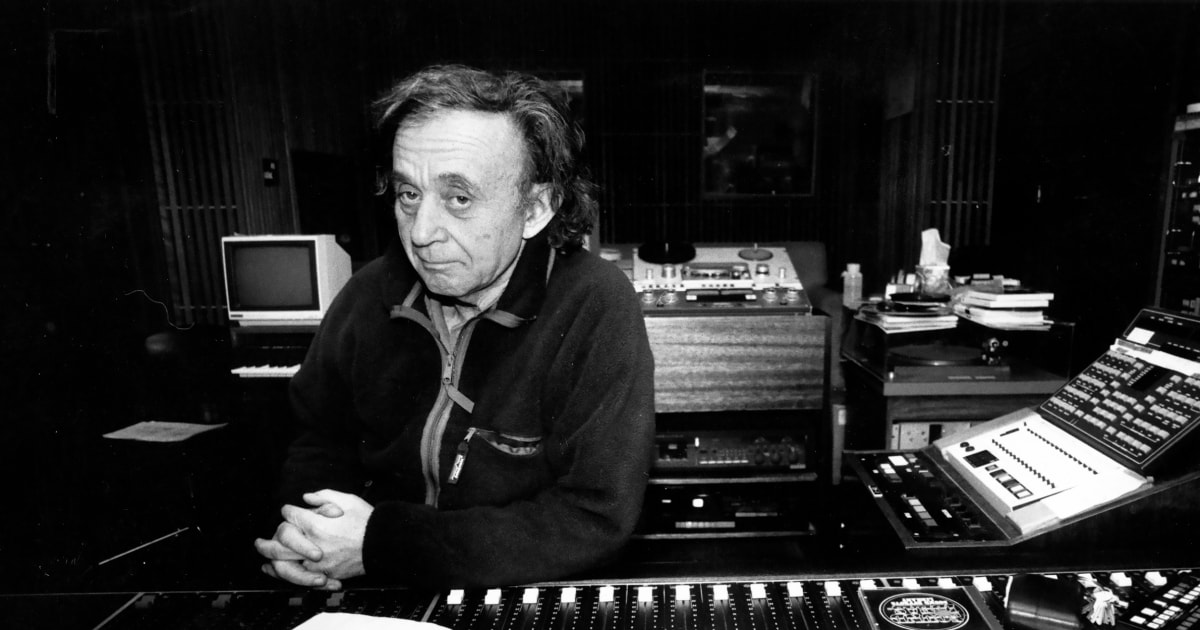
NEW YORK — Frederick Wiseman, renowned for directing “Titicut Follies” along with numerous other documentaries that provided a raw and insightful examination of American institutions, passed away on Monday at the age of 96.
The announcement of his death came via a joint statement from his family and his production company, Zipporah Films. Further details were not disclosed.
“He will be profoundly missed by his family, friends, colleagues, and the many filmmakers and audiences globally whose lives and viewpoints were influenced by his distinct vision,” the statement noted.
Among the most respected filmmakers worldwide, Wiseman received an honorary Academy Award in 2016 and created over 35 documentaries, some of which run several hours. His subjects ranged from suburban high schools to horse racetracks, and his works were featured on public television, presented in retrospectives, showcased at film festivals, and preserved by the Library of Congress.
Wiseman made his first full-length film in his mid-30s, but he soon gained recognition alongside notable contemporaries such as D.A. Pennebaker and Robert Drew for their contributions to modern documentary filmmaking.
Beginning with “High School” and the controversial “Titicut Follies,” Wiseman developed a unique, impactful style, often working with a minimal crew, even handling sound himself. His approach drew a mix of admiration, laughter, scrutiny, and, with “Titicut Follies,” even legal challenges.
Exploring Human Behavior
“Titicut Follies,” released in 1967, featured shocking footage from Massachusetts’ Bridgewater State Hospital, capturing disturbing scenes of mistreatment of inmates. The outrage surrounding its content resulted in state restrictions on its release, enhancing its infamy.
In “High School” (1968), he documented the everyday life at a suburban Philadelphia school, providing a candid glimpse into student interactions and educational dynamics.
Critics like The New Yorker’s Pauline Kael praised Wiseman for portraying human experiences in an evocative way, enhancing the audience’s understanding of shared human existence.
A Lifelong Journey
Born in Boston to an accomplished family, Wiseman enjoyed a privileged education, which greatly influenced his documentaries. His professional experiences in law and education significantly shaped his filmmaking perspective.
Wiseman shifted to filmmaking after initially working in various legal and academic roles. His passion for creating films emerged in his 30s as technology made sound recording easier, enabling him to capture compelling narratives.
His career took off with “Titicut Follies,” though its controversial nature led to significant legal battles concerning privacy and censorship before restrictions were eventually lifted.
“It is true,” remarked Judge Andrew Meyer, acknowledging the film’s impact on public discourse while weighing the privacy violations it presented.
