



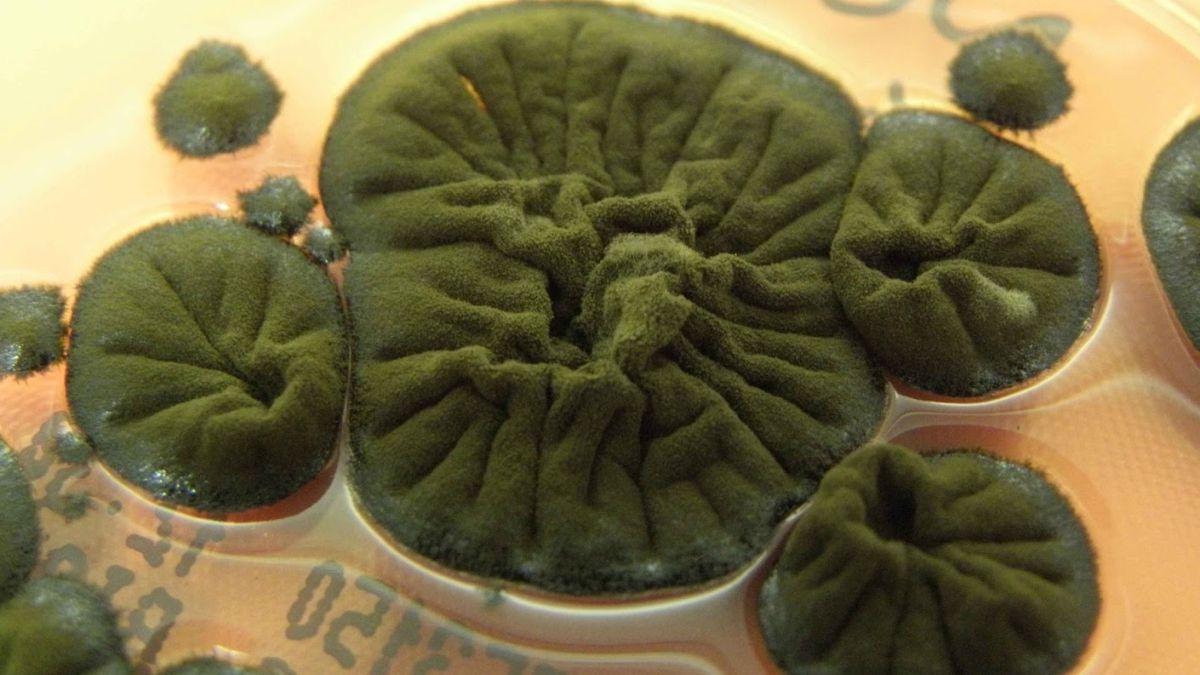
Chernobyl’s Resilient Ecosystem
The Chernobyl exclusion zone is prohibited for humans, yet not all life forms are barred. Following the catastrophic explosion of the Unit Four reactor at the Chernobyl Nuclear Power Plant nearly 40 years ago, various organisms have flourished, adapting and seemingly thriving in the absence of human presence.
This unexpected growth may be attributed partly to the lack of humans, but for one particular organism, residual ionizing radiation in the reactor’s surrounding structures might even be beneficial. Scientists have discovered a peculiar black fungus, Cladosporium sphaerospermum, thriving on the radioactive walls of one of the Earth’s most contaminated buildings.
This fungus contains melanin, a dark pigment that may enable it to capture ionizing radiation similarly to how plants utilize sunlight for photosynthesis. This process has been dubbed radiosynthesis, although the precise mechanisms remain unclear.
The intrigue surrounding this fungus began in the late 1990s, when a team led by microbiologist Nelli Zhdanova explored the Chernobyl Exclusion Zone to study surviving life forms. They were amazed to find a diverse array of fungi, documenting 37 different species, notably those rich in melanin. Among these, C. sphaerospermum was prominent, exhibiting the highest levels of radioactive contamination.
Subsequent research led by radiopharmacologist Ekaterina Dadachova revealed that exposing C. sphaerospermum to ionizing radiation did not harm it as it would harm other organisms. Surprisingly, this fungus appeared to thrive under such conditions. Further studies indicated that ionizing radiation could alter the behavior of its melanin, leading to speculation about a biological pathway akin to photosynthesis.
A 2022 study took C. sphaerospermum into space, revealing that it blocked more cosmic radiation than a control group without fungus. This aspect was explored for its potential as a radiation shield for future space missions, though the underlying processes remain elusive. Current research has yet to convincingly demonstrate the hoped-for effects of radiosynthesis.
Other fungi, like Wangiella dermatitidis, also show enhanced growth under ionizing radiation, while another species, Cladosporium cladosporioides, increases melanin production but not growth under radiation. Thus, behaviors observed in C. sphaerospermum are not universally applicable to all melanized fungi. Ultimately, it remains unclear whether these adaptations are strategies to harness radiation or responses to stressful environments.
