



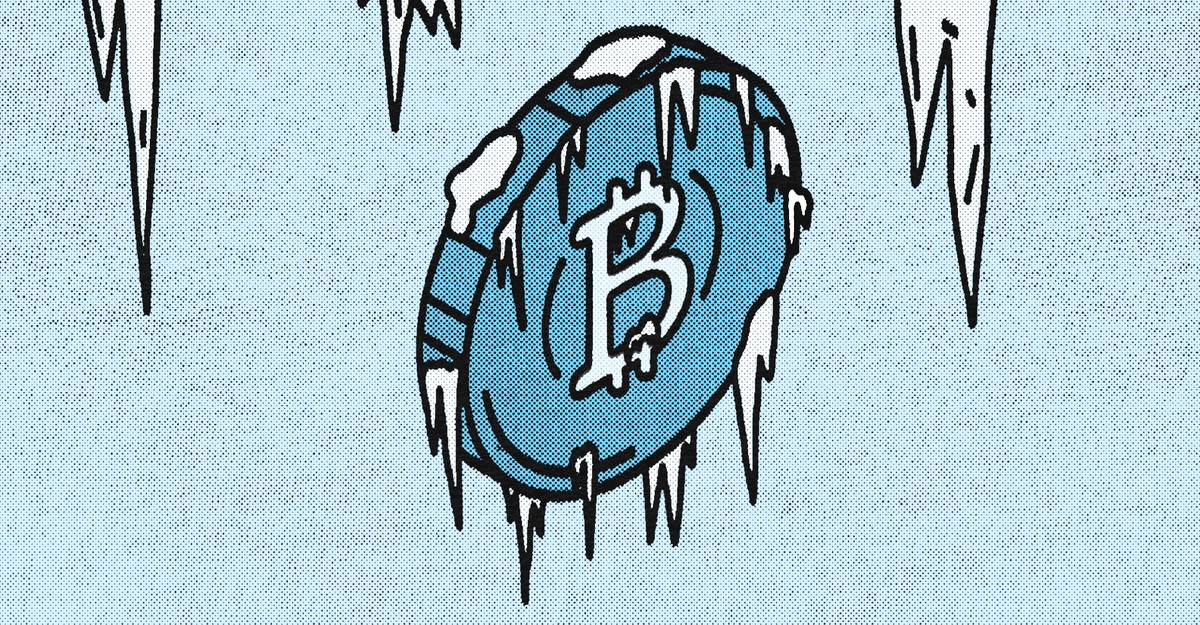
Recent months have been tumultuous for cryptocurrencies. While there was a slight recovery on Friday, bitcoin remains nearly 50% down from its all-time high in October, with other currencies—including major players like ethereum and solana—experiencing even greater declines. Crypto downturns are not unfamiliar; the most significant drop for bitcoin in 2011 led to a staggering 99% decrease in its value. However, this current decline feels particularly harsh, coinciding with a period when crypto advocates believed they had finally achieved mainstream recognition.
With Donald Trump’s presidency, the industry finally had a leader who openly supported cryptocurrencies. Trump appointed regulators who, in contrast to those under Joe Biden, did not seek to limit crypto’s expansion or impose restrictions on exchanges. Notably, he pardoned the founder of the largest crypto exchange, Binance, who had previously been convicted for not adequately preventing money laundering. Just before his inauguration, Trump even introduced his own cryptocurrency, which, like many meme coins, saw a surge before plummeting.
The cryptocurrency sector appeared well-positioned as it became more integrated into the global financial system, with increasing public awareness and interest. It was believed that this would enhance the stability and reliability of bitcoin and other cryptocurrencies, shielding them from the sharp sell-offs of previous downturns. However, the very integration that had previously bolstered bitcoin’s value last year has now contributed to accelerating its decline.
This scenario wasn’t anticipated. The rise of exchanges like Binance made crypto trading much more accessible for retail investors, complemented by the popularity of crypto exchange-traded funds (ETFs) that allowed for leveraged trading. Institutional investors also began viewing crypto as a legitimate asset class, adding bitcoin to their portfolios. Additionally, a surge in digital-asset-treasury companies—public firms primarily focused on raising capital to acquire crypto—helped push bitcoin’s price higher, leading to a self-reinforcing cycle of value.
However, when the market shifted, these dynamics turned negative. Leveraged ETFs are risky, amplifying losses when bitcoin drops, which increases the likelihood of sell-offs. Institutional investors, often not as committed, tend to sell during price drops. The digital-asset-treasury firms have also suffered, making it harder for them to raise funds to buy bitcoin, thereby reducing demand, which had previously been stable.
The broad institutionalization of crypto has further complicated things, leaving it with fewer new buyers. The emotional drive that previously lifted crypto prices relied on its image as a disruptive force. As the market became more established, traders seeking thrills turned to other opportunities like prediction markets, which offer clearer appeal than crypto. Analysts now express concerns about a stalled narrative and the absence of a compelling story to reignite interest in the market.
The diminishing confidence is critical because crypto’s value is more influenced by sentiment than hard economic indicators. While some argue that bitcoin should act as an inflation hedge due to its capped supply of 21 million coins, recent economic instability has undermined this idea. Instead of rising, bitcoin’s value has fallen, proving it to be a speculative asset reliant solely on perceived value. Although many still believe in bitcoin’s worth—having soared from under a dollar in 2010 to nearly $69,000 at its peak—this is a new era for crypto, where its future remains uncertain without a fresh narrative.
