



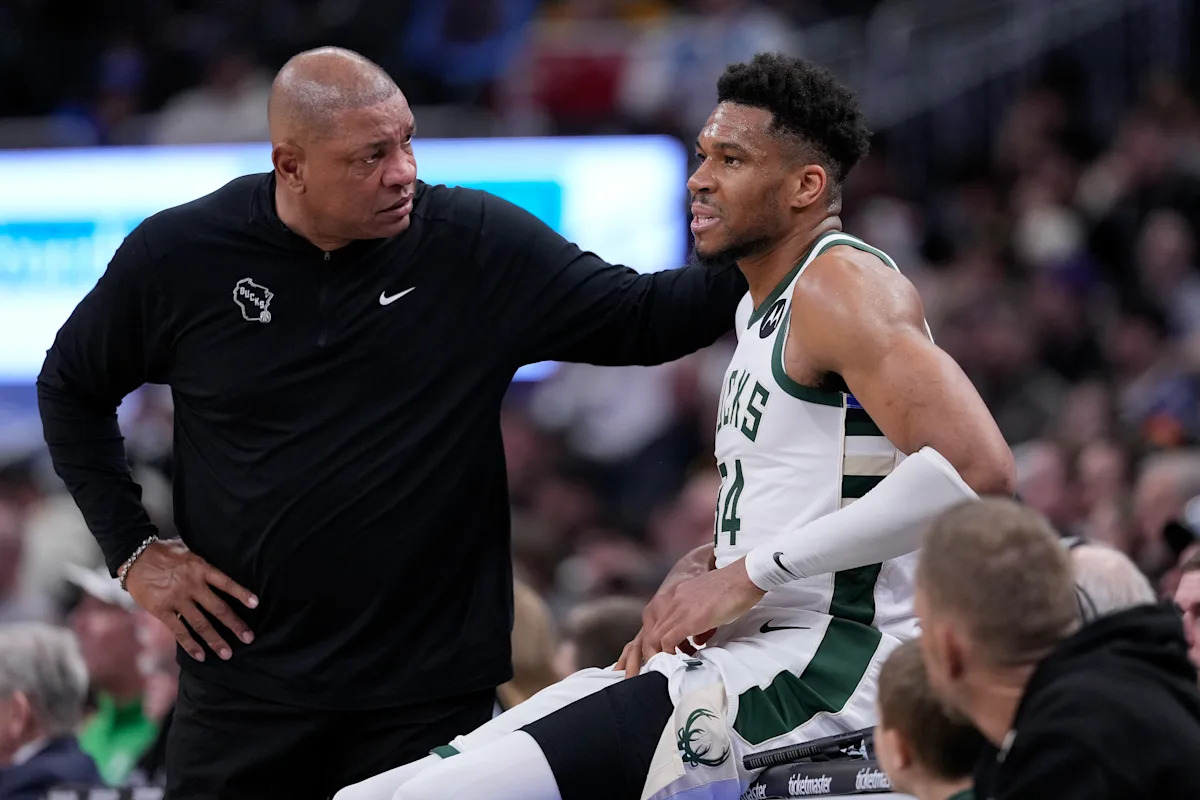
After the NBA players’ union accused the Milwaukee Bucks of wanting to end Giannis Antetokounmpo’s season as part of a strategy to lose games, Bucks head coach Doc Rivers provided a different explanation for keeping the two-time MVP on the injured list: he is genuinely injured.
Coach’s Statements on Giannis’ Health
“He’s not [healthy],” Rivers stated, addressing the media before the Bucks faced the Portland Trail Blazers. He added, “He’s progressing. He’s just not healthy.”
Response to Player Union’s Claims
Rivers’ comments came in response to a strong statement from the National Basketball Players Association, which suggested that the Bucks were engaging in anti-competitive practices by aiming to sideline Antetokounmpo, who is currently dealing with a hyperextended left knee and a bone bruise sustained during a March 15 game.
Giannis’ Attempt to Play
Following his injury, Antetokounmpo attempted to rejoin the game but was held out by the team’s medical staff. He later expressed optimism about his recovery, stating he wasn’t concerned about the injury and thought he would return for the next game.
Bucks’ Performance Without Giannis
The Bucks have struggled significantly without their star player. Antetokounmpo has participated in 36 games this season, during which the team held a 17-19 record. In contrast, they are 12-24 in the games he has missed, showcasing a stark difference in performance and scoring margins.
Ongoing Dispute Between Giannis and the Organization
Recent reports indicated an ongoing disagreement between Antetokounmpo and the Bucks front office regarding his playing time. The NBPA emphasized that their Player Participation Policy requires teams to ensure that when a player like Antetokounmpo is cleared to play, he should be on the court.
Future Implications for Giannis
The circumstances surrounding Antetokounmpo’s return may significantly impact his future with the team, particularly as he approaches the final year of his contract. Rivers assured reporters that the focus remains on Antetokounmpo’s health and not the larger organizational implications.
