



Recent investor anxieties regarding AI have raised concerns about its potential disruptions across various sectors.
Initially impacting software stocks, these worries have cascaded into the wealth management, transportation, and logistics sectors, sparking debates about how extensively AI might alter not just technology, but also high-fee service industries.
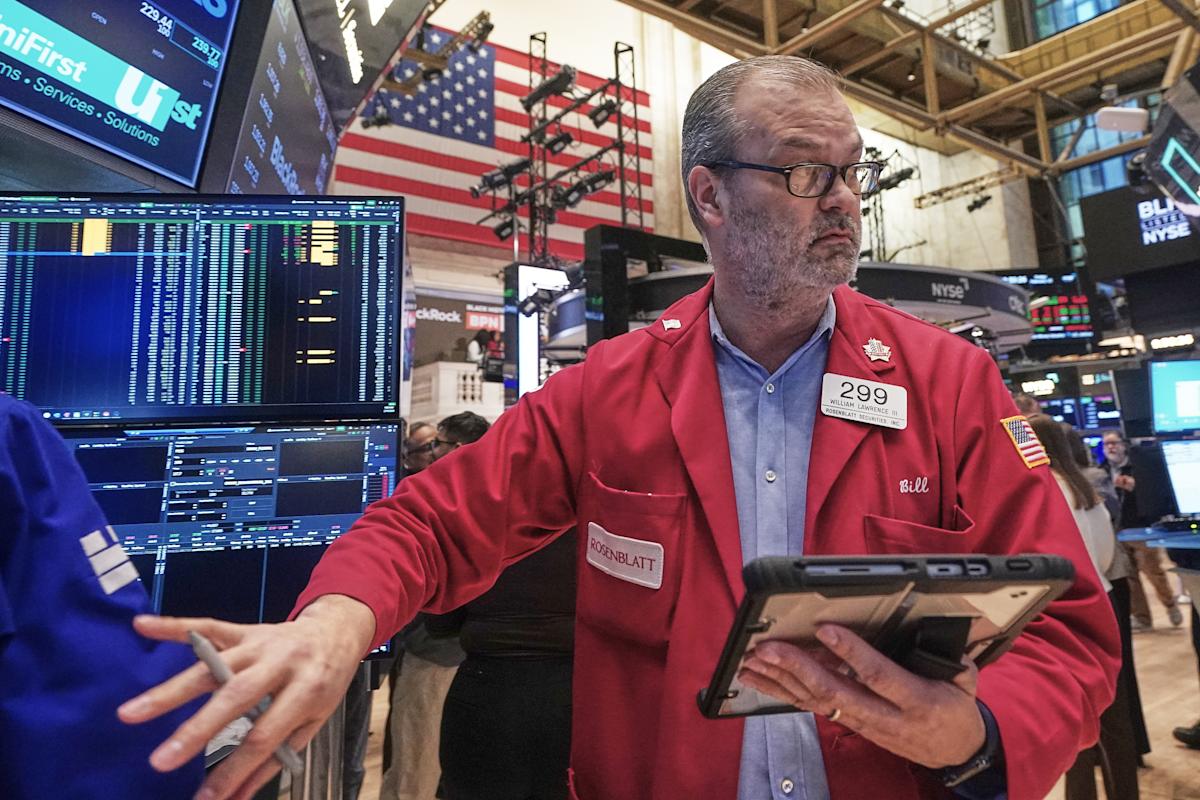
The S&P 500 (^GSPC) and Nasdaq Composite (^IXIC) both experienced declines of over 1% last week. Key sectors such as Financial Services (XLF), Consumer Discretionary (XLY), and technology stocks fell due to fears surrounding AI. The Dow Jones Industrial Average (^DJI) decreased by 1.2%, while Nasdaq and S&P 500 saw drops of 2% and 1.4%, respectively.
Tim Urbanowicz, Chief Investment Strategist at Innovator Capital Management, remarked, “That’s the dark side of AI. It’s crucial to be aware of this, as many industries may face disruption, presenting a significant threat.”
Companies such as C.H. Robinson (CHRW) and Universal Logistics (ULH) reported losses of 11% and 9%, respectively, after a Florida firm unveiled a new tool capable of increasing freight volumes without additional staffing.
The anxiety surrounding AI also impacted wealth management firms like Charles Schwab (SCHW) and Raymond James (RJF), with shares declining by 10% and 8% for the week. This followed the rollout of an AI-driven tax tool that enables advisers to tailor strategies for clients, raising concerns over the pressure on the industry’s high advisory fees.
The so-called “AI scare trade” has proliferated beyond software stocks, which have recently suffered due to concerns about AI’s potential to disrupt traditional roles in major enterprise companies like Salesforce (CRM) and ServiceNow (NOW). The Tech-Software Sector ETF (IGV) has plunged 22% year-to-date, although some Wall Street analysts believe this sell-off may be excessive.
Urbanowicz expressed concerns about whether the lowest prices have been reached, stating that profit margins in this sector are still strong, and valuations remain high. Nonetheless, he anticipates a “very supportive backdrop” for stocks, forecasting the S&P 500 to reach 7,600 by year-end.
Favorable conditions are attributed to a supportive regulatory environment from the previous administration, alongside corporate tax motivations and growth in other sectors. Sectors like Energy (XLE), Consumer Staples (XLP), and Materials (XLB) have all seen double-digit growth, contrasting with the Technology sector, which is down 2.5% this year.
