



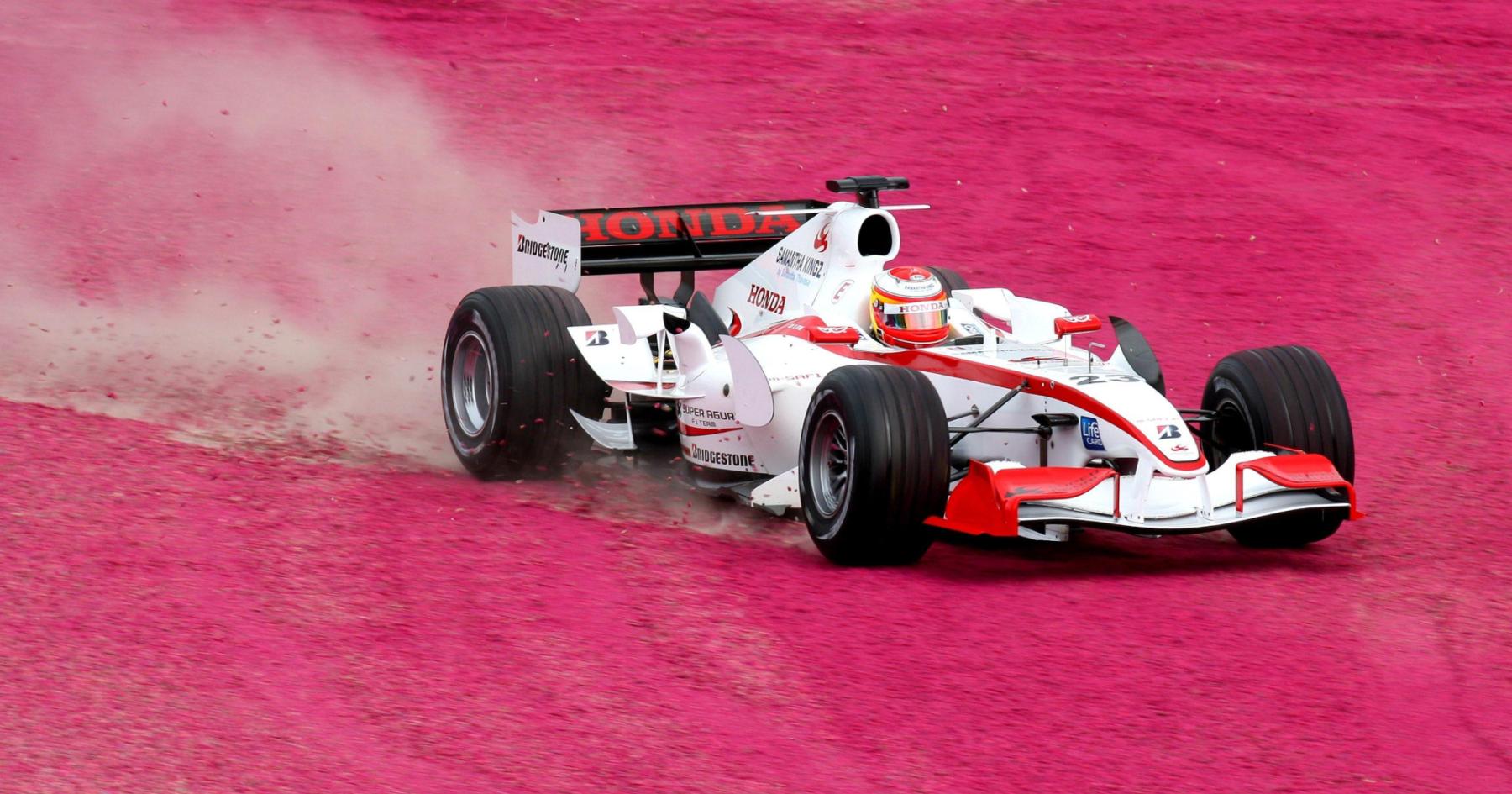
Yuji Ide has an unfortunate spot in Formula 1 history.
The Japanese driver, celebrating his 51st birthday on January 21st, participated in just four races for the Super Aguri team in 2006, entering the sport as a rookie at 31 years old.
Following an incident where he flipped Christijan Albers during the opening lap of the San Marino Grand Prix, the FIA intervened to revoke Ide’s super licence until he gained further experience.
Two decades later, Ide’s super licence remains revoked after he returned to Japan and focused on Super GT racing.
However, the circumstances were against Ide, preventing him from having a fair opportunity in Grand Prix racing.
Although Ide wasn’t a standout performer, he had a noteworthy record in Formula Nippon, finishing third in 2004, just behind champion Richard Lyons and equal with Andre Lotterer, who later achieved success at Le Mans and in the WEC.
In 2005, he improved his performance, narrowly missing the title against Satoshi Motoyama, before receiving the unexpected call to join Super Aguri as Takuma Sato’s teammate, after being dropped by Honda to make space for Rubens Barrichello.
During the season opener in Bahrain, Ide posted the slowest qualifying time, nearly 2.8 seconds behind Sato, and was about seven seconds off the pace set by Michael Schumacher, ultimately retiring from that race and the next in Malaysia. He did finish the Australian Grand Prix in 13th place, albeit three laps down.
At Imola, Ide collided with Albers during the first lap and retired due to suspension issues after 23 laps, marking the last time he would drive a Formula 1 car.
The article continues below.
A Return to Japan
Being thrust into an F1 seat at a team created primarily to keep a teammate racing likely wasn’t the ideal scenario for a debut. Despite his challenges, Ide didn’t showcase promise that could suggest he needed more time.
His notable achievement remains finishing at the challenging Albert Park circuit in Melbourne during his third race.
Following the revocation of his super licence, Ide returned to Japan to compete in Super GT, earning a victory at Suzuka in 2010. In 2022, he participated in a partial campaign, securing a second place at Fuji and a sixth at Suzuka.
While his results have been respectable, his last win was in 2010. Ide’s performance in 2022 included a second at Fuji and a sixth at Suzuka.
It’s important not to label Ide as a complete failure in racing—he was a competent driver who simply faced significant obstacles, finding himself somewhat out of his depth in Formula 1. There’s no disgrace in that.
