


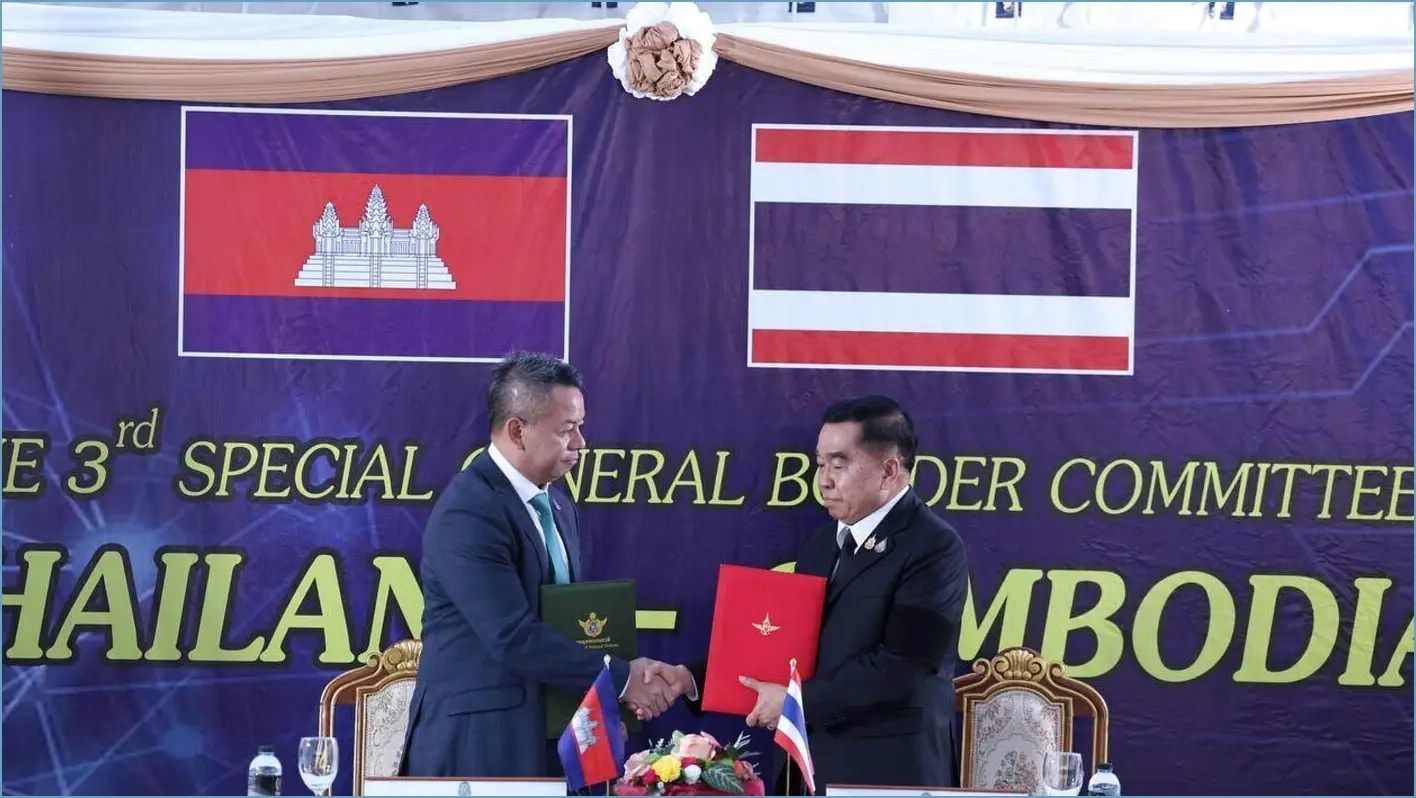
Ceasefire Agreement Between Thailand and Cambodia
BANGKOK (AP) — Thailand and Cambodia have reached a ceasefire agreement on Saturday, aiming to resolve weeks of conflicts over conflicting territorial claims at their shared border. This agreement came into effect at noon (0500 GMT) and mandates a halt to military movements and violations of airspace for military purposes.
Details of the Agreement
As of the signing, only Thailand has conducted airstrikes, with recent attacks reported in Cambodia on Saturday morning, according to the Cambodian Defense Ministry. The agreement stipulates that after maintaining peace for 72 hours, Thailand will repatriate 18 Cambodian soldiers captured during earlier clashes in July—this repatriation is a significant demand from Cambodia.
High-Level Talks and Previous Ceasefire Efforts
The agreement was signed by defense ministers from both nations, Cambodia’s Tea Seiha and Thailand’s Nattaphon Narkphanit, following three days of discussions among lower-ranking military officials. It reaffirms commitments to a previously established ceasefire that ended five days of fighting in July and emphasizes prior agreements.
Impact of the Fighting on Civilians
Since December 7, Thailand has reported the deaths of 26 soldiers and one civilian due to combat, along with 44 civilian casualties overall. Cambodia has not released official military casualty figures but reported 30 civilian fatalities and 90 injuries, with hundreds of thousands of individuals displaced from both sides. Cambodian Defense Minister Tea Seiha mentioned that the ceasefire allows displaced families to return home and resume normal activities.
International Oversight and Joint Efforts
The agreement calls on both nations to comply with international norms against deploying land mines, a major concern for Thailand. Thai soldiers have suffered injuries from incidents attributed to newly laid Cambodian mines, while Cambodia maintains that the mines were remnants from past civil conflict. The recent agreement includes provisions for joint humanitarian demining efforts to ensure the safety of civilians and military personnel.
Reactions and Future Considerations
Malaysia’s Prime Minister Anwar Ibrahim, who played a pivotal role in the initial ceasefire, praised the agreement for reflecting a mutual understanding that restraint is essential, especially for civilian protection. However, the agreement’s stability remains uncertain, as Thailand’s Defense Ministry spokesperson emphasized that actual peace will depend on Cambodia’s sincerity in maintaining the ceasefire.
Conclusion
The situation remains delicate, and both nations have a timeline to demonstrate their commitment to peace, marked by the initial 72-hour period set forth in the agreement.
