


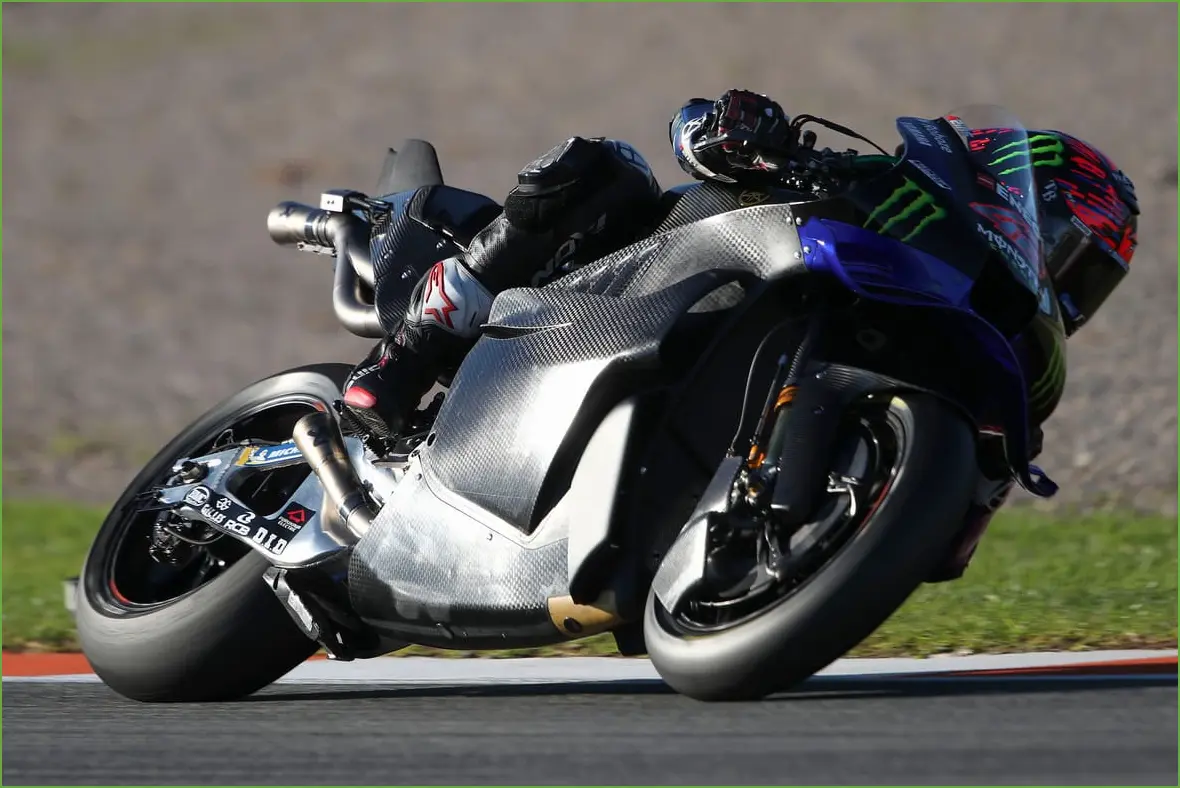
As they enter the third year of their partnership in MotoGP, Alex Rins and Yamaha appear to be on the verge of parting ways.
While neither party has made any official statements about this possibility, it seems to be the most likely outcome. Rins, who joined Yamaha after a successful period with Suzuki and a challenging stint at LCR Honda due to injuries, has struggled to deliver on the inline-four Yamaha M1. His performance, alongside Fabio Quartararo, was expected to be a highlight, but has fallen short of expectations.
Some argue—though it’s somewhat harsh and lacks important context—that Rins may be the least effective full-time factory Yamaha rider since 1999.
Five Worst Yamaha ‘Number Two’ Seasons Since 1999
Based on lead rider’s points percentage
Maverick Vinales, 2021 – 34.2% (down from 49.4% when he was let go mid-season)
Alex Rins, 2025 – 33.8%
Alex Rins, 2024 – 27.4%
Ben Spies, 2012 – 25.1%
Franco Morbidelli, 2022 – 16.9%
Notably, Quartararo features prominently in four of these five cases, and the overall MotoGP environment has shifted, making points harder to secure in a factory setting. Thus, while Rins hasn’t been “catastrophic” or “disgraceful,” his performance has certainly been insufficient.
Even the team’s optimistic perspective, as shared by team manager Massimo Meregalli in an interview, lacks conviction. “Alex had a first part of the season that was below expectations,” he remarked about Rins’s 2025. “However, we began to see improvements starting in Motegi.” While Indonesia marked Rins’s best weekend of the season, the overall trajectory remains concerning.
Rins vs Quartararo in 2025
Qualifying Gap: Full season: +0.614s; From Motegi: +0.513s
Sprint Gap: Full season: +8.688s; From Motegi: +9.357s
Grand Prix Gap: Full season: +7.109s; From Motegi: +6.910s
Points: Full season: Quartararo 201 – Rins 68; From Motegi: Quartararo 64 – Rins 23
Rins’s tenure at Yamaha has been impacted by a mid-2023 injury. Although he claims it no longer affects his riding, results suggest otherwise. If substantial improvements don’t materialize, he may face serious consequences.
The situation could have been different had Yamaha continued with the inline-four bike, which Rins has described as a poor fit for his style, differing greatly from the Suzuki he once thrived on. Despite attempts to adjust his technique to better match that of Quartararo, the noticeable gap remains.
Upcoming changes to a V4 engine for 2026 present Rins with a potential lifeline. Following a lackluster 19th place finish in the Valencia test, he appeared more optimistic afterward and has expressed enthusiasm for the V4’s capabilities. “Braking is much improved compared to the inline-four,” he stated, acknowledging room for growth in top speed.
Rins needs immediate results as the new season begins. Given his previous struggles with the inline-four, the V4 could serve as a vital reset for his career.
