



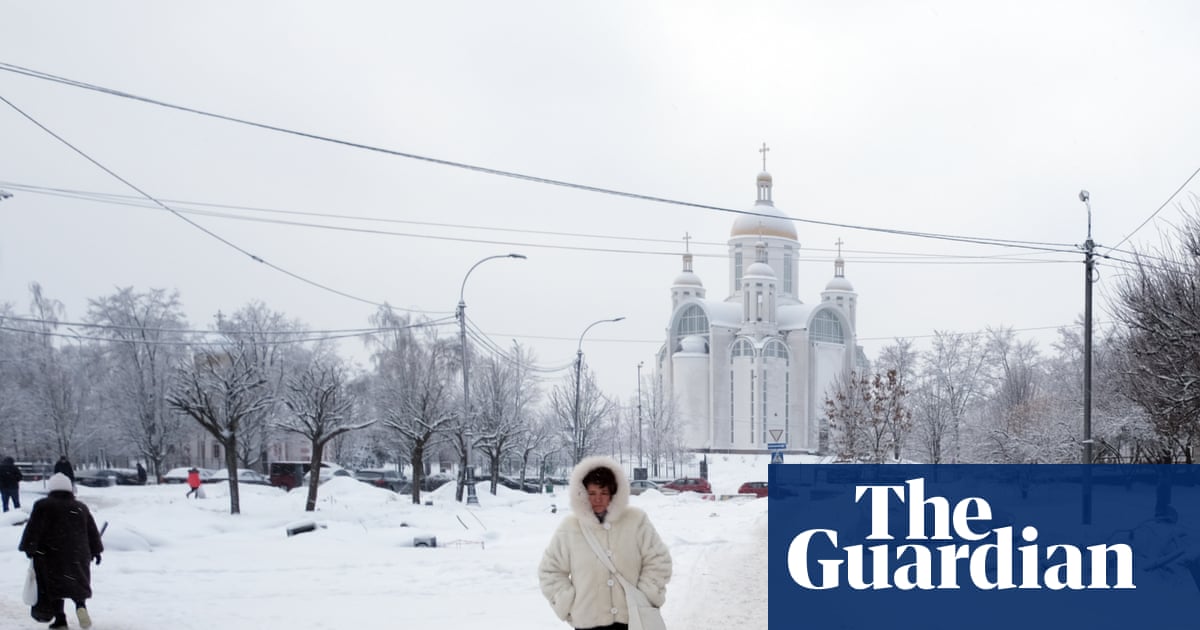
Engineers Work to Restore Power in Bucha
At Bucha’s main pumping station, three engineers, dressed in parkas, are focused on an emergency generator that supplies the Ukrainian city with water. One of them uses a heat gun on the generator’s filter to thaw it, his face reddened by the blowing snow and the frigid temperature of -12°C (10.4°F). The city’s mayor, Anatolii Fedoruk, watches closely, noting that the generator in his office is also frozen, resulting in no coffee for visitors during a Guardian visit.
Bucha’s History and Current Challenges
Four years ago, Bucha and its neighboring city Irpin became symbols of the violence during the opening days of Russia’s invasion of Ukraine, witnessing horrific civilian casualties. Although many buildings in Bucha have been repaired and Russian forces have long left, the ongoing conflict continues to impact daily life, especially amid the latest Russian assaults on energy infrastructure as temperatures dipped below -20°C, prompting a national state of emergency.
Energy Shortages Affecting Local Life
This winter, energy rationing has been implemented in Bucha, but recent attacks have made conditions worse. On a particularly cold day, traffic lights are out, and many shops remain dark due to ongoing power outages. At the Battkava cafe, Oleksandr Bartkov, 28, waits for the generator to warm up before he can use the espresso machine for his first customer.
Businesses Struggle Amid Power Cuts
“In our usual eight or nine hours open, we experience electricity for only three to four hours,” Bartkov explains. “This has been the case all winter, but recent attacks have made it worse.” He notes that many small businesses are struggling, with some already closed and others likely to shut down through February.
City Officials Face Ongoing Difficulties
Meanwhile, Mayor Fedoruk, from his office, acknowledges Bucha’s struggle to adhere to the power rationing plans of three hours on and six off, but asserts that the situation is somewhat better than in parts of Kyiv. He notes that the more recent developments in cities like Bucha, designed with a distributed power supply system, are helping to mitigate the impact of Russian attacks.
Living Conditions in Temporary Shelters
In a prefabricated building created to shelter displaced families, heating relies on electric storage heaters, which posed challenges during a recent power loss. Manager Vitalina Tsisar, displaced from Kramatorsk, recounted a terrifying moment when a Russian air raid cut off electricity on January 13, leading to rapidly dropping temperatures as residents struggled to stay warm.
Russian Strategy and Local Reactions
Ukraine’s resilience continues, despite Russian assaults on energy infrastructures. According to Oleksandr Kharchenko, director of the Energy Industry Research Center, these actions are designed to inflict widespread suffering. Even as Ukraine’s leadership acknowledges the dire situation, there are calls for accountability and faster responses. Mayor Fedoruk remains hopeful, citing the city’s past resilience, stating, “Four years ago, Russia failed to take Kyiv in three days, and we are still standing strong.”
