



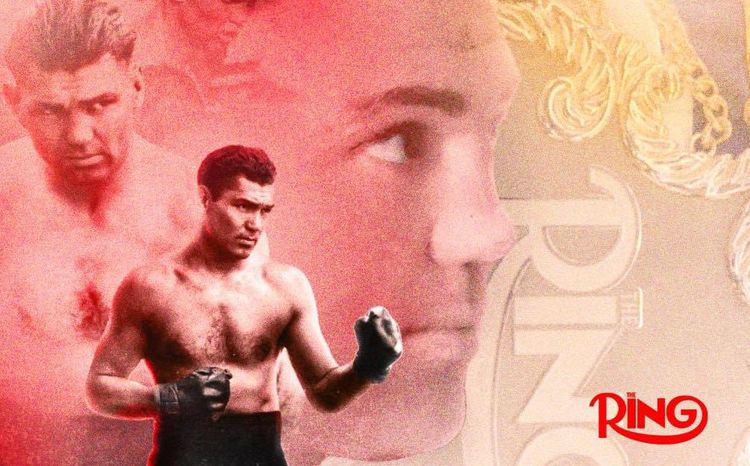
The annual awards, including “Fighter of the Year” and “Fight of the Year,” typically capture the essence of each boxing year.
The Ring began its “Fighter of the Year” selection in 1928, with editor Nat Fleischer outlining four criteria for potential winners:
- The fighter must significantly contribute to both the skills and the science of boxing and does not strictly need to be a champion.
- The honoree should be ranked highly among fighters while also holding a respected position as a sportsman.
- Good public relations and a clean moral reputation must accompany their fighting abilities.
- The awarded boxer should serve as a role model for the youth of America.
Over time, additional awards were introduced, though most came later. The “Fight of the Year” and “Round of the Year” began in 1945, with “Upset of the Year” following in 1980 and “KO of the Year” in 1989.
Fortunately, editors Steve Farhood and Nigel Collins reviewed awards from every year in The Ring’s history for the magazine’s 75th Anniversary issue in 1997, with assistance from historians.
As we approach the new year, anticipation surrounds what’s to come, and reflections on the previous year remain. In early 1926, sportswriter John J. Romano commented on 1925:
“Any year in boxing marked by an inactive heavyweight champion is dull. This has always been the case.”
1925
• Fight of the Year: Harry Greb W15 Mickey Walker
• Fighter of the Year: Paul Berlenbach
• Upset of the Year: Dave Shade KO3 Jimmy Slattery
• Round of the Year: Gene Tunney vs. Tommy Gibbons Round 12
While 1925 lacked excitement, the subsequent year, 1926, delivered a flurry of upsets, with nearly every championship title changing hands.
1926
• Fight of the Year: Gene Tunney W10 Jack Dempsey
• Fighter of the Year: Gene Tunney
• Upset of the Year: Pete Latzo W10 Mickey Walker
• Round of the Year: Gene Tunney vs. Jack Dempsey Round 1
The year witnessed significant activity, with the passing of champion Harry Greb and the emergence of new excitement in both heavyweight and lighter divisions. In 1926, eight of the ten recognized world champions were American, reinvigorating public interest as promoters scaled back investments the prior year.
While there is no guarantee of patterns in boxing history, some coincidences warrant observation.
In 2025, the current heavyweight champion fought just once, and the division’s overall strength seems lackluster. Recent retirements, such as Terence Crawford, and ongoing legal issues for Gervonta Davis, alongside uncertainties for Canelo Álvarez and Dmitry Bivol, create a situation that is neither dull nor quiet; rather, it is a pivotal moment.
As some aging champions approach the twilight of their careers, fresh talent can drive renewed interest, reminiscent of the dynamic 1926 era. The immediate future is crucial, as developments over the next year could steer boxing in a positive direction.
