



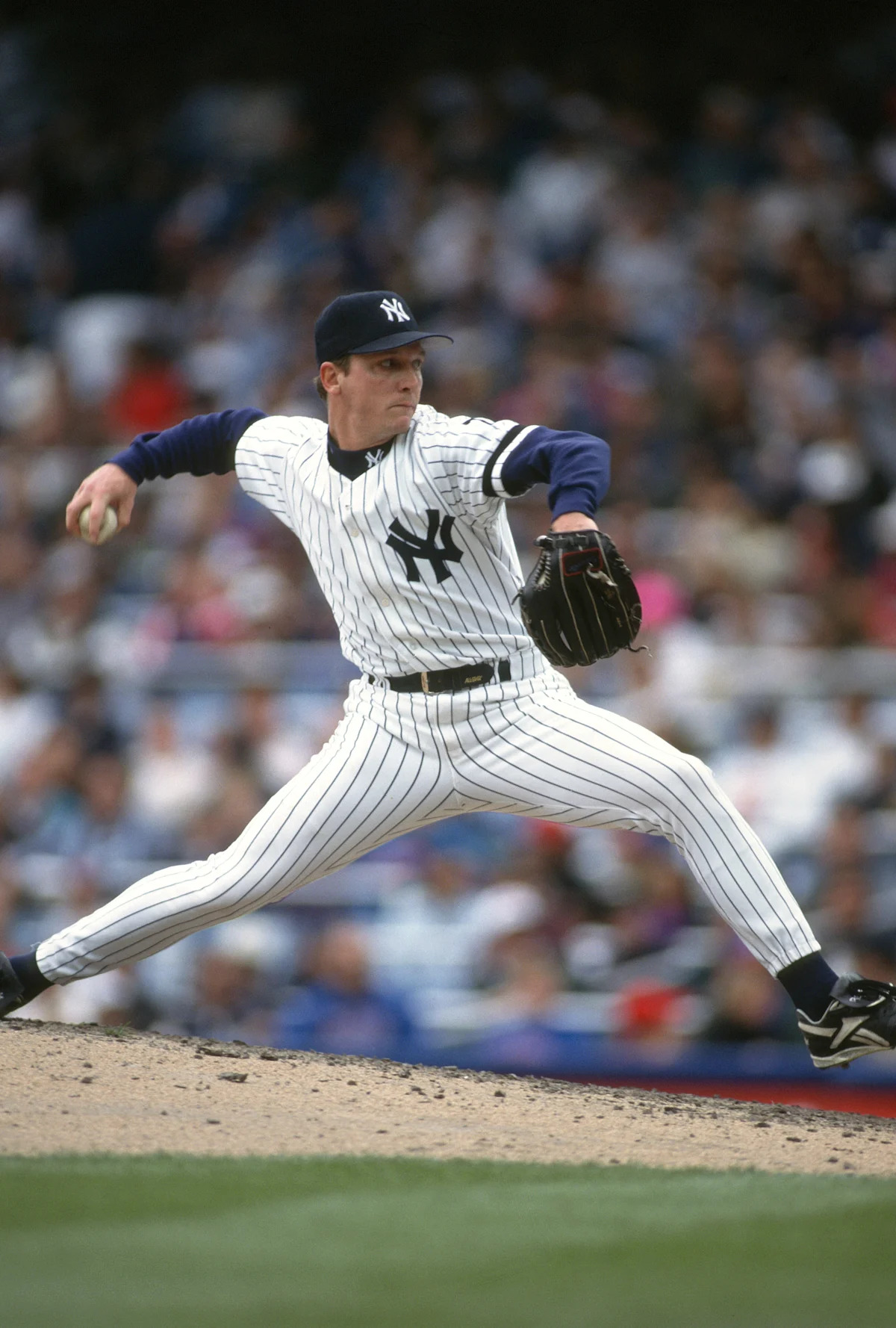
Prior to the Yankees acquiring the right-handed pitcher with a unique wrist motion in 1995, David Cone had been navigating his career through various teams. He started with the Kansas City Royals, making 11 appearances before being traded to the New York Mets, where he spent several seasons and became an All-Star. In 1992, Cone transitioned back to the American League after being traded to the Toronto Blue Jays just before their championship push.
Fresh from winning his first World Series as a free agent, Cone entered the market for the first time. During this initial free-agent experience, Cone engaged with the Yankees, who were eager to sign him along with the Atlanta Braves and Hall of Famer Greg Maddux. Ultimately, they settled on Jimmy Key, a key figure in the 1996 World Series. Cone described the negotiation phase with then-general manager Gene Michael as somewhat chaotic in an interview with the New York Times.
Cone remarked, “The chaos in the front office is self-evident. The negotiations with the Yankees were rather strange, needless to say.” He eventually re-signed with the Royals, enjoying two of his best seasons before being traded back to the Blue Jays, who subsequently sent him to the Yankees at the 1995 Trade Deadline. Following a successful introduction to the Yankees, Cone signed a multi-year contract to remain in New York.
David Cone
Signing Date: December 21, 1995
Contract: 3 years, $19.5 million
Before the Yankees could fully embrace Cone’s signing, they faced competition from the Baltimore Orioles, who were also pursuing him vigorously. With Roberto Alomar added to their roster—a tempting prospect for any player seeking a World Series—the Yankees’ offer, led by George Steinbrenner, ultimately proved to be the most appealing. This competitive pursuit allowed the Yankees to bolster their rotation with Cone.
In his first full season with the Yankees in 1996, Cone only started 11 games due to recovering from an aneurysm in his right arm. He made a remarkable return just in time for the playoffs, finishing the season with a 2.88 ERA. Cone pitched through all rounds of the 1996 postseason and celebrated as a World Series champion against Maddux’s Braves, notably winning Game 3 to help avoid a 0-3 deficit.
In 1997, Cone returned to form, pitching 195 innings and achieving a 2.82 ERA, the eighth-best in MLB, along with a bWAR of 6.7. At 35, he continued to excel, surpassing 200 innings and securing 20 wins with a 3.55 ERA during the Yankees’ historic 1998 season. Cone played a crucial role in winning the championship, including a strong performance in World Series Game 3. His career highlight came in 1999 when he pitched the 16th perfect game in MLB history against the Montreal Expos, a memorable moment amidst Yogi Berra’s return to Yankee Stadium.
Cone signed on for another season in 2000; however, it was a challenging year, culminating in a 4-14 record and a dismal 6.91 ERA. His performance dropped significantly, and he was excluded from the playoff rotation, resulting in a shift to a relief role. Despite a tough season, Cone contributed by getting Mike Piazza out in a crucial playoff moment, helping the Yankees secure their third consecutive championship.
Although Cone’s end with the Yankees was not the farewell he might have hoped for, his journey with the team proved invaluable. His contributions were significant in bringing the World Series title back to The Bronx, leaving a lasting impact on the franchise.
Explore more in the “50 Most Notable Yankees Free Agent Signings in 50 Years” series here.
