


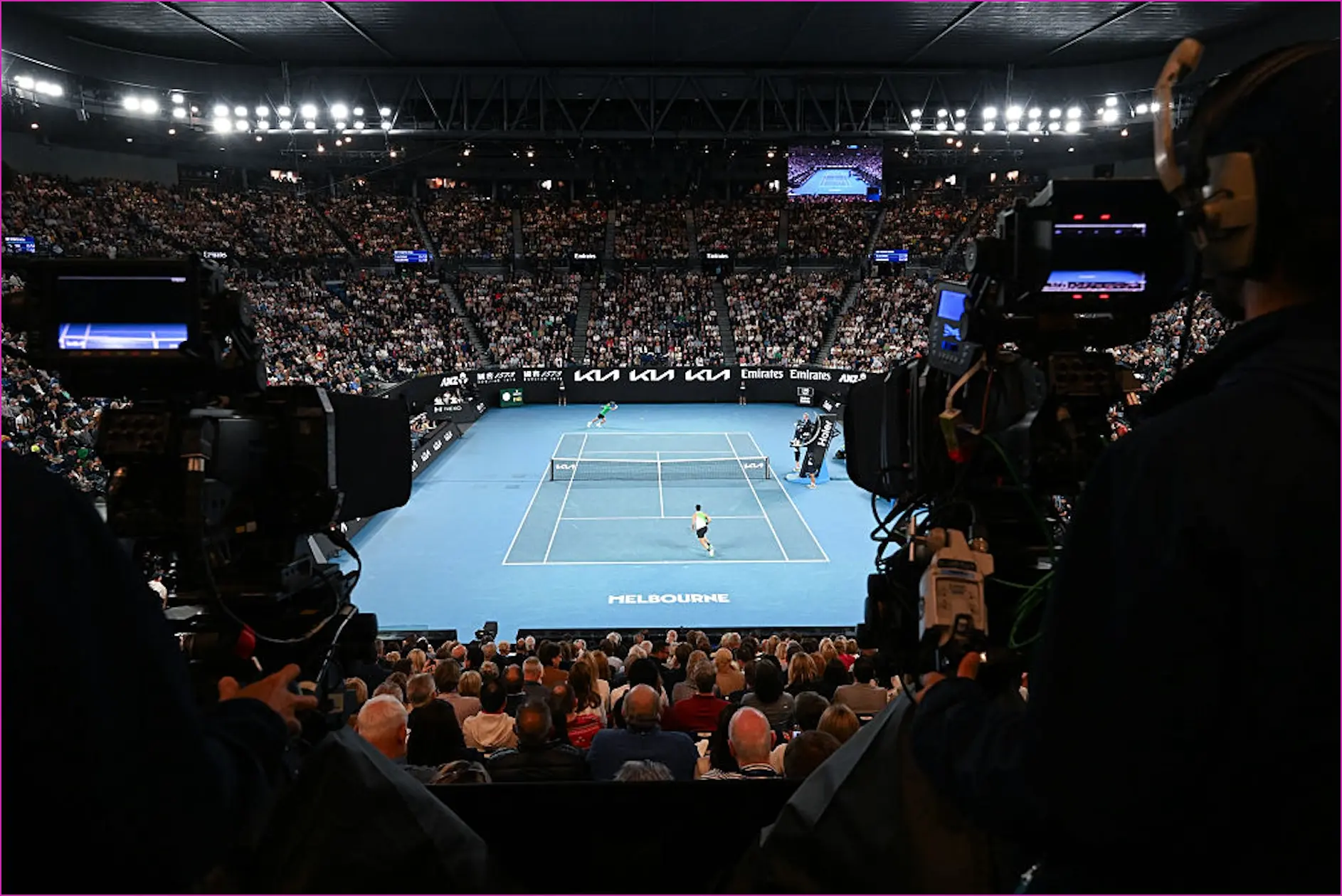
Reflections Before the Australian Open
Before heading to Melbourne in January to cover the Australian Open for Defector and other outlets, I visited New Zealand with my family. Having lived there for five years during my childhood, it remains a utopian escape since returning to the U.S. New Zealand is a seasonal refuge from the harsh winters and current political climate in the U.S. Headlines about tariffs or political drama seem less impactful from such a distance. However, the news of a U.S. military strike on Venezuela, which claimed over 80 innocent lives, weighed heavily on my mind. Soon after, a report about an ICE agent’s murder further deepened my sense of dread, making me embarrassed to order food in a cafe with my American accent, as I felt compelled to clarify my disdain for the situation back home.
Disconnection During the Tournament
Strangely, few journalists at the Australian Open questioned American players about the troubling state of their country, despite the barrage of distressing news. Professional tennis players typically engage with political issues as if they were children, yet they do face inquiries when global events impact their sport. For instance, the WTA Finals in Riyadh have prompted discussions regarding financial benefits versus ethical concerns. Ukrainian, Russian, and Belarusian players have frequently addressed questions around the invasion of Ukraine and actions taken against Russian players, making it odd that American players remained largely unchallenged.
Pursuing Insightful Responses
With encouragement from another journalist, I proposed a piece about American players’ sentiments toward their country to an editor at The Athletic. The questions I posed were cautious, informed by nerves that felt like a burden. Although I gathered a variety of responses from eight players—ranging from thoughtful to indifferent—I regretted not being more straightforward. Nevertheless, I could sense underlying influences from agents and fan expectations in their replies.
Online Backlash and Misinterpretation
As I gathered responses, clips of my questions circulated online, sparking a targeted backlash against me. Misrepresented as representative of The Athletic, I faced vitriol from individuals upset about my inquiries. After eventually drafting my piece and with the support of my editor, the article was never published.
Gauff’s Thoughtful Commentary
Coco Gauff provided a particularly insightful answer, articulating her fatigue over discussing the state of the nation while emphasizing the unique struggles of being a Black woman. Despite my intentions to question multiple players, Gauff’s response ignited an online debate about racial biases in media coverage. I found it disheartening that many interpreted my inquiry as merely seeking a soundbite, rather than understanding that a broader discussion would ensue.
Challenges in Modern Journalism
Access to players for in-depth questioning has become increasingly challenging due to the rise of social media and COVID. As journalists balancing multiple assignments, we often settle for broader inquiries to maximize interactions with players, leading to somewhat banal engagements. The current media landscape pressures writers to churn out content quickly, often to their detriment. This precarious environment poses challenges for effective journalism in tennis.
The Broader Context of Political Discourse
In contrast to tennis, NBA players faced similar political inquiries with much less controversy. The narrative of tennis players avoiding political questions too often creates an atmosphere where tough inquiries feel unjust. Questions about domestic issues are pertinent for athletes living in America, and outrage over such inquiries seems exaggerated. The resulting silencing and backlash symbolize a broader tension surrounding civil discourse in the U.S., further hindering the meaningful engagement that society needs.
