


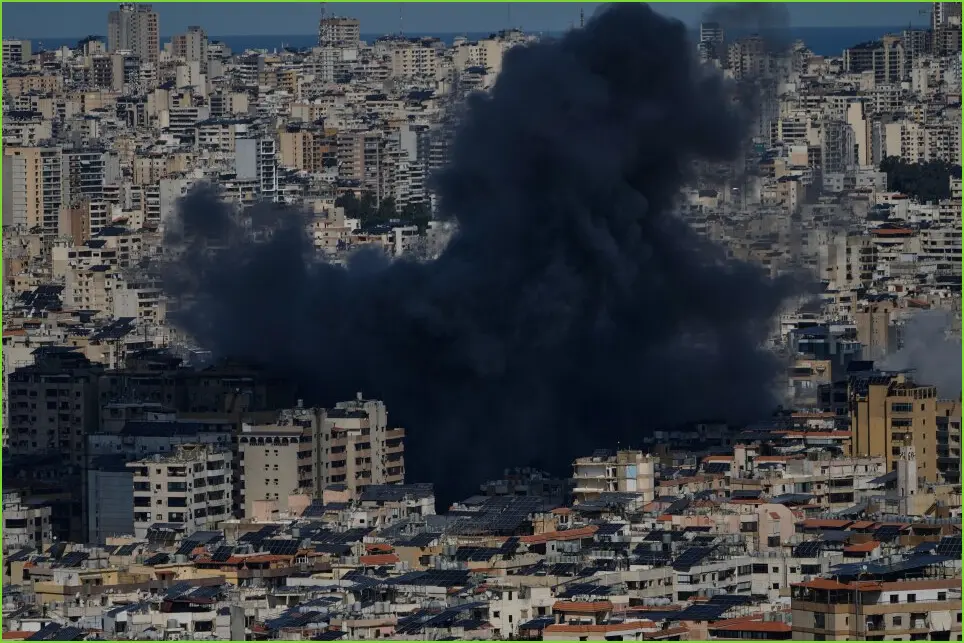
DUBAI, United Arab Emirates (AP) — On Tuesday, Iran escalated its attacks on Gulf Arab nations, intensifying its pressure in the Middle East amid a war that has driven oil prices upward and disrupted global economies. An airstrike in northern Iraq resulted in the deaths of five pro-Iranian militiamen.
This morning, missile sirens were activated in Dubai, UAE, and Bahrain, while Saudi Arabia reported intercepting two drones over its eastern oil region, and Kuwait’s National Guard shot down six drones. Iran’s missile and drone strikes have not only targeted Israel and U.S. military bases but have also focused on energy infrastructure, exacerbating the situation and leading to soaring oil prices due to its control over the Strait of Hormuz.
Brent crude, a global benchmark, surged to nearly $120 on Monday before slightly declining, still remaining around $90 a barrel on Tuesday—almost 24% higher than it was when the conflict began on February 28.
U.S. President Donald Trump attempted to alleviate concerns regarding a prolonged regional conflict, stating it would be “a short-term excursion.” However, Tehran claims it is ready for a lengthy battle, with officials conveying a lack of diplomatic room unless foreign economic pressure brings a resolution.
Iran’s Stance Amid Global Disruptions
The ongoing conflict has severely impacted global oil and gas supplies, leading to rising fuel prices in the U.S. The violence has compelled foreigners to flee commercial areas and has driven millions into shelters as military installations, government structures, and civilian facilities face bombardments. Iran has virtually halted tanker movements through the critical Strait of Hormuz, which handles 20% of the world’s oil transport.
In commentaries replying to Trump’s assertions, Iranian officials maintain that “Iran will determine when the war ends,” indicating their readiness to face any challenges. Iranian adviser Kamal Kharazi emphasized that Iran sees no prospect for diplomacy unless external pressures compel intervention to cease what it views as aggression from the U.S. and Israel.
Iranian Women’s Soccer Team Granted Asylum
Five members of the Iranian women’s soccer team, who were in Australia for a tournament when the war erupted, have been granted asylum. Home Affairs Minister Tony Burke announced. The team gained significant media attention for refraining from singing the Iranian national anthem during their first match. All players of the squad have been offered asylum, although there is uncertainty regarding the return of the remaining members to Iran.
Airstrike Targets Iran-Linked Militias
As the fighting continues, Israel has conducted several airstrikes on Hezbollah in Lebanon, resulting in retaliatory missile fire from the Iranian-backed group. Pro-Iran militias in Iraq have attacked U.S. bases amid the growing hostilities. Early Tuesday, an airstrike targeted the 40th Brigade of the Popular Mobilization Forces in Kirkuk, killing five militiamen and injuring several others, although the identity of the assailants remains unclear.
In the financial realm, markets fluctuated significantly recently, opening with gains following positive trends in the U.S. Despite the turmoil, Saudi Arabia’s Aramco reported profits of $104 billion for 2025, slightly down from the previous year’s $110 billion. The ongoing conflict continues to create ripples throughout various sectors globally.
