


The early months of 2026 have prompted the Ethereum community to engage in deep reflection, moving beyond just market value and technical enhancements to contemplate the network’s true identity.
Even prior to this year, there was a perception among developers and leaders that Ethereum was on the brink of another phase of growth, this time fueled by institutions and technology rather than just crypto enthusiasts. Some argued that neobanks could effectively onboard millions of users by simplifying the complexities of wallets and gas fees. In this scenario, Ethereum could function in the background, supporting a new financial ecosystem that appeared disconnected from crypto on the surface.
This perspective aligns with the long-held belief that Ethereum’s success hinges on its invisibility.
Over the years, various upgrades aimed at enhancing user experience and lowering costs have shaped this vision. Innovations like “proto-danksharding,” introduced in the Dencun upgrade, have significantly reduced fees for layer 2 (L2) networks by optimizing data downloads for transactions. Meanwhile, ongoing improvements to the base layer have resulted in greater transaction efficiency. Although the price of Ether (ETH) is driven by market dynamics, these advancements have allowed users to interact with applications without needing to grasp the underlying technology.
The L2 Debate
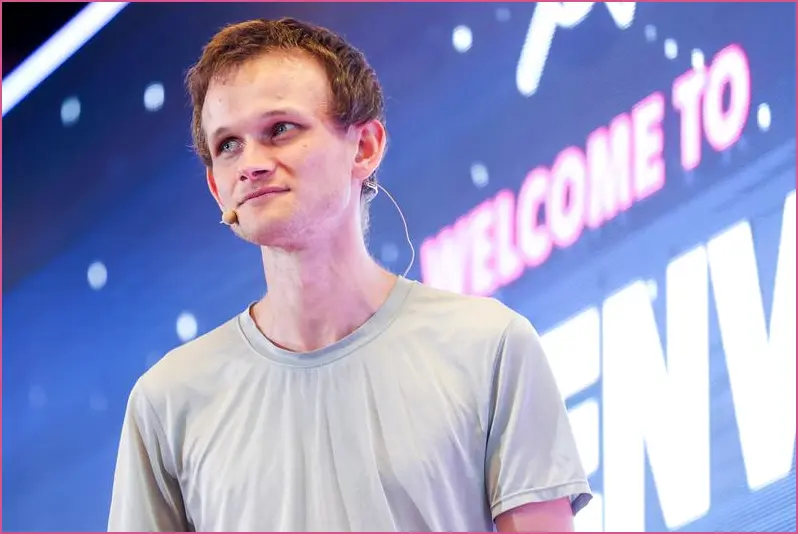
However, by early 2026, Vitalik Buterin, the network’s co-founder, delivered a stark reminder to the ecosystem: “You are not scaling Ethereum.” This assertion pierced through what had previously been a celebratory discussion surrounding rollups—L2 networks that handle transactions off the main Ethereum blockchain before bundling them back for greater speed and reduced costs. While L2 networks have proliferated and transaction fees have decreased, the central question remains: are these developments truly leading to meaningful scaling?
Quantum Threat
Simultaneously, another pressing issue—Quantum Computing—has begun to occupy a more prominent position on the agenda. The Ethereum Foundation indicated a shift in focus, prioritizing initiatives like ‘LeanVM’ and post-quantum signature schemes. What was once considered a distant concern is now woven into immediate planning efforts.
Internal Shuffle
If scaling has revealed weaknesses in Ethereum’s current framework, the threat posed by quantum computing casts uncertainty over its future. Changes within the Ethereum Foundation, such as the unexpected departure of Tomasz Stańczak as co-executive director, symbolize a broader reassessment of the network’s strategy and priorities. This swift transition suggests an internal recalibration as the foundation grapples with the demands for enhanced scaling, security, and the network’s possible role in emerging domains like artificial intelligence (AI).
‘Trust Layer’
AI has emerged as a significant area of focus, influencing the Ethereum network’s direction. Buterin outlined a potential role for Ethereum as a foundational layer in the future of AI, extending beyond mere transactions into a sphere where Ethereum could facilitate decentralized AI systems and trustworthy data sharing. This vision aligns with the foundation’s earlier initiatives to explore how the network could support autonomous agents and machine-to-machine economies.
These developments suggest that Ethereum is navigating multiple urgent challenges and priorities, making it increasingly complex to balance its foundational upgrades with the growth of specialized rollups. The upcoming Glamsterdam upgrade is expected to play a crucial role in determining the network’s ability to evolve into a robust, quantum-secure “trust layer” capable of supporting the global AI economy.
