


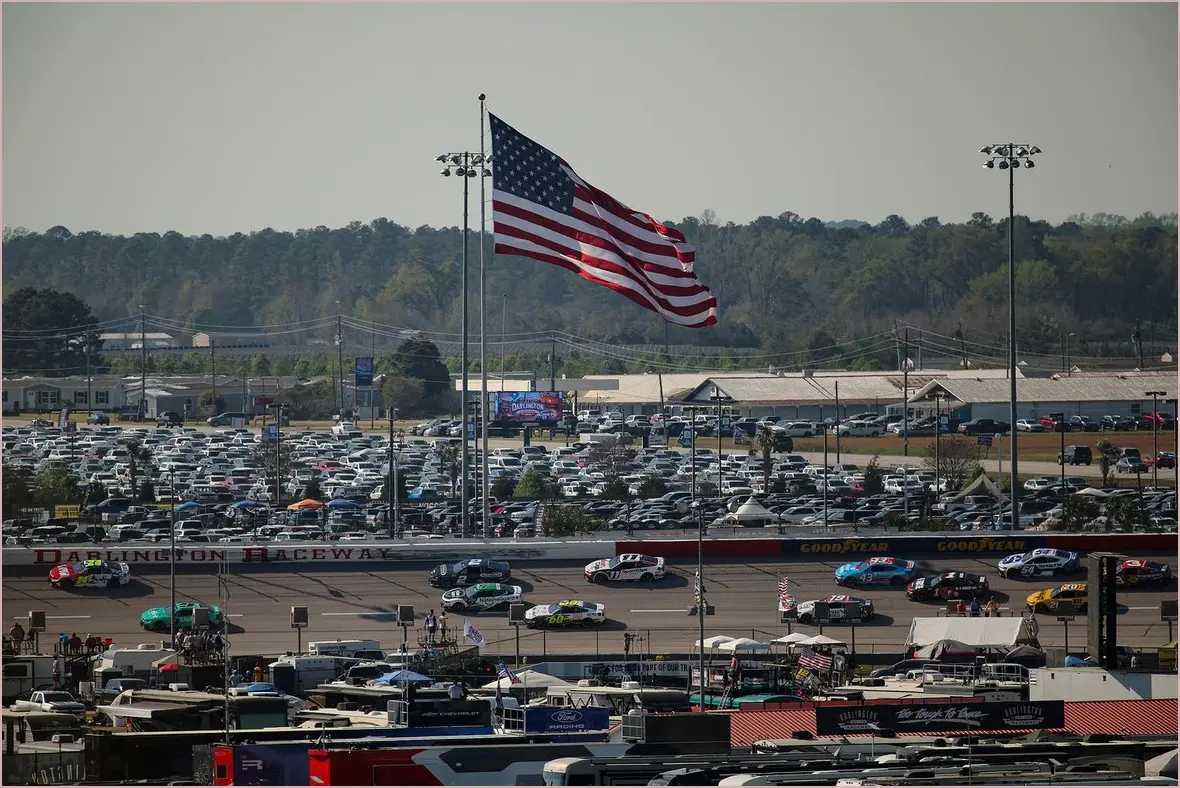
Debut of New Short Track Package at Darlington Raceway
The introduction of the new short track package at Darlington Raceway revealed a mix of perspectives among drivers regarding its impact on racing. Notably, there seemed to be some overlap between those who had strong-performing cars and those who felt the racing improved.
However, several drivers indicated that the combination of increased horsepower and reduced downforce did not significantly alter the race dynamics. Denny Hamlin commented that with the track’s narrow racing groove, any changes would likely be marginal.
Hamlin stated, “It wasn’t drastically different. Passing remained challenging on this narrow track, which limits options to avoid the effects of the car ahead. While the top-performing cars could pass, the average ones struggled to keep up.” He emphasized the continued importance of track position for successful racing strategies.
Statistically, there was an increase in green flag passes and lead changes from the previous year, showcasing some improvement in competitive racing. Despite expectations of chaotic driving, the number of crashes was lower as drivers opted for more conservative tactics to maintain control over their vehicles.
Ryan Blaney shared his experience, noting, “For the first time, I let a driver pass shortly after a restart, thinking I would catch up in about 20 laps.” He acknowledged that the new package proved beneficial, as cars appeared to follow leading vehicles more easily and had improved racing dynamics.
Race winner Tyler Reddick felt that defending positions was more challenging under the new configuration. “The way I was able to make moves wouldn’t have been possible with the old car’s setup,” he explained, highlighting the reduced grip that allowed for more overtaking opportunities.
Ryan Preece mentioned the need for further tire testing, suggesting that more aggressive tire designs could enhance competition. He noted that aerodynamics, horsepower, and tires are critical factors in racing quality. Brad Keselowski echoed these insights, stating that while cars were more challenging to drive, they performed better in traffic, suggesting a positive step forward in racing technology.
