


The Challenges of Working from Home
Working remotely has its challenges, such as managing pets, suffering from back pain after long hours at a desk, or simply forgetting to take breaks. There are various apps designed to remind users to move or correct their posture, yet they can often be overlooked.
My Experience with Home Office Setup
After nearly ten years of working at a home desk, I have continually adjusted my workspace—switching chairs and adding lumbar support—but none of these modifications have ensured consistent good posture.
Introducing Isa: A Smart Desk Device
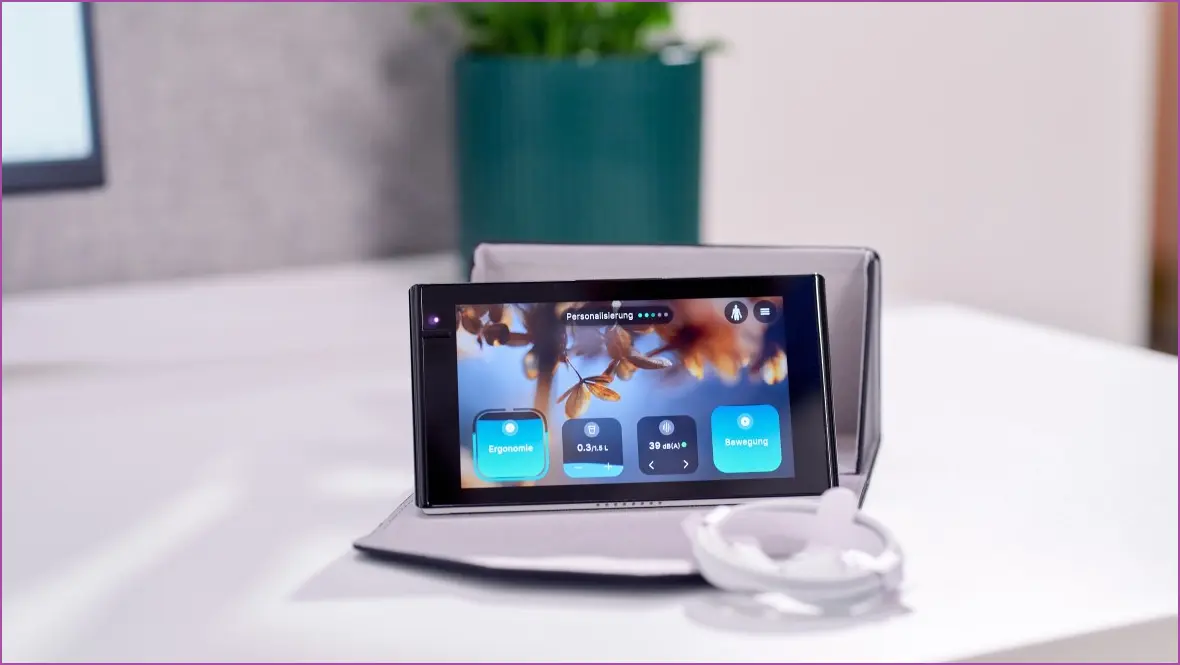
I discovered Isa, a desk device from the German startup Deep Care that takes an innovative approach. It monitors various health metrics, including posture, hydration, light, sound, and movement, all without using a camera or an internet connection, which is a significant advantage in today’s privacy-conscious environment.
Understanding Isa’s Functionality
Isa features a 5.5-inch IPS HD screen, resembling a tabletop clock, and operates via USB-C, allowing compatibility with virtually any existing charger. Central to its functionality is a Time-of-Flight (ToF) 3D depth sensor that tracks posture and movement. This sensor also counts hydration instances, functioning effectively within a range of 0.15 to 1.8 meters, thus monitoring your movement even when you stand up. Additionally, it is equipped with other sensors including a gyroscope, barometer, and light and temperature sensors.
Setup and Features
Setting up Isa is simple; users enter a few personal and routine details. However, it’s worth noting that it currently supports only EU and US time zones, which may limit its accessibility. The display includes a posture indicator that changes color based on your sitting position and a widget tracking hydration. If you slouch, the device vibrates as a gentle reminder to correct your posture.
Tracking Movement and Privacy Considerations
Isa also tracks your movement, prompting you to get up if you’ve been stationary for too long, supplemented with guided exercises. While the lack of a camera enhances privacy, there are trade-offs. For instance, if an object obstructs the sensor, it may misinterpret this as your absence. This sensor-based approach can occasionally result in inaccurate readings, but the device has generally encouraged me to pay more attention to my posture, offering valuable exercise suggestions.
Pricing and Future Prospects
Isa is priced at €299 ($354) and offers two subscription tiers. The basic plan (€4.99/month) includes posture and hydration tracking, while the Pro plan (€7.99/month) adds environmental monitoring features. Deep Care has plans to utilize Isa’s sensors for mental health tracking, including developing a stress-related score based on various physical and environmental metrics.
When you purchase through links in our articles, we may earn a small commission. This doesn’t affect our editorial independence.
