


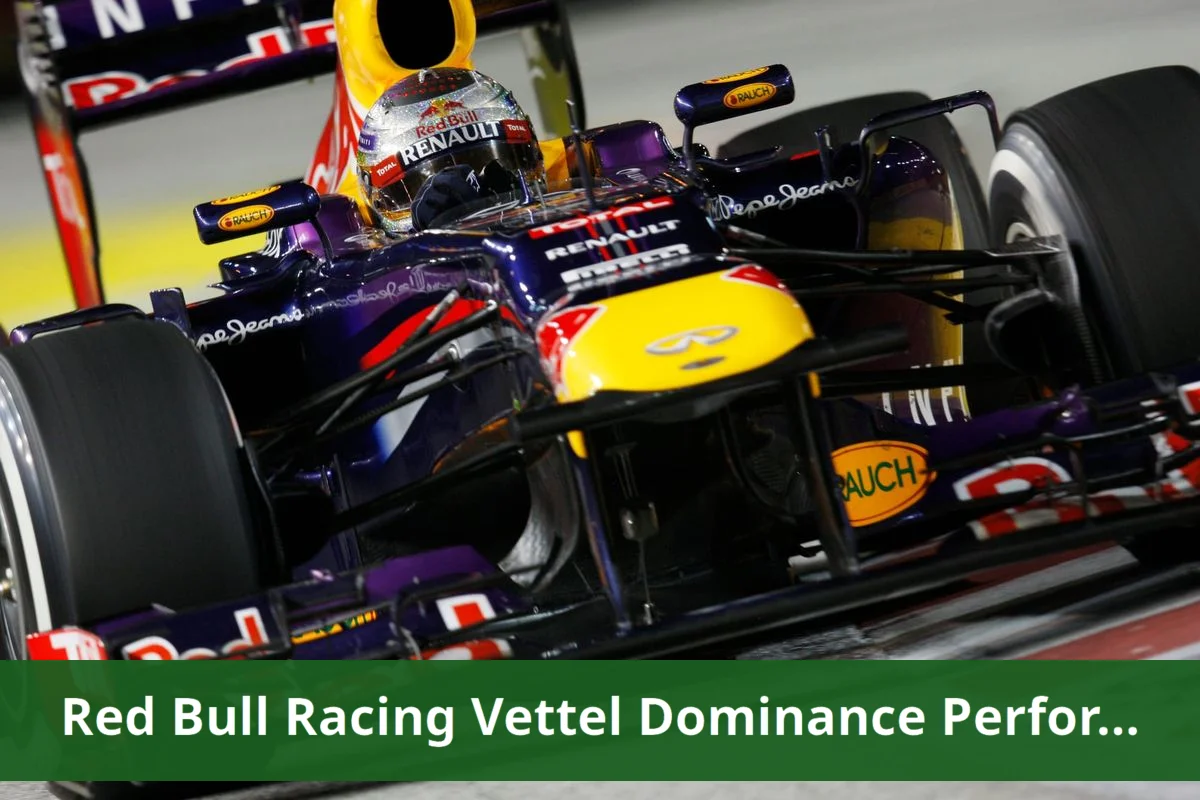
Four-time world champion Sebastian Vettel’s Formula 1 career has been marked by periods of dominance and struggles, according to The Race. The analysis highlights his unique driving skills and emotional management, shaping his legacy in the sport over the years.
What happened
Experts Edd Straw and Mark Hughes discuss Vettel’s fluctuating performance in the latest episode of the podcast “Driving Style Secrets.” They highlight how Vettel transformed from a dominant force with Red Bull Racing to experiencing challenges later in his career. “He was able to drive that particular type of car, which required a very unusual driving technique to really fully exploit,” Hughes stated.[1]
During Vettel’s prime, he took four consecutive F1 titles with Red Bull, leveraging the team’s aerodynamic advantages. “Very counterintuitive, in slow corners in particular, as the car’s beginning to oversteer, you need to stand on the gas,” Hughes explained. This technique allowed Vettel to excel in situations where others struggled, particularly during the blown diffuser era.[2]
However, as time progressed, challenges arose. His emotional reactions during high-stress moments eventually affected his performance, particularly with Ferrari. “He was quite an emotional driver…there are a few high-stress moments where he let himself down,” Straw noted, identifying key incidents that marked his Ferrari tenure.[3]
Why it matters
The significance of Vettel’s career spans beyond his title wins. It encompasses a narrative of talent and emotional complexity that shaped his trajectory and decision-making on the track. Understanding this duality offers insight into both his prowess and vulnerabilities, illustrating the high-pressure nature of Formula 1.
Vettel’s ability to manage his performance waned over time, affecting his relationship with teams and impacting his race results. Such dynamics underscore the challenges faced by even elite drivers when internal and external pressures mount in professional racing.
Background
On May 27, 2016, Vettel faced a turning point in his career with Ferrari after a promising early stint with Red Bull. As he contended with rising teammate Charles Leclerc, gaps in performance began to show. The 2017 season was marked by a series of costly mistakes that deepened concerns about his adaptability.
The fallout from a pivotal crash at Hockenheim during the same season exemplified his struggles, further complicating his standing within the team. “The errors seemed to feed upon themselves,” Hughes remarked, illustrating how pressures from both performance issues and team dynamics affected him.
What’s next
The final episode of “Driving Style Secrets,” focusing on 2016 world champion Nico Rosberg, will be released soon. Subscribers to The Race Members’ Club can access this exclusive content, as well as submit questions for the upcoming post-race podcast at the Monaco Grand Prix on May 28, 2026.
