


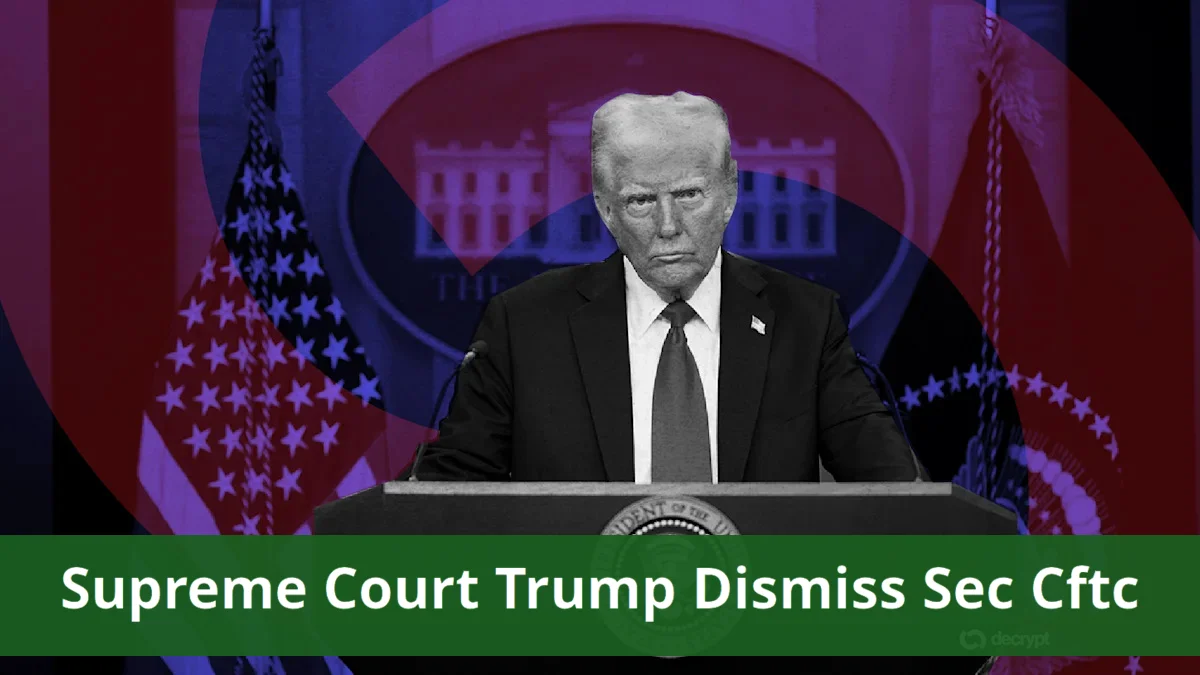
The U.S. Supreme Court overturned a landmark ruling allowing presidents to fire federal agency commissioners at will, according to Decrypt. The decision, announced on May 27, 2026, grants President Donald Trump expanded authority over regulatory bodies, including the SEC and CFTC, at a critical time for crypto regulation.
What happened
The U.S. Supreme Court ruled in a 6-3 decision that President Donald Trump can now terminate federal agency commissioners without restrictions, according to Decrypt. This decision particularly affects Rebecca Slaughter, a Democratic FTC commissioner, clarifying that Trump may also fire other agency commissioners at will, except for Federal Reserve governors.
This ruling overturns nearly a century of precedent established during Franklin Delano Roosevelt’s presidency, which limited presidential power to dismiss agency leaders only under extreme circumstances. Trump described the ruling as “the greatest increase in presidential power in the last 100 years,” emphasizing its significance at this time.
As a result of this ruling, Trump can dismiss commissioners from key regulatory agencies like the SEC and CFTC without justification. This newfound authority enhances executive control over agencies that were historically considered independent, raising concerns about potential impacts on regulations, especially in the crypto sector.
Why it matters
This Supreme Court decision represents a pivotal shift in the balance of power between the presidency and regulatory bodies. Critics fear that it threatens the independence of agencies responsible for monitoring financial markets, including crypto. The ruling may affect how these agencies operate and enforce regulations crucial for maintaining market integrity.
Background
On May 20, 2026, the court heard arguments regarding the limitations on presidential authority to remove regulatory commissioners. The case gained notoriety because Slaughter’s involvement has ties to the crypto industry; her husband is a VP at Paradigm, a venture firm. This connection aided in funding her legal battle all the way to the Supreme Court.
The issue of regulatory independence became particularly relevant in the context of the Clarity Act, a proposed bill that would legalize most crypto activities in the U.S. Senate Democrats indicated they would not support the legislation unless Trump committed to appointing Democratic commissioners to the SEC and CFTC.
What’s next
The Clarity Act faces a critical deadline, as its supporters believe it must pass by early August 2026 to have a chance of becoming law amidst the upcoming midterm elections. GOP Senate leadership has signaled intentions to force a vote on the bill in June, regardless of Democratic support.
