


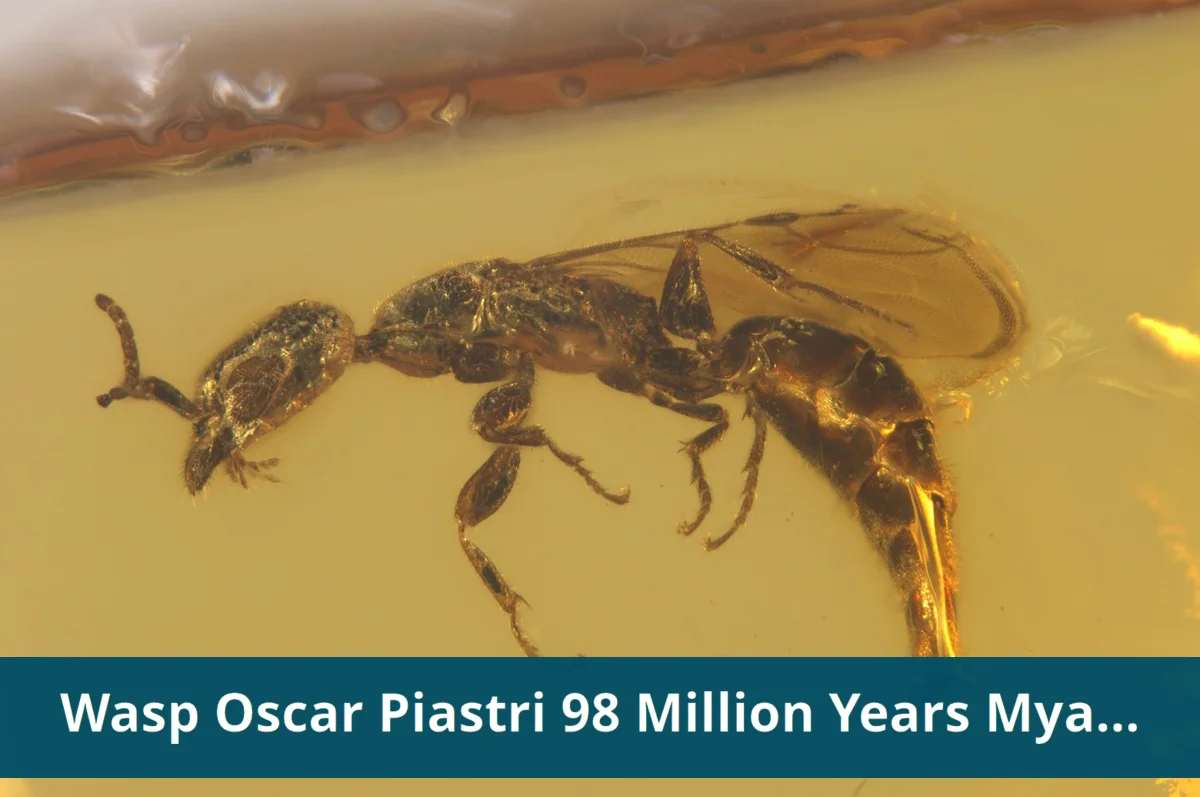
Corentin Jouault discovered a 98-million-year-old wasp and named it after McLaren driver Oscar Piastri, according to Motorsport.com. The fossil was found in amber in Myanmar. Jouault, an Oxford research fellow, described the wasp in a recent scientific publication.
What happened
Corentin Jouault, alongside colleagues Professor Di-Ying Huang and Professor Celso O. Azevedo, identified the new wasp species as a part of the Lancepyrinae genus called Gwesped piastrii. This naming came after Jouault had jokingly pledged to honor Piastri while discussing Formula 1 among colleagues. He stated, “I have been cheering for him since his rookie season. I admire both his driving and his calm, professional attitude.”
The fossil represents a remarkable find dating back to the Cretaceous Period. Jouault, who specializes in wasps, described the process of discovering this rare specimen in China, noting, “We carried out a detailed taxonomic study… The more we studied it, the clearer it became that this specimen belonged to a completely extinct lineage dating back to the age of dinosaurs.” The paper detailing this discovery was published in the June issue of Palaeoworld.
Why it matters
The naming of a new species reflects both an academic achievement and highlights the intersection of science and popular culture. This unique tribute to an active Formula 1 driver has drawn significant attention from both the scientific community and motorsport fans alike, fostering curiosity about paleontology.
Background
On May 20, 2026, Jouault discussed naming a species in honor of Oscar Piastri during conversations with colleagues. Shortly thereafter, he discovered the wasp fossil while researching in China. The find symbolizes the blend of scientific pursuit and personal passion.
What’s next
Jouault’s ongoing research may yield more discoveries, but he expressed uncertainty about naming future species after F1 drivers. His recent fame has created interest in his findings and the potential for further species to be uncovered in his field.
