


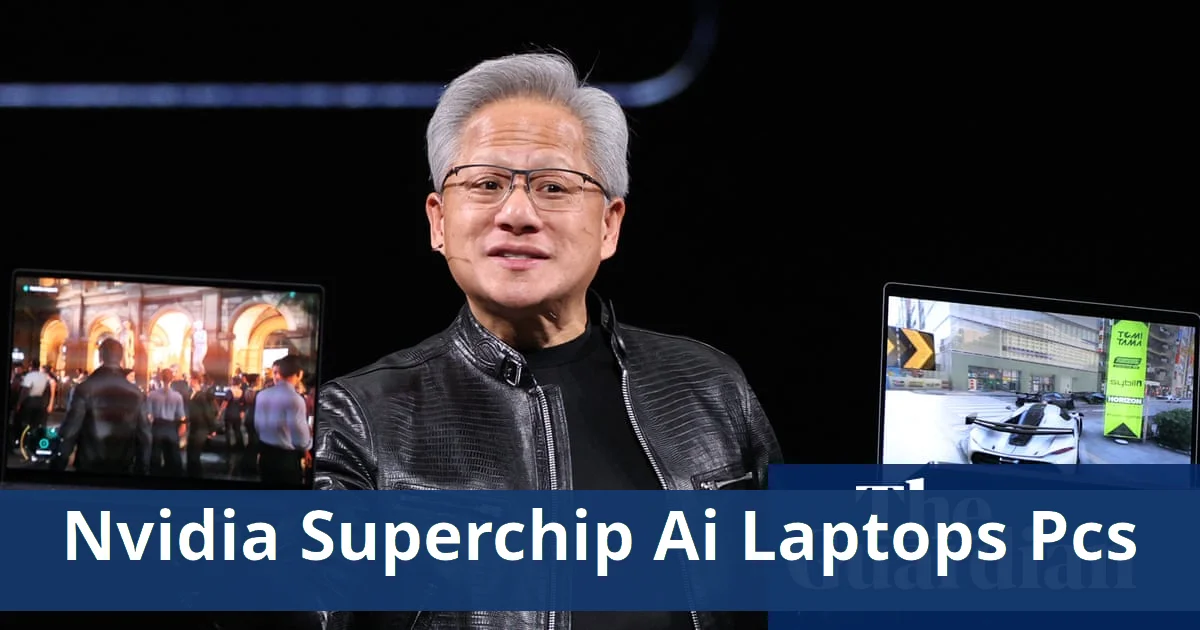
Nvidia has launched a new “superchip” that integrates AI capabilities into personal computers, according to the Guardian. This innovation, revealed during the Computex conference in Taiwan, aims to revolutionize user interaction by potentially replacing traditional mouse and keyboard controls.
What happened
Nvidia introduced the RTX Spark chip, designed to bring advanced AI functionalities to laptops and desktop computers. This move directly challenges established players such as Intel, Apple, Qualcomm, and AMD. Jensen Huang, Nvidia’s chief executive, stated, “This chip will reinvent the PC for the AI era,” following three years of collaborative development with Microsoft.
The chip combines a microprocessor and a graphics processing unit, developed in partnership with Taiwan’s MediaTek. It allows AI agents to operate independently of cloud computing, making PCs more autonomous in navigation and operational tasks. Huang emphasized that the powerful design ensures that computers remain thin and lightweight.
“The RTX Spark looks to transform the traditional app-centric PC to a real useful agentic AI personal computer,” said Neil Shah, co-founder of Counterpoint Research.
Why it matters
Nvidia’s latest product represents a significant pivot towards integrating AI into everyday computing devices. The company intends to extend its dominance in the booming AI semiconductor market beyond graphics cards and data centers. Analysts see this as a long-term growth strategy rather than an immediate revenue boost. Investors must weigh this against the ongoing global demand for data center computing power.
Background
On May 20, 2026, Nvidia unveiled its potential plans for the RTX Spark at Computex, noting a need for extensive collaboration with major software providers to optimize functionality. This development comes as Intel and AMD prepare to release their own AI-focused chips later this year, intensifying competition in the sector.
What’s next
Nvidia plans to launch the RTX Spark chip within this year, and it will be utilized by major computer manufacturers like Dell, Lenovo, Asus, and HP. Specific timelines for market release and integration into existing product lines have yet to be disclosed.
