


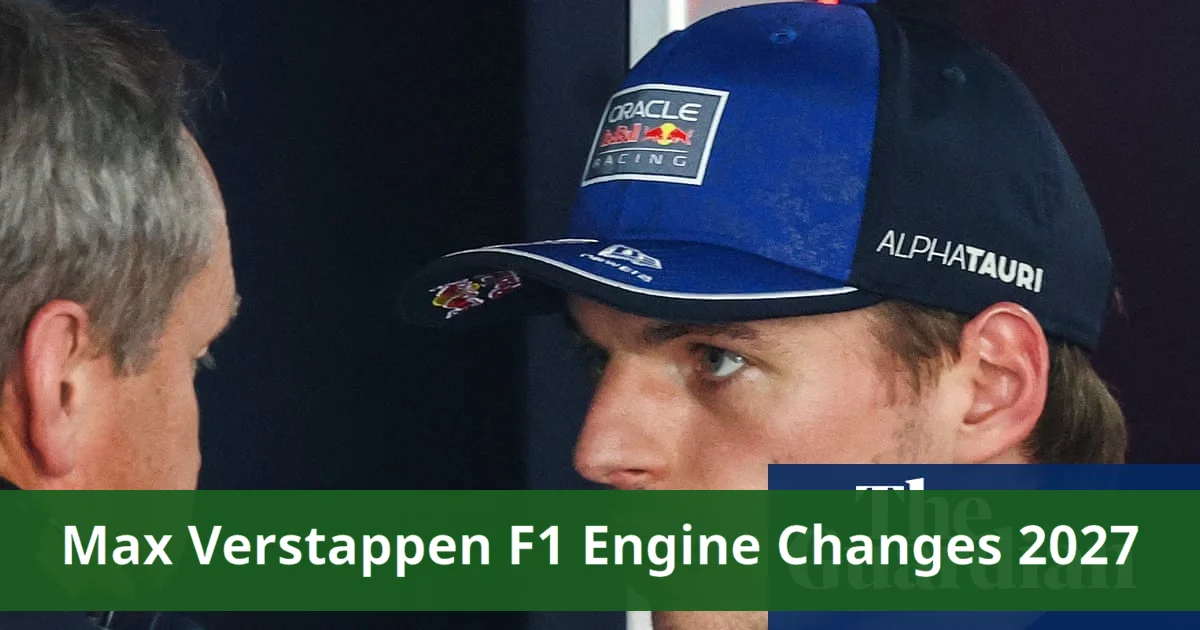
Key players in Formula One have reached an agreement on engine changes for the 2027 and 2028 seasons, according to Formula One 2026. The move addresses driver dissatisfaction, particularly from champion Max Verstappen, who has threatened to leave the sport over current rules.
What happened
The Formula One stakeholders have come to a resolution concerning engine modifications aimed at enhancing driver satisfaction for the upcoming seasons. Max Verstappen, a vocal critic of the existing regulations, described them as “anti-racing.” His discontent has been shared by other drivers, prompting the FIA and team representatives to engage in discussions regarding proposed changes.[1]
The engine resolve will alter the power delivery split to 58-42 in favor of the internal combustion engine (ICE) in 2027, with an incremental increase in fuel flow. A significant boost in the ICE’s output from 400 kW to 420 kW is also anticipated. Notably, the more substantial shift to a 60-40 split will not materialize until 2028, with a further increase in maximum ICE output to 450 kW.[2]
“How this will be greeted remains to be seen,” Verstappen stated, acknowledging that the new changes do not entirely meet his expectations.
Why it matters
This resolution aims to address the growing frustration among drivers regarding the current energy management required during races. The existing engine split led to situations where drivers prioritized energy conservation over competitive racing, affecting the spectacle of the sport. This has raised concerns not only among drivers but also in terms of safety on the track due to varying closing speeds.[3]
The new framework is designed to strike a balance between improved performance and minimal hardware alterations, accommodating manufacturers like Audi, which have invested heavily in existing technologies. The incremental approach is expected to ease concerns while facilitating adaptations necessary for teams.
Background
On May 20, 2026, a preliminary proposal was made to adjust the power split to 60-40 in favor of the combustion engine. However, due to objections from car manufacturers, including Audi and Ferrari, a formal agreement was delayed. These discussions have persistently focused on both driver needs and technical feasibilities.
Additionally, ongoing negotiations have attempted to alleviate the pressure from manufacturers regarding costly modifications to power units. The compromise reached aims to introduce changes steadily, allowing teams to adapt without incurring severe expenses.
What’s next
The changes must be finalized by the end of June to be implemented for the next season. The FIA has committed to expediting the approval process, with the world motorsport council set to review the proposals during its next meeting in Macau on June 23.
