


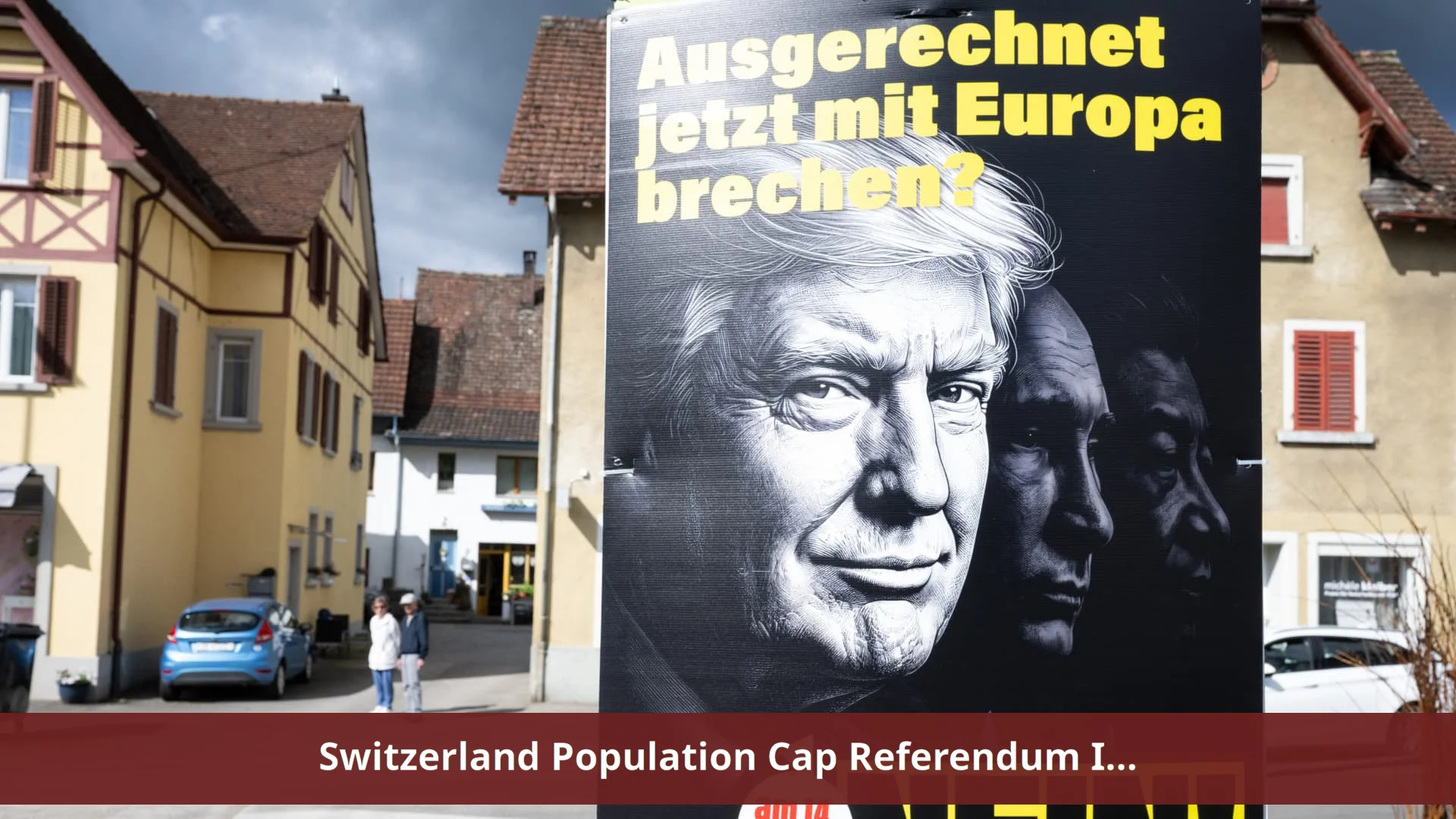
Switzerland plans to vote on a population cap and related immigration measures, according to CNBC. The referendum, scheduled for June 1, 2026, follows a decade where the country’s population increased by 10%, now exceeding 9.1 million, with notable demographic shifts.
What happened
On June 1, 2026, Swiss voters will decide whether to restrict immigration to manage population growth. “Switzerland’s right-wing SVP party is urging voters to ‘send a clear signal’ to curb what it calls ‘overwhelming’ population growth,” a recent statement highlighted. [1]
If approved, the plan would enforce stricter immigration measures should the population surpass 9.5 million over the next 24 years. This includes potential cuts to asylum and family reunification programs. “Switzerland’s freedom of movement initiative with the European Union would also potentially end, should the population rise above the 10-million threshold,” according to the report.[2]
Why it matters
The outcome of the referendum carries significant implications for both Switzerland’s economy and its social fabric. With 41% of the population having a “migration background,” any immigration cap could disrupt the labor market and economic stability. Furthermore, key sectors such as pharmaceuticals and technology rely heavily on skilled foreign workers.[3]
Background
Switzerland has historically embraced immigration, with its population exceeding nine million for the first time in 2025. This growth has shifted the demographic landscape, resulting in more citizens over age 65 than those under 20. Leading up to this vote, public sentiment has been split, with a recent poll showing that 52% oppose the proposed cap.
What’s next
As voters head to the polls on June 1, 2026, the implications of their decision regarding the population cap will shape Switzerland’s immigration policy for years to come. A manageable population growth plan could lead to legislative changes in immigration systems and international agreements.
