


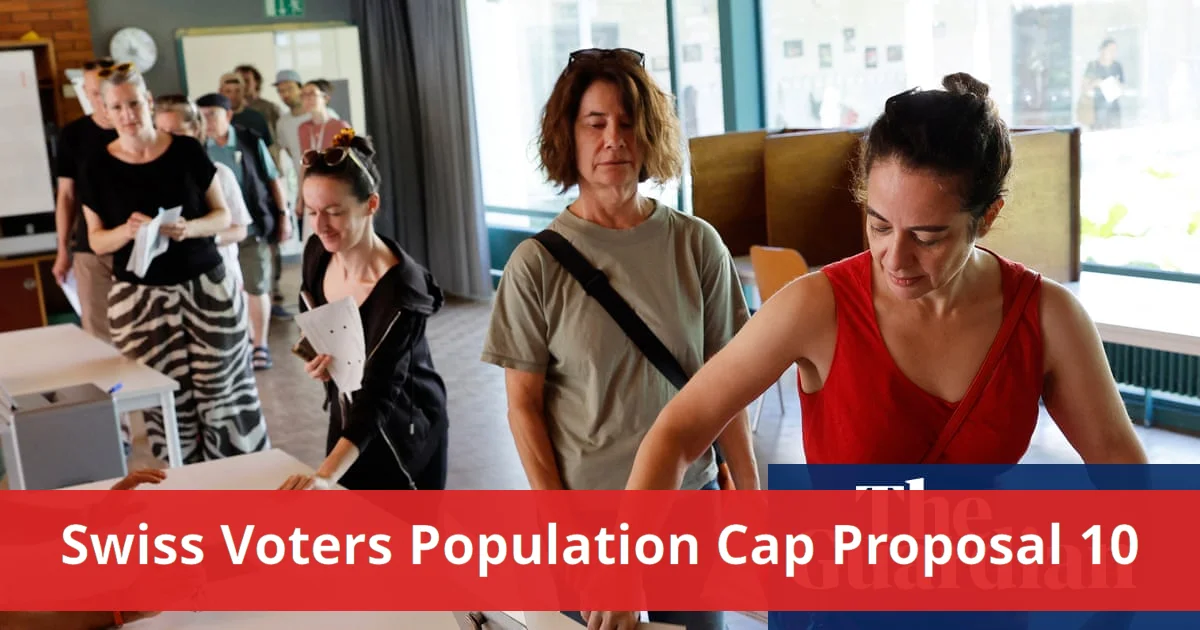
Swiss voters rejected a far-right proposal to cap the nation’s population at 10 million in a highly contentious referendum, according to The Guardian.
What happened
On May 27, 2026, roughly 54.79% of Swiss voters opposed the proposal from the Swiss People’s Party (SVP), while 45.21% supported it. Voter turnout was reported at 58.86%. Had the initiative passed, it would have mandated limiting the current population of 9.1 million to 10 million by 2050, triggering stringent residency restrictions if numbers exceeded 9.5 million.[1]
The proposed cap also stipulated that exceeding the population threshold would compel Switzerland to withdraw from its free movement agreement with the EU, thereby losing access to the single market. The SVP claimed the initiative was vital for addressing pressures on infrastructure, housing, and resources due to rising population numbers.[2]
“Voters were worried about negative consequences for Switzerland’s relationship with the EU and for the labour market,” said Urs Bieri from the polling firm GFS Bern.
Why it matters
This referendum’s outcome is significant for Switzerland’s socio-economic landscape. The SVP has long stoked anti-immigrant sentiment, particularly regarding EU workers, and a cap could have fundamentally altered the nation’s demographic makeup and economic stability. Many feared the proposal would harm relationships with the European Union and disrupt the flow of foreign labor crucial for various sectors.[3]
Background
On June 13, 2026, before the referendum, polling indicated a narrowly divided electorate, reflecting ongoing national debates surrounding immigration and population growth. The SVP previously utilized referendums to push anti-immigration policies, leveraging Switzerland’s system of direct democracy, which facilitates popular initiatives with sufficient public support.
