


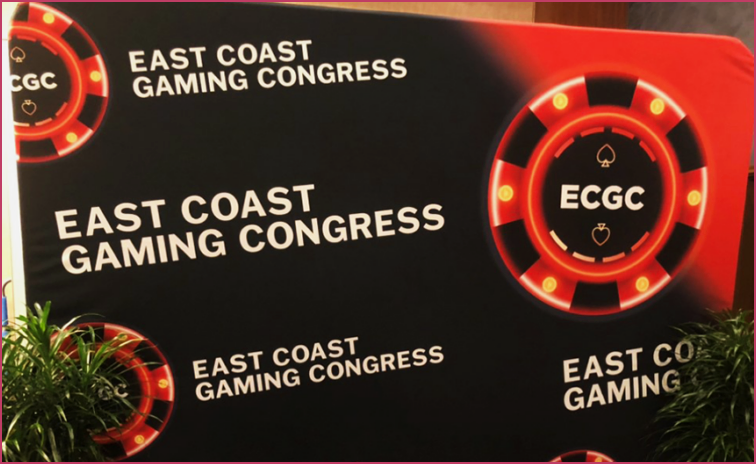
At the East Coast Gaming Congress last week in Atlantic City, industry experts rallied against prediction markets.
The 29th East Coast Gaming Congress (ECGC) brought together two governors, top state regulators, and key gaming executives at the Hard Rock Atlantic City on April 14-15 to examine the eastern casino market’s challenges and opportunities.
This longest-running gaming conference in the U.S. delved into various pressing issues, including how new downstate New York casinos will impact Atlantic City, the future of Atlantic City’s appeal, U.S. iGaming status, the rise of artificial intelligence, and featured talks by current New Jersey Governor Mikie Sherrill and former Governor Chris Christie.
During the main keynote luncheon, ECGC recognized the Association of Gaming Equipment Manufacturers with its first-ever Lifetime Achievement Award, which was accepted by AGEM President and CEO Daron Dorsey.
The conference theme, “Gaming in Transition,” underscored the evolving dynamics of the eastern gaming sector, facing heightened competition from not just regulated casinos in New York but also unregulated forms of gaming like sweepstakes and prediction markets.
The Primary Threat
Among the various challenges, prediction markets emerged as a principal concern during the conference discussions. Multiple panelists characterized them as an “existential threat” to the casino industry, especially as they were described as illegal sportsbooks by many attendees. As regulation of prediction markets falls under the Commodity Futures Trading Commission (CFTC), these markets initially dealt with commodities but have recently expanded to include bets on political outcomes and sports events, often with controversial and suspicious gains.
The debate featured prominent panelists, including Mike Dreitzer of the Nevada Gaming Control Board, who argued against the concept of prediction markets. Opposing him, Alex Kane from Sporttrade advocated for the legality of what he called “peer-to-peer” trades in a marketplace model. Dreitzer firmly rebutted this, asserting that any form of wagering on uncertain sports outcomes constitutes gambling, which must adhere to strict regulations.
Lack of Regulation in Prediction Markets
Schippers from Penn Entertainment lamented that prediction markets operate without regulations, creating unfair competition. The absence of taxation and responsible gaming safeguards was highlighted as problematic, especially given that many states have deemed prediction markets illegal. As prediction markets proliferate, there are concerns that they could evolve into patterns akin to slot machines, potentially intensifying the threat to regulated casinos.
