


Munir’s Diplomatic Role in Iran
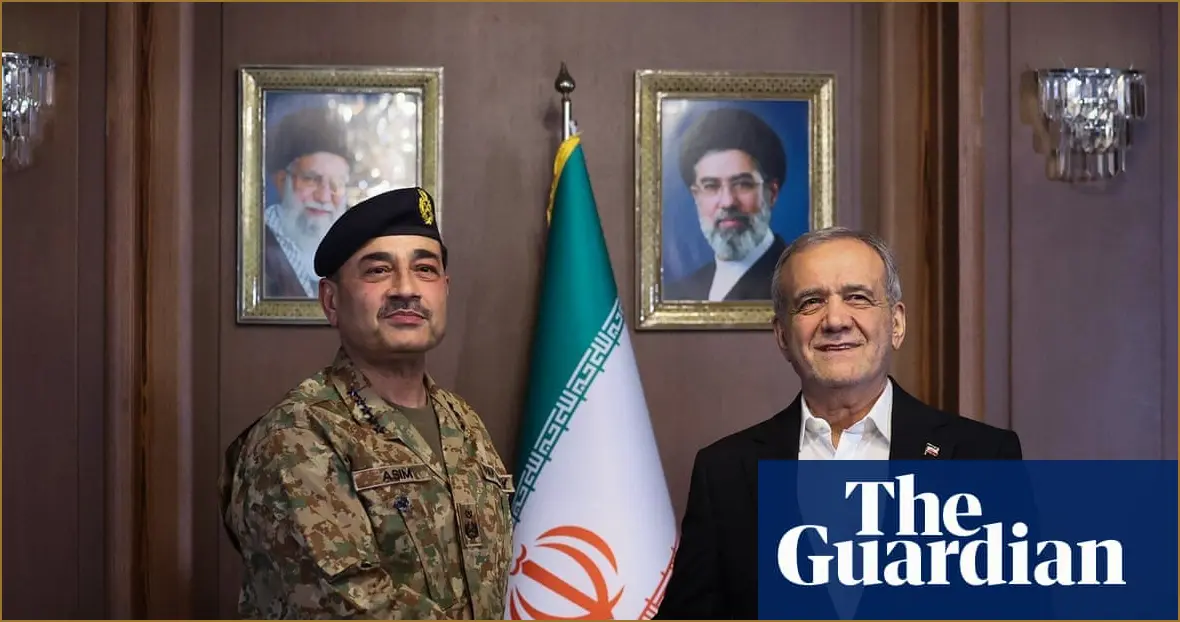
Upon landing in Tehran on Wednesday evening, Field Marshal Asim Munir was greeted warmly by Iran’s foreign minister and chief negotiator, Abbas Araghchi. Clad in full military uniform, the influential leader of Pakistan’s armed forces stepped outside the typical military persona to engage in diplomacy, a role he fully embraced.
Efforts to Mediate US-Iran Conflict
Munir’s visit to Tehran was perceived as a critical last-ditch effort to revitalize Pakistan’s mediation ambitions aimed at resolving the ongoing conflict between the US and Iran. Just four days prior, US Vice President JD Vance left Islamabad after lengthy discussions ended without a conclusive agreement.
US Reactions and New Proposals
In the wake of President Trump’s swift response, which included imposing a naval blockade on the Strait of Hormuz, Munir’s mediation efforts were praised as “fantastic.” Munir arrived in Tehran with a fresh proposal from Washington for a new round of negotiations in Islamabad scheduled for the following week.
Pakistan as an Unexpected Mediator
Pakistan has positioned itself as an unexpected diplomatic intermediary between Iran and the US, with Munir viewed as a key figure in this process. His ability to communicate directly with leaders from both nations has made him a highly trusted facilitator. Key negotiations are being orchestrated from Rawalpindi, the military headquarters, rather than Islamabad, the political hub.
International Relations Expertise
“Field Marshal Munir is the driving force—without him, this would not work,” observed Maleeha Lodhi, a former ambassador. This sentiment underscores the significant confidence Iran and the US have in Munir’s abilities, highlighting the military’s dominant influence over diplomatic initiatives in Pakistan.
Strategies and Outcomes
Munir’s impactful phone calls were pivotal in securing a last-minute ceasefire amidst escalating tensions, especially during Trump’s threats toward Iran. As a result, when US and Iranian delegations convened in Islamabad, Munir served as an essential third party.
Future Implications for Pakistan
As analysts point out, much is at stake with the success of these negotiations, not only for Munir personally but also for Pakistan’s reputation as a diplomatic player. The military and government are under pressure to guide these talks to a successful conclusion to prevent further economic repercussions. If the situation stabilizes, Munir could solidify Pakistan’s role as a strategic peacekeeper in the Middle East, enhancing his influence in future diplomatic frameworks.
