



Getty Images
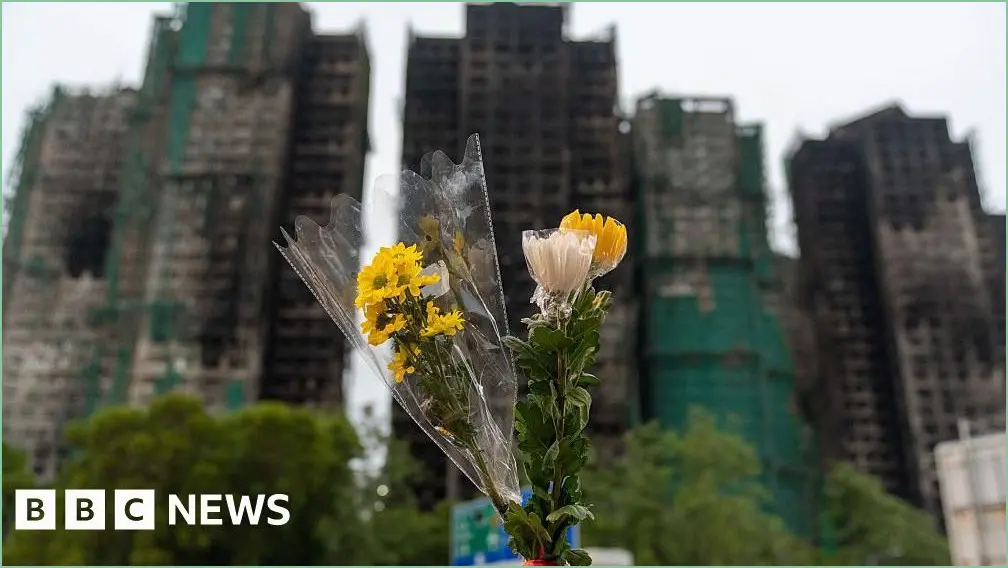
After a catastrophic fire, Miles Kwan, a university student, started a petition seeking accountability from Hong Kong officials but was arrested for sedition.
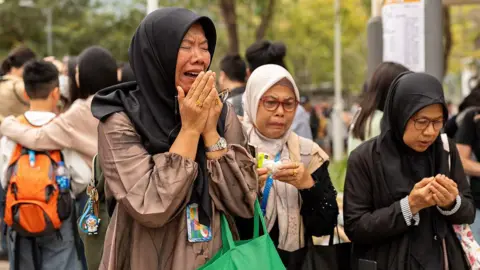
The devastating fire in the densely populated Tai Po area resulted in at least 159 fatalities and displaced many, marking a significant challenge for the city reminiscent of the protests in 2019 over escalating Chinese control.
The pro-Beijing government expressed concerns that public outrage could reignite large-scale protests, repeatedly cautioning against using the fire as a means to threaten national security.
Kwan’s detainment was part of a broader crackdown under the contentious national security law affecting others who demanded government accountability.
For some observers, this reaction raises questions; for others, it follows a familiar script from Beijing.
‘A Human Response to Tragedy’
Once known for its vibrant civic activism, Hong Kong’s response to the fire underscores its increasing alignment with mainland China, where criticisms of the government are swiftly silenced.
Ronny Tong, a member of the Executive Council, rejected claims that residents face suppression, asserting that the government is acting cautiously.
Regina Ip echoed this sentiment, mentioning that authorities are being vigilant to prevent a repeat of the unrest seen in 2019.
Critics argue that the sweeping national security legislation essentially curtails dissent, despite government claims of its necessity for maintaining order.
Kwan’s petition gathered over 10,000 signatures within a day before being removed, mirroring the activist slogan from the 2019 protests.
Getty Images
Following the fire, China’s national security office quickly issued warnings against anyone attempting to incite “black terror,” a term previously used to describe the 2019 protests.
In a stern statement, it threatened action against “hostile foreign entities,” emphasizing its commitment to maintaining order.
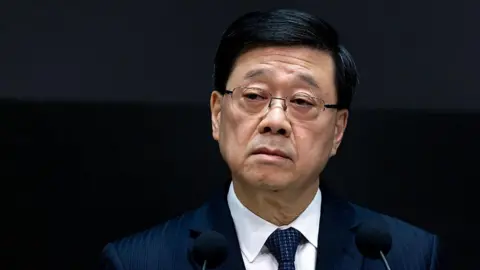
Chief Executive John Lee pledged justice against those who might impede relief efforts, reinforcing the government’s stance.
Former district councillor Kenneth Cheung, one of those arrested under the national security law, stated that authorities took issue with his social media posts after the fire.
Many citizens are questioning how the fire spread so rapidly and whether government officials bear any responsibility.
Getty Images
When questioned earlier this week about his job security following the fire, John Lee avoided the topic and focused on his commitment to holding accountable anyone obstructing relief efforts.
As of now, no government officials have resigned or been implicated in the fire; the 15 arrests made for manslaughter included employees of construction companies and contractors.
Additionally, one woman was arrested for attempting to exploit the situation through a fraudulent fundraising effort.
Some residents have expressed discontent about the scheduling of a Legislative Council election amidst the mourning, criticizing the government’s focus on politics over the tragedy.
“I believe it shows a lack of respect,” said resident Trent Huang regarding the electoral proceedings during this sensitive time.
