


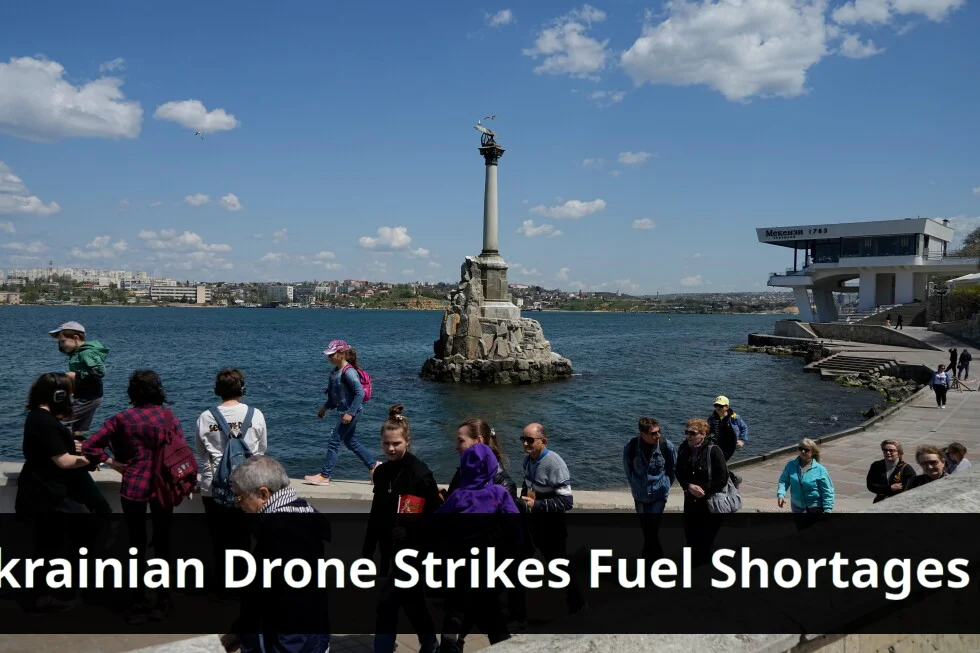
Ukraine has launched a series of drone strikes that have caused significant fuel shortages in Crimea, according to AP News. The attacks targeted refineries, depots, and pipelines, leading to long lines at gas stations on the peninsula as residents scramble for fuel.
What happened
In a dramatic escalation, Ukrainian forces have focused on disrupting Russia’s fuel supplies to Crimea, triggering the worst fuel crisis on the peninsula since its annexation by Moscow in 2014. The relentless attacks, which included strikes on fuel tanks and delivery trucks, have caught Russian authorities off guard. A Kremlin-sponsored acknowledgment of the crisis underscored its severity.[1]
The gas shortages are threatening to cause further disruptions to the tourism-dependent region, where beaches and resorts flourish.
As of late May, residents faced significant restrictions, with authorities limiting gasoline sales to 20 liters per week using prepaid coupons. Reports indicate that long lines formed as motorist rushed to secure fuel supplies, while social media buzzed with requests for information on fuel availability.
Why it matters
The fuel crisis not only disrupts daily life in Crimea but also poses a challenge to the Russian military’s operations. With escalating attacks on logistical supply lines, Ukraine demonstrates its ability to weaken Russia’s control over the region, challenging the narrative of its invulnerability. The crisis coincides with the onset of summer tourism, critical for Crimea’s economy, and fears are mounting regarding cancellations and lost revenue.[2]
Background
On March 18, 2014, Russia annexed Crimea following a controversial referendum. Since then, Ukraine has engaged in a series of military actions aimed at countering Russian influence. The situation escalated further following Russia’s full-scale invasion of Ukraine on February 24, 2022, which marked a turning point in the ongoing conflict.
By May 2026, as Ukrainian forces increased their operational tempo, they have targeted critical infrastructure within Crimea and along the routes connecting it to mainland Russia. Recent successful strikes on supply lines have led to heightened vulnerability for Russian logistics, particularly concerning fuel transportation.[3]
What’s next
In response to the current fuel crisis, the Kremlin has promised prompt measures to alleviate the shortages. However, specific strategies or actions have yet to be detailed. Authorities are expected to address supply chain disruptions, especially as the summer tourist season progresses.
