


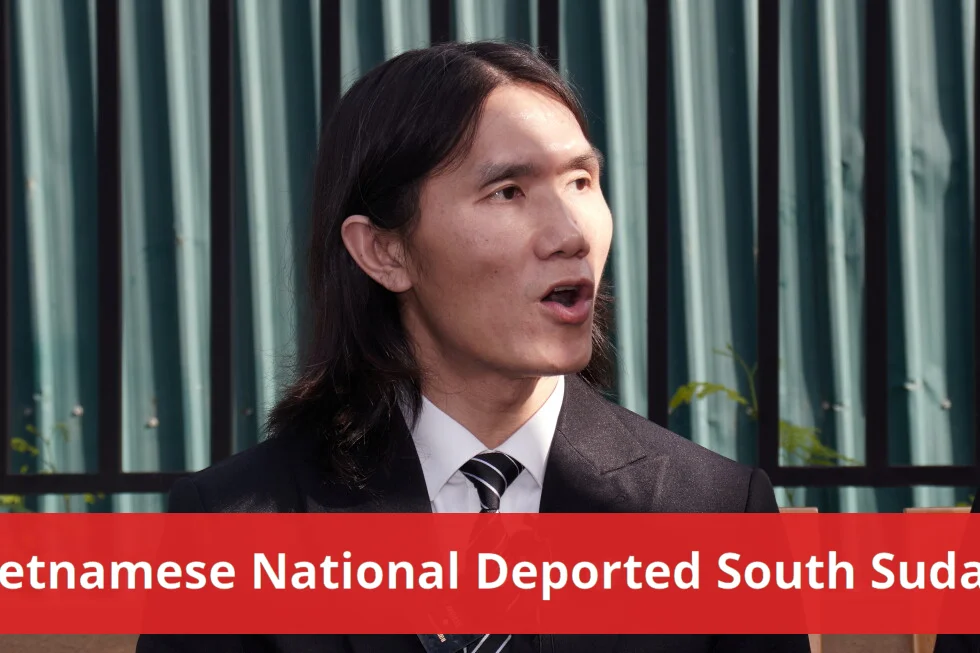
A Vietnamese national deported to South Sudan by the Trump administration returned to Vietnam on Friday after over a year in detention, according to the Associated Press. Tuan Phan, 44, was repatriated following an announcement from South Sudan’s Ministry of Foreign Affairs.
What happened
Tuan Phan was part of a group of eight men deported to South Sudan in May 2025. They were initially rerouted to a U.S. military base in Djibouti due to a federal judge blocking their deportation midflight, citing procedural irregularities. According to South Sudan’s Ministry of Foreign Affairs, Phan was “very disciplined, joyful, and importantly, he remained healthy” during his detention.
The men, all having served prison sentences in the U.S. for various offenses, arrived in Juba, South Sudan, in July 2025. Phan is the second individual from the group to be repatriated, following Jesus Munõz-Gutierrez, who was sent to Mexico in September. The only South Sudanese national in the group was released upon arrival.
Why it matters
This case highlights the complexities and ethical concerns surrounding U.S. deportation policies, particularly the controversial third-country deportation program. South Sudan’s selection as a receiving nation raises specific human rights concerns due to its poor human rights record and ongoing political instability, impacting both the deportees and diplomatic relations.[1]
Background
On May 20, 2025, eight men, including Phan, were initially deported to South Sudan as a result of the U.S. government’s agreements with several African countries to accept non-citizen deportees. These arrangements often involve financial compensation from the U.S. government. The conditions surrounding these deportations, particularly to South Sudan, have drawn scrutiny from human rights advocates.[2]
What’s next
As of now, the remaining men from Phan’s group, including individuals from Cuba, Myanmar, and Laos, continue to await their fate. Ongoing negotiations regarding the treatment of deportees and the conditions of their detention in South Sudan remain highly scrutinized.
