


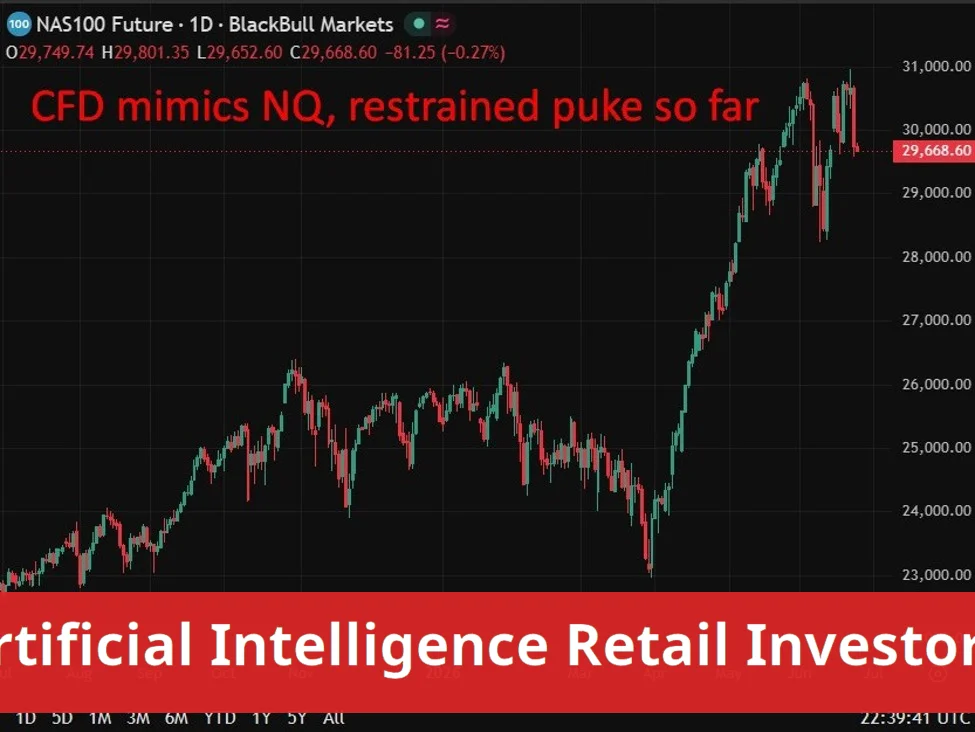
Real money US equity inflows into the artificial intelligence market reached all-time records, according to Barclays equity strategists. This trend comes amid heightened retail interest and a cautious stance from professional investors, raising concerns about market stability in light of recent shifts.
What happened
Retail investors recently poured capital into the artificial intelligence (AI) sector, significantly impacting US equity markets, according to Barclays equity strategists. The shift has led to record inflows concentrated in AI-linked firms within tech and industrial sectors. Barclays noted, “The correlation between tech fund flows and valuations now indicates that end investors have moved from buying dips to chasing upside.”
Despite these inflows, systemic equity positioning remains fragile, with a volume control exposure approximating 60%. Barclays suggested that this situation reflects ongoing inflation risks and a Federal Reserve less inclined to ease policies. “The architecture is not as robust as headline flow numbers might suggest,” they added.
Why it matters
The current investment climate highlights vulnerabilities within the market. When retail demand shifts from a stabilizing force to chasing momentum, the potential for sharp reversals increases. High concentrations of profitable Nasdaq longs may elevate risks, especially if impacted by a downturn. A significant negative catalyst could lead to rapid losses.
Background
On May 27, 2026, reports indicated that US equity inflows had significantly shifted, primarily fueled by interest in the AI value chain. This transition followed around 12 months of dip-buying sentiment among retail investors.
Additionally, global equity positioning began to improve in early June 2026, aided by geopolitical developments, particularly a memorandum of understanding between the US and Iran. This event bolstered risk sentiment, contributing to a growing pulse in small-cap stock exposure.
What’s next
Market watchers will closely observe upcoming Federal Reserve communications and earnings reports from major AI companies as critical indicators. The performance of equity markets may hinge on these developments, potentially shaping investor sentiment in the coming weeks.
