


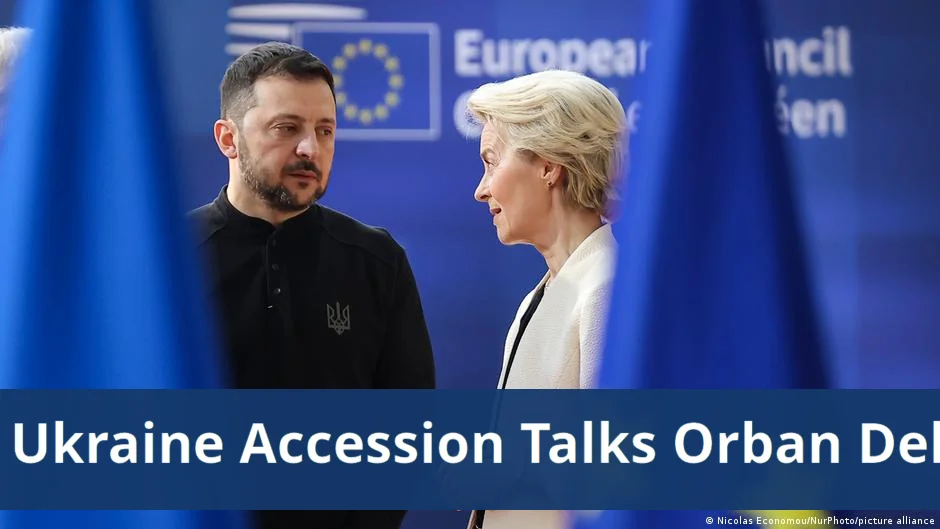
The EU and Ukraine opened formal accession negotiations, according to DW.** On May 27, 2026, the discussions commenced in light of Hungary’s recent approval, marking a significant milestone for Ukraine’s integration into the European Union amidst ongoing conflict with Russia.
What happened
The EU and Ukraine officially launched the first stage of accession negotiations on May 27, 2026. This step aims to facilitate Kyiv’s eventual membership in the 28-nation bloc. European Council President Antonio Costa remarked, “Today, we are taking a historic step towards Ukraine’s future within the EU.” [1]
Previously, the process had been stalled for two years due to Hungary’s former Prime Minister Viktor Orban’s objections. The block was eliminated following an agreement between Ukraine and Hungary’s new Prime Minister Peter Magyar, which addressed the rights of the ethnic Hungarian minority in Ukraine. Magyar stated the deal was essential for lifting Budapest’s veto on Ukraine’s accession talks.[2]
Why it matters
The formal commencement of negotiations signals a new chapter for Ukraine as it seeks close ties with Europe amid the ongoing war with Russia. The outcome of these talks could reshape geopolitical alliances and strengthen Ukraine’s global standing.[3]
Swift progress through negotiations may also impact public sentiment in both Ukraine and the EU, highlighting the benefits of cooperation in addressing issues such as security, trade, and humanitarian aid.
Background
On February 24, 2022, Russia launched a full-scale invasion of Ukraine, escalating discussions around Ukraine’s EU membership. Prior to this conflict, the idea of joining the EU had faced considerable opposition among Ukrainians.
The accession process had stalled until Hungary’s new political landscape allowed for a renewed focus on integration. On May 20, 2026, Magyar indicated readiness to support Ukraine’s EU aspirations conditional on minority rights protections.
What’s next
The next steps in the accession process will involve Ukraine meeting EU criteria across various sectors through a structure of six clusters and a total of 33 chapters. Success hinges on unanimous approval from all 27 EU member states for final accession decisions, which are anticipated to take several years, particularly in light of ongoing military tensions.
