


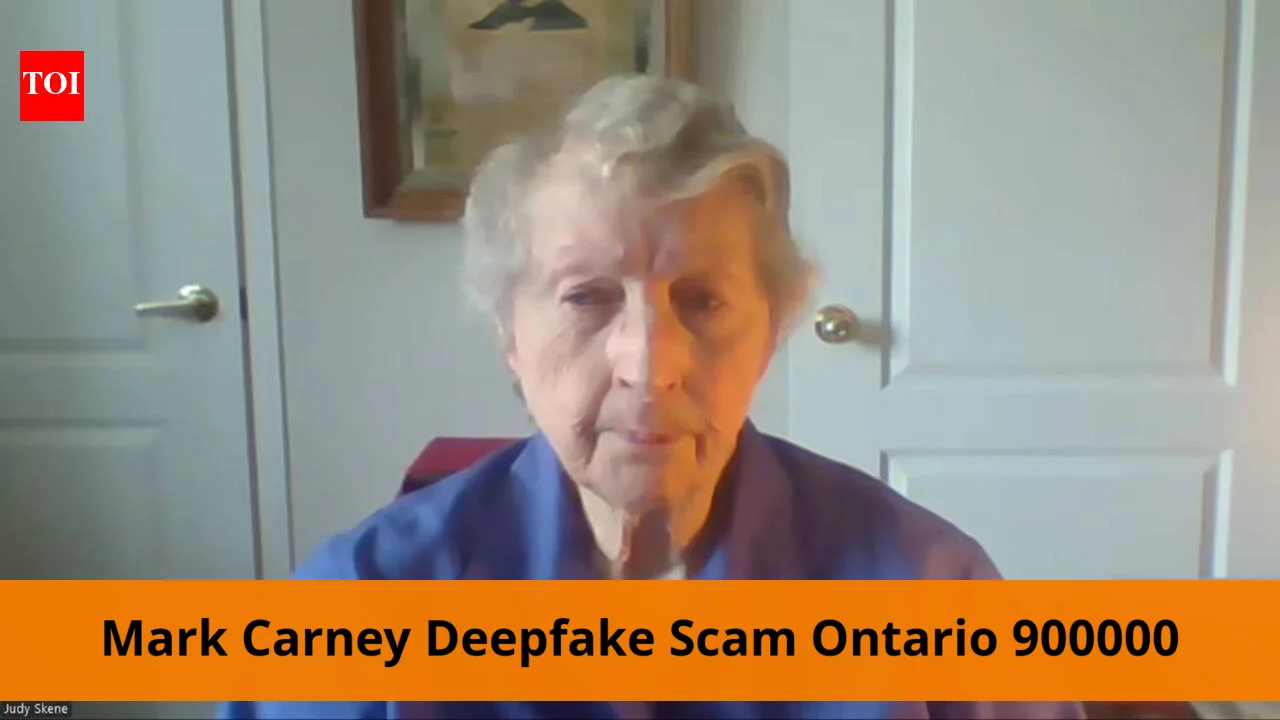
An 86-year-old Ontario woman lost more than $900,000 in a cryptocurrency scam she found on Facebook, according to CTV News. Judy Skene, from Sault Ste. Marie, discovered the scheme in 2025, involving a deepfake video of former Prime Minister Mark Carney.
What happened
Judy Skene first encountered the fraudulent investment scheme while browsing Facebook in 2025. She saw a deepfake video of Mark Carney promoting a crypto investment platform that allegedly promised high returns, claiming legitimacy through backing from the Bank of Canada. “I saw an ad on Facebook of Mark Carney telling me if I invested $350 Canadian, it would be backed by the Bank of Canada,” Skene said.
Initially persuaded, Skene signed up and made an initial payment. Shortly after, a representative informed her that her investment had tripled. Encouraged by these false promises, she continued to invest her entire life savings, even undertaking financially difficult steps such as taking out a $300,000 mortgage on her condominium. “So I agreed to put a mortgage of $300,000 on my condominium,” Skene told CTV News.
Over time, her account on the fraudulent platform displayed rapid growth, claiming her funds had nearly doubled. However, there were no actual investments; once she made her final payment, all communication halted, and her funds vanished. “Once I did the final payment, there was no more conversation and all my money was gone,” said Skene.
Why it matters
The impact of such scams is profound, as evidenced by Skene’s experience. A family friend, Pat Probert, noted that the distress from her financial loss led Skene to consider taking her own life. “Her condo fees were bouncing, the insurance payments on her condo and her car were bouncing,” Probert stated. Probert has called for greater awareness of online fraud, particularly for vulnerable populations like seniors.
Probert emphasized the importance of checking in on isolated seniors. “If you know a senior that’s alone, reach out to them and make sure someone is on a bank account as their emergency contact,” he urged.
Background
On May 20, 2025, Judy Skene first saw the advertisement that would lead to her financial ruin. This trend is part of a larger issue, as fraudulent schemes increasingly utilize artificial intelligence to create convincing deepfake videos featuring public figures, making scams harder to detect. Mohit Rajhans, an AI expert, criticized social media platforms for their role in hosting such misleading ads.
What’s next
Skene is currently working to recover from her devastating loss and has spoken out to warn others about online fraud. Meanwhile, Probert has initiated a GoFundMe campaign to assist her with living expenses, as she had initially planned to donate her money to charity.
