


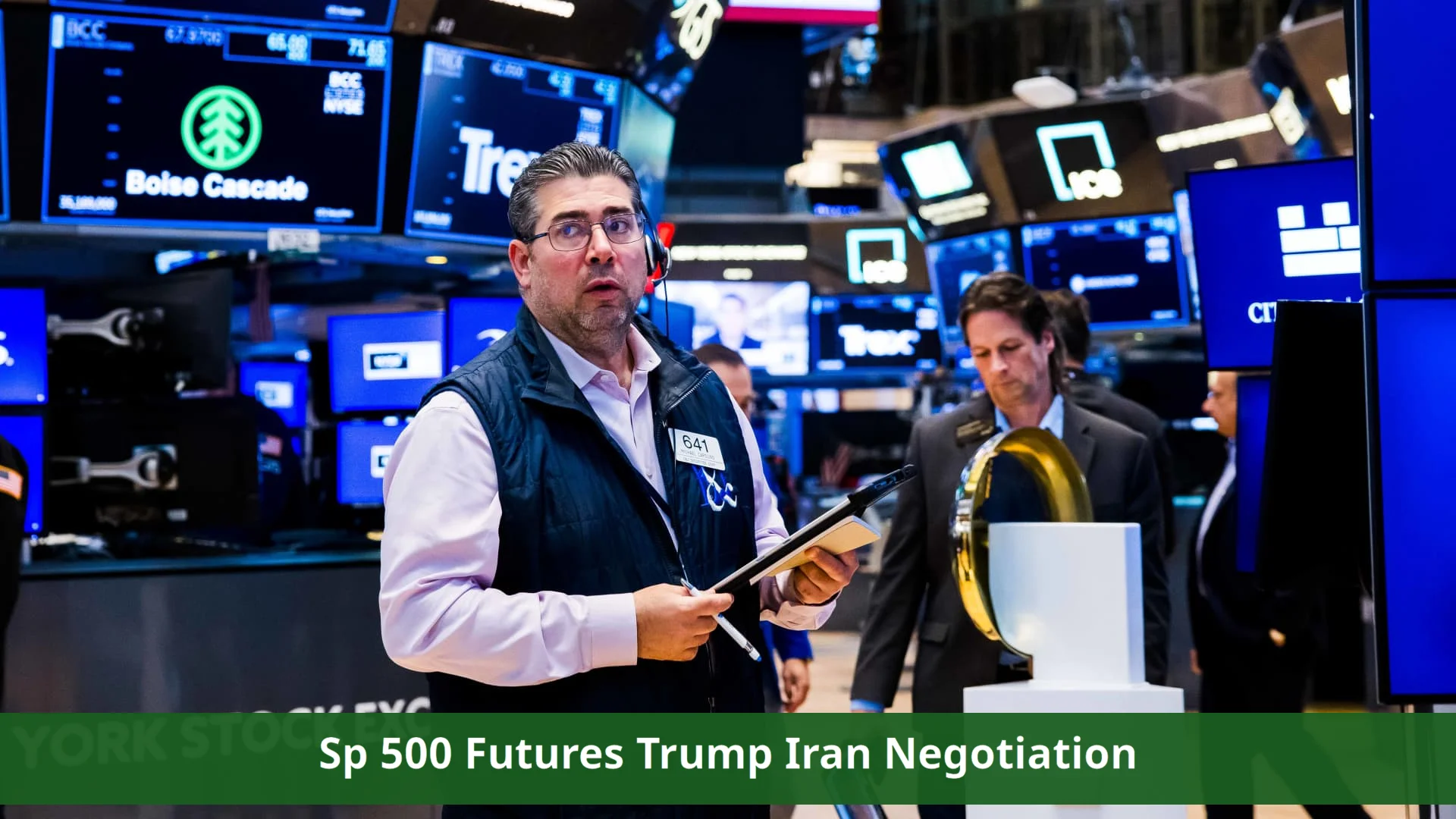
U.S. stock futures fell Wednesday following President Donald Trump’s remarks that negotiations with Iran were “taking too long,” according to CNBC. Futures for the S&P 500 and Nasdaq 100 dropped by 0.5% and 0.7%, respectively, as geopolitical tensions escalated amidst recent U.S. military actions in the region.
What happened
U.S. stock futures declined sharply on June 10, 2026, after President Trump warned that negotiations with Iran were dragging on and threatened further actions. According to CNBC, S&P 500 futures and Nasdaq 100 futures fell by 0.5% and 0.7%, respectively, reflecting investor concerns over heightened geopolitical risks.[2]
“Iran has taken too long to negotiate a deal that would have been great for them; now they will have to pay the price!!!,” Trump stated early Wednesday.
The situation intensified after U.S. military strikes against Iran were launched Tuesday in response to the downing of a U.S. Army Apache helicopter over the Strait of Hormuz. Trump’s accusations of Iranian aggression have exacerbated tensions in an already volatile region, leading to a surge in oil prices. West Texas Intermediate crude futures rose nearly 2%, trading around $90 a barrel.[3]
Why it matters
The decline in U.S. stock futures reflects broader anxiety among investors regarding the impact of geopolitical tensions on economic stability. The stock market’s vulnerability to international conflicts raises concerns about investor sentiment and the potential for market volatility.[1]
In addition, the ongoing uncertainty may affect global oil prices, which can have significant implications for inflation and economic growth. A surge in oil prices could lead to renewed inflationary pressures, complicating monetary policy decisions for the Federal Reserve.
Background
On June 8, 2026, U.S. Central Command reported that U.S. forces conducted airstrikes in response to the downing of the helicopter. This marked a significant escalation in hostilities in the Middle East, a region already characterized by heightened tensions due to ongoing diplomatic negotiations.
Previous weeks had seen a surge in U.S. stock values, particularly in technology and semiconductor sectors, driven by strong investor sentiment and optimism fueled by trends in artificial intelligence. However, the geopolitical uncertainty shifted the market dynamics significantly.
What’s next
Market participants will closely monitor developments in U.S.-Iran relations, particularly any further military actions or diplomatic initiatives. The upcoming economic reports, including core consumer price index figures due later this week, may also influence market sentiment significantly.
