


MotoGP’s Calendar Expansion and Its Challenges
MotoGP Sports Entertainment (formerly Dorna Sports) has successfully continued to grow the championship and expand its calendar. A notable achievement is the return of the Brazilian Grand Prix, absent since 2004, which marks a successful expansion of the schedule. The event was expected to generate excitement, particularly among Brazil’s enthusiastic motorsport fans.
Record Attendance and Mixed Reactions
The fans demonstrated their passion for MotoGP, with nearly 150,000 attendees over the weekend. They witnessed an exhilarating sprint race, especially highlighting Marc Marquez’s thrilling overtake that captivated everyone. However, the main Grand Prix proved to be a letdown in comparison, despite the initial thrills, largely due to numerous difficulties at the Goiania track that persisted until shortly before the race began.
Concerns Over Track Conditions
Leading up to the race at the Ayrton Senna circuit, preparations felt uncertain as improvements were still underway in January. Bringing the track to Grade A FIM standards required extensive resurfacing and facility upgrades, which were completed on time. Yet, unanticipated heavy rainfall created flooding issues, complicating the situation further.
Delays and Organizational Criticism
Despite the track’s draining capacity, standing water caused practice delays on Friday. Trackhouse team boss Davide Brivio expressed his disappointment with the track’s condition, highlighting that while expanding MotoGP’s reach is essential, proper preparations from the promoter are equally critical.
Race Day Complications
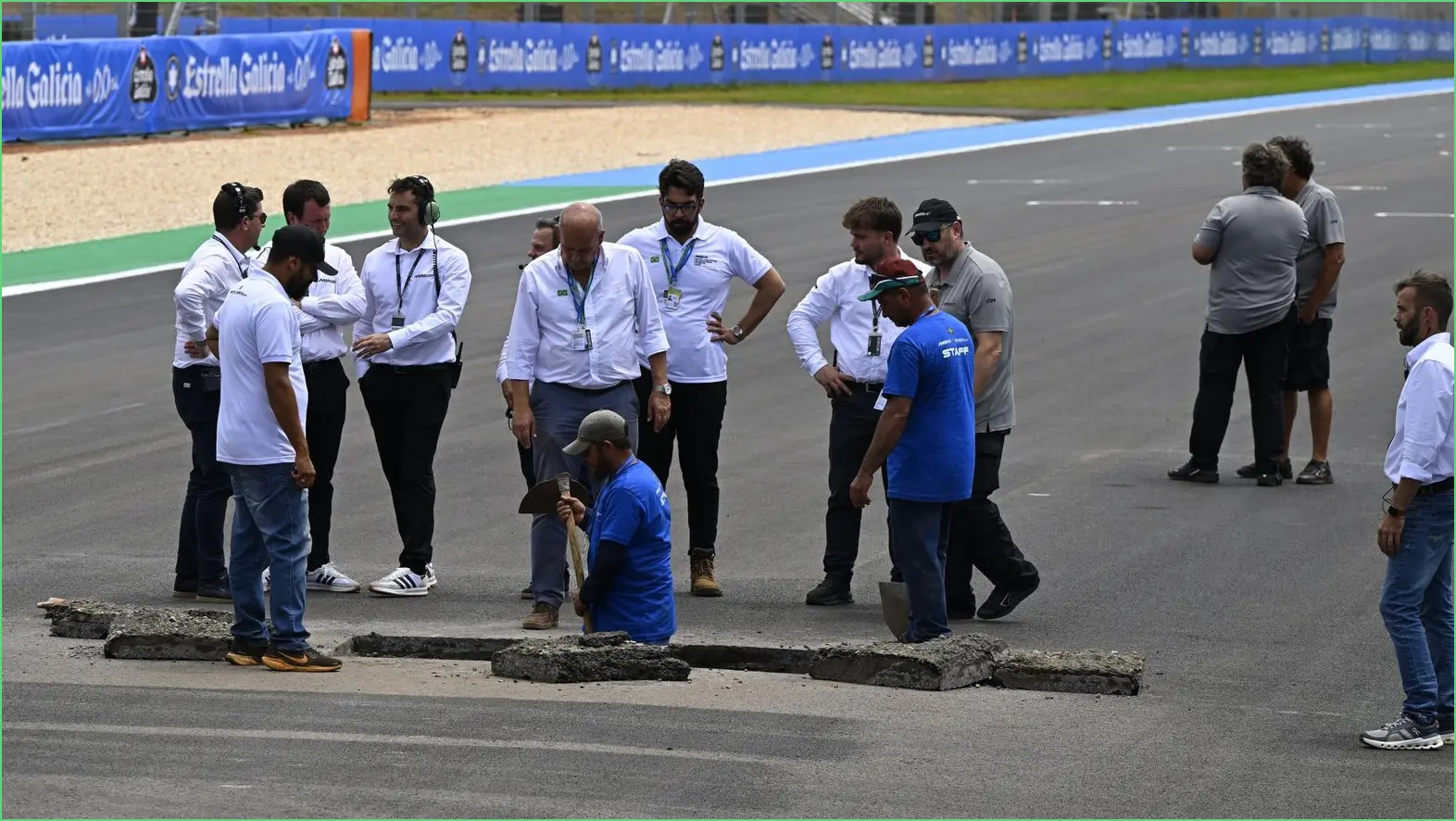
On Saturday, following MotoGP qualifying, a sinkhole appeared on the pit straight due to heavy rains, leading to substantial delays. The asphalt’s inability to withstand tropical weather raised concerns regarding the track’s preparation. This situation escalated when the surface began breaking down during the MotoGP race, ultimately resulting in a last-minute decision to reduce the race distance from 31 to 23 laps.
A Call for Improved Safety Standards
The issues experienced at Goiania echo previous challenges faced in Mandalika during the Indonesian Grand Prix and underline serious questions about the FIM’s homologation process. Fortunately, the repairs were made before racing resumed, but discussions around safety and oversight are becoming increasingly critical.
Looking Ahead
Moving forward, the situation from the Brazilian Grand Prix serves as a significant learning opportunity. While several riders lauded the efforts to prepare the track amid difficulties, the onus remains on MotoGP to ensure its circuits meet required standards to avoid similar complications in the future.
