


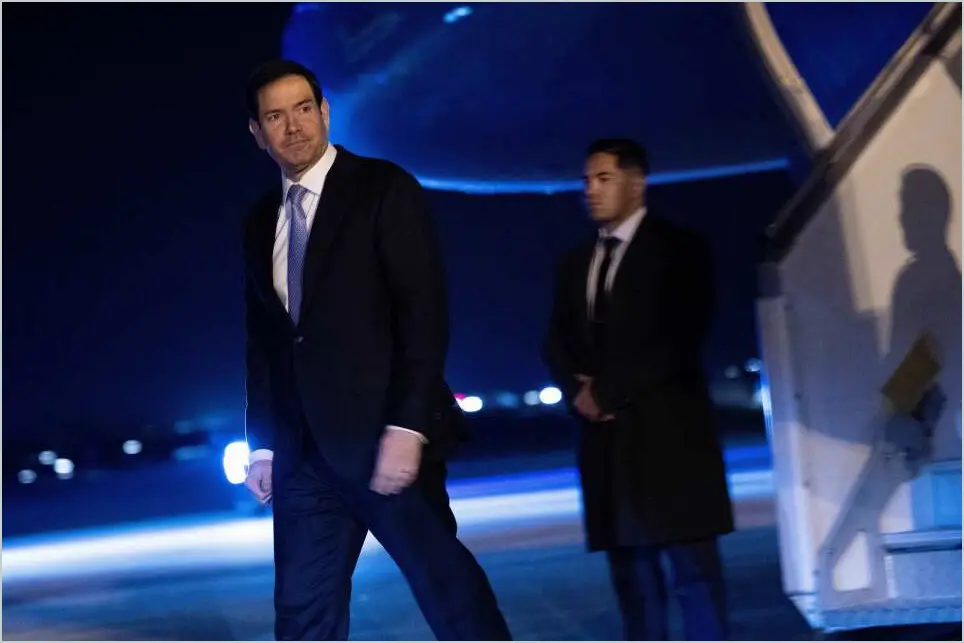
VAUX-DE-CERNEY, France (AP) — U.S. Secretary of State Marco Rubio is in France for discussions with his counterparts from the Group of Seven (G7) foreign ministers, following President Donald Trump’s criticism of NATO nations for their hesitance to participate in the Iran conflict. Many of America’s closest allies view this conflict with skepticism.
Rubio faces significant challenges convincing other G7 diplomats regarding the U.S. strategy for the Iran situation, as most nations have voiced their objections. Upon arriving at a historic 12th-century abbey in Vaux-de-Cerney near Paris, he took a group photo but did not engage in conversation with his counterparts.
Trump’s harsh remarks about NATO during a recent Cabinet meeting may complicate Rubio’s efforts further. Among the G7 countries, only Japan is not a member of the NATO alliance, which includes Britain, Canada, France, Germany, and Italy.
Rubio departed Washington shortly after Trump expressed strong dissatisfaction with NATO’s lack of support for the U.S. and Israel in the Iran war. “We are very disappointed with NATO because NATO has done absolutely nothing,” Trump stated.
Rubio’s task includes mending relationships with European allies, who have faced threats and criticism from Trump’s administration. They are still adjusting to past demands, such as Trump’s suggestion to acquire Greenland from Denmark, a NATO ally, and are concerned about U.S. support for Ukraine in its conflict with Russia, which adds to the existing tensions in the Middle East.
Before leaving for the G7, Rubio expressed optimism about the meetings, stating, “I’m not there to make them happy… I work for the people of the United States.” He later tweeted about discussing global security concerns and opportunities regarding the Middle East and the Russia-Ukraine conflict.
Trump has lamented the lack of allied support for his actions in Iran and expressed frustration that NATO and many other allies have rejected his calls for assistance in securing the Strait of Hormuz, which has experienced disruptions in oil shipments. “We’re there to protect NATO… but they’re not there to protect us,” he remarked, alluding to a point of testing alliances.
G7 Host France’s Reservations
France, hosting the G7 meeting, is particularly skeptical of the conflict in Iran. French defense chief Gen. Fabien Mandon criticized the U.S. for not notifying allies about military engagements, stating, “They have just decided to intervene… without notifying us.” Nonetheless, discussions on military cooperation to restore order in the Strait of Hormuz are ongoing, with over 35 countries involved in talks led by France.
