


Konstantin can discern the impacts of the Ukraine war from his home in St. Petersburg, the second-largest city in Russia and the birthplace of President Vladimir Putin.
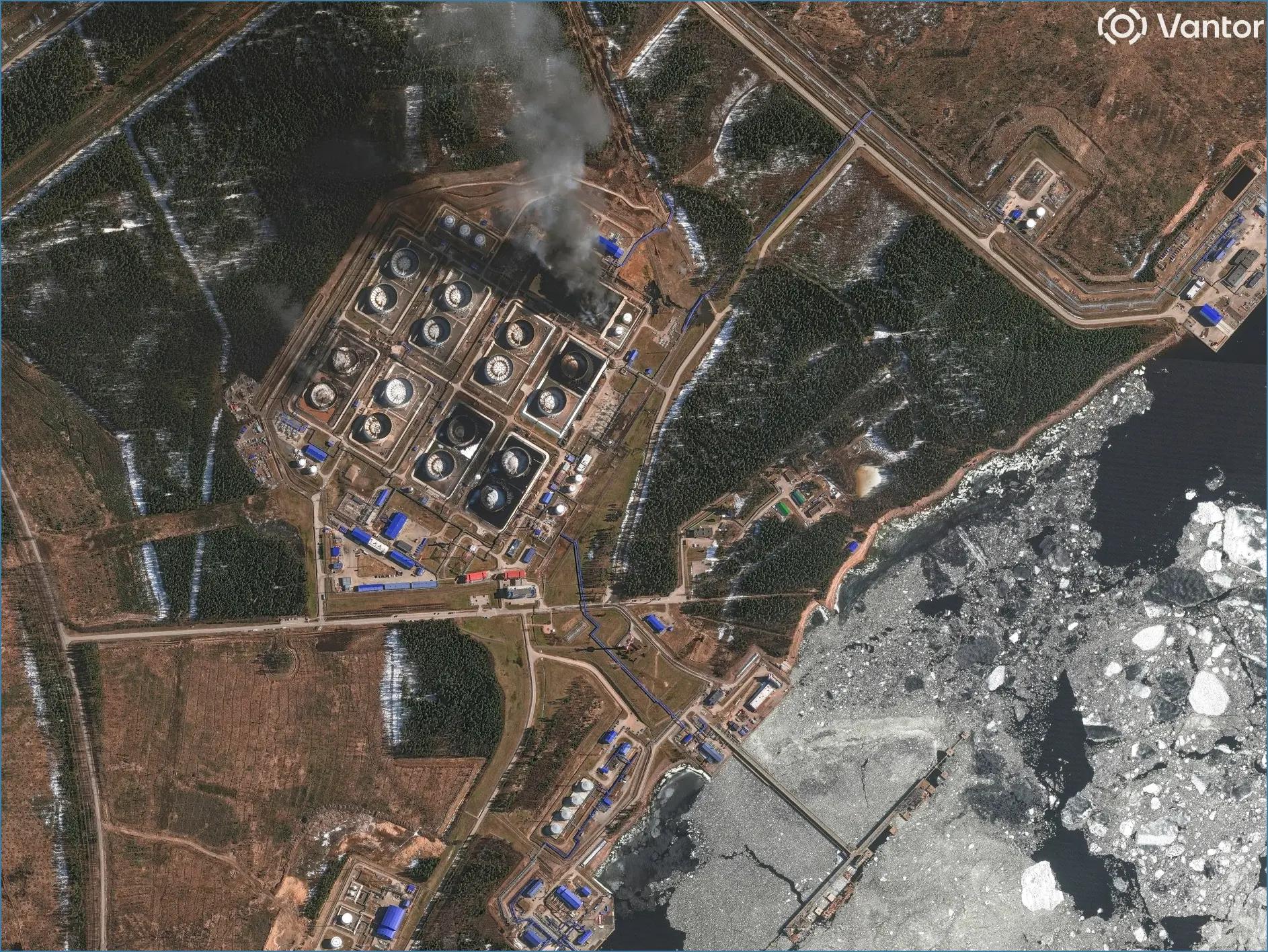
The 53-year-old, who suffers from asthma and prefers to remain unnamed due to safety concerns, has been intermittently aware of the smell of burning oil and chemicals. This odor is a result of Ukrainian drone strikes targeting Russia’s top oil terminals on the Baltic Sea, which are crucial for Moscow’s maritime oil exports and account for nearly 2% of the global oil supply, as reported by the International Energy Agency (IEA).
These attacks form part of Kyiv’s broader strategy aimed at disrupting oil refineries deep within Russia, notably to diminish Moscow’s financial gains from oil sales following the escalation of US and Israeli strikes on Iran that commenced in late February.
The oil terminals at Ust-Luga and Primorsk, located 165 km and 133 km from St. Petersburg respectively, are strategic hubs connected by pipelines from oilfields across the Volga River, Ural Mountains, and western Siberia.
During these assaults, drones have traveled over 1,000 km from Ukrainian territory to target oil storage and shipping infrastructure, igniting extensive fires that can last for days. Konstantin noted that the smell intensified in late March, varying from diesel fumes to the scent of burning plastic.
“I never imagined the war would manifest in my surroundings,” he told Al Jazeera, expressing his disillusionment with government assurances and recalling the nuclear fears of his childhood during the 1980s. The recent attacks have led to a significant decline in Russia’s oil exports from the Baltic region, resulting in losses amounting to $1 billion for Moscow as of March 31, according to Bloomberg.
Russian officials have claimed that European nations are colluding with Ukraine to facilitate drone overflights, attributing rising oil prices to these events. However, Ukrainian analysts contend that the drone strikes are carefully executed solely over Russian territory to evade air defense systems. Each $10 increase in global oil prices adds approximately $1.6 billion to the Russian economy per month, making Ukraine’s targeted strikes integral in reducing Moscow’s war funding.
