


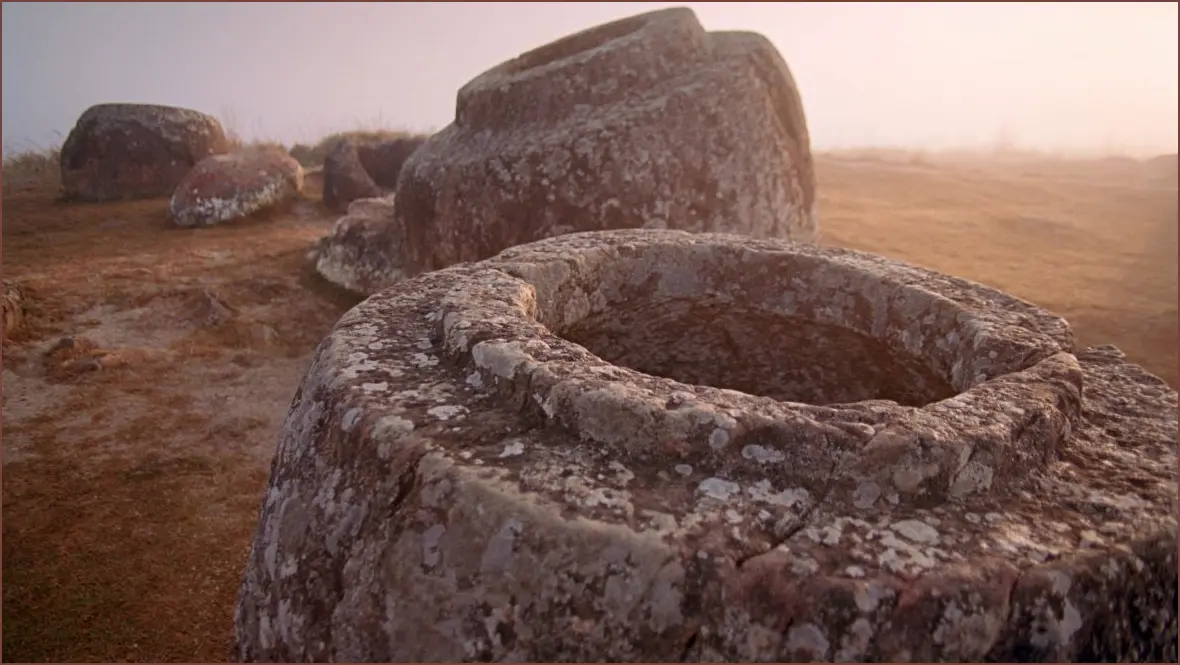
In the heart of Laos, an age-old enigma rises from the expansive plains and scattered woods of the Xiangkhoang Plateau.
Numerous massive stone jars, many of which are open to the elements, populate the landscape, their original significance obscured by time.
For many years, researchers have speculated on their purpose but faced challenges in approaching the jars due to the 80 million unexploded cluster bombs littering the area, remnants of U.S. airstrikes during the 1960s Laotian Civil War.
Recent excavation of a single large jar has finally provided some insights.
Inside, archaeologists uncovered a dense collection of human bones from approximately 37 individuals, indicating multiple interments over a span of 270 years, specifically from 890 to 1160 CE. “The number of individuals suggests these jars belonged to family or extended family groups,” notes Nicholas Skopal, an archaeologist from James Cook University in Australia.
The jars appear to have been utilized for funerary purposes rather than food storage, as suggested by the evidence gathered so far. The jars, ranging from 1 to 3 meters (3.3 to 9.8 feet) in size, have also yielded human remains, some with indications of cremation.
Excavations took three field seasons, from 2022 to 2024, focusing on a sizeable jar dubbed “Jar 1” at Site 75. This stone container, partially buried and in poor condition, revealed significant clues about its use. By the end of the excavations, researchers found a large number of bones at the jar’s base, suggesting this site was used for secondary interment after an original burial.
In addition to bones, the jar also contained 20 glass beads, pottery shards, a small bell, and an iron knife, with some pottery pieces fitting together to suggest they formed a round pot. The glass beads provide hints of trade relationships, as they originated from South India and Mesopotamia, indicating previously unknown connections with these regions.
Researchers are now analyzing the bones to uncover the identities and relationships of the individuals, potentially revealing the multi-generational nature of this burial site. “This preservation offers a valuable glimpse into historical mortuary practices and suggests many similar sites may still be undiscovered,” Skopal concludes. The findings have been documented in Antiquity.
