


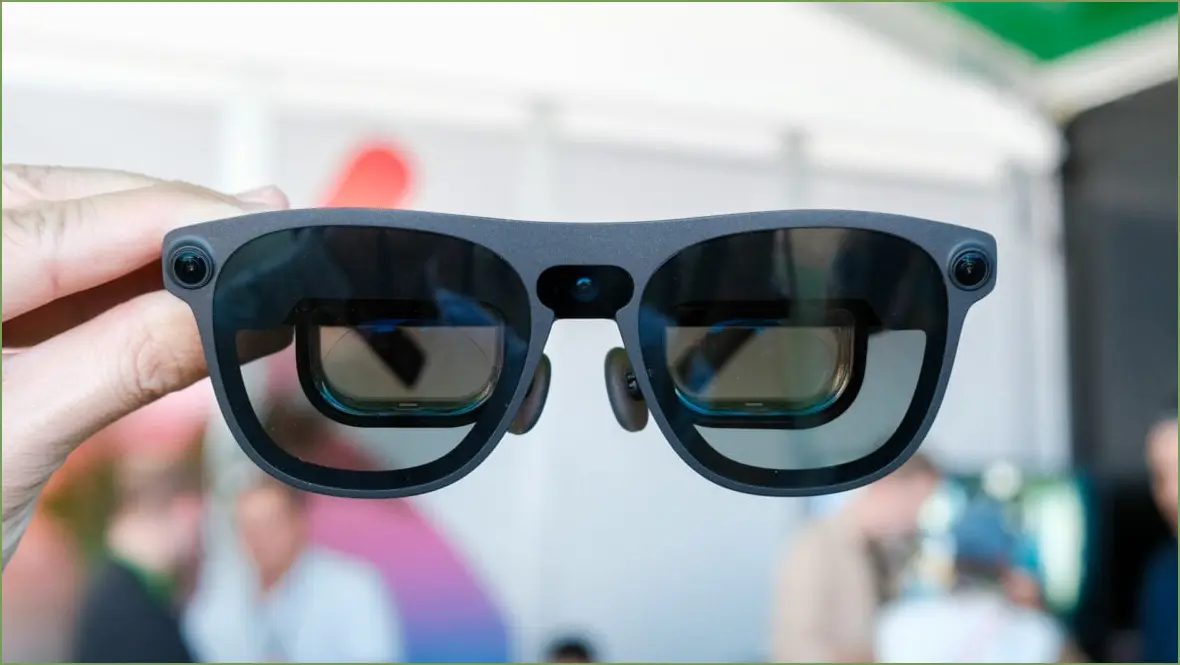
Hands-On with Project Aura at Google I/O 2026
I attended Google I/O 2026 to experience Project Aura, the XR smart glasses from Google and Xreal. I’m delighted to share that I received more than just 90 seconds with them.
Overview of Project Aura
Set to launch worldwide this year, Project Aura is designed to operate on Google’s Android XR spatial platform. While specific pricing and release dates haven’t been disclosed, I was able to demo the glasses and gauge what they offer. They perfectly bridge the gap between more basic displayless smart glasses, like Ray-Ban Meta AI, and more immersive headsets like Apple Vision Pro.
Design and Comfort
When I wore the glasses, they felt just like the Xreal’s One Pro AR glasses. Aside from the three cameras—one in the bridge for photos/videos and two for hand tracking—they were lightweight and comfortable, which is essential since bulky headsets aren’t appealing to many users. The glasses are connected to a compute puck via a cable, which I wore around my neck. The puck, reminiscent of the Vision Pro’s battery pack, featured a trackpad that I didn’t get a chance to test.
User Experience and Functionality
During a short demo, I navigated basic hand tracking functions. By pinching objects, I could select them and drag them around my spatial view. However, the absence of eye tracking requires turning my head to select items, which can be cumbersome. The spatial field of view (FOV) is impressive at 70 degrees, allowing for the simultaneous viewing of three app windows, and I was informed that up to five could be open concurrently.
Display Quality
The glasses possess bright screens with clear visuals and text. While I didn’t obtain specifics on resolution or refresh rates, previous Xreal models have had a standard 1080p resolution. A high refresh rate like 240Hz could enhance costs further.
Software and Interaction
Most importantly, the software experience—Android XR and Gemini Intelligence—appears much more functional than anticipated. Hand tracking had minor inconsistencies, but generally, I could pinch and move windows effectively. For example, I explored a bookshelf, and Gemini provided details on the objects there. My favorite experience was utilizing the glasses for gaming, which proved more immersive than traditional controller-based methods.
Conclusion and Future Outlook
Project Aura represents the pinnacle of current XR technology, but it still requires refinement. I hope XYZ and Xreal address any issues before their launch later this year. My time with the glasses left me optimistic; the compact design could set a new standard for XR smart glasses. Ultimately, comfort and affordability will be crucial, as high prices could deter potential buyers—after all, few enthusiasts are likely to spend $3,500 on an immersive experience.
