


Lessons of Basketball from John Powless
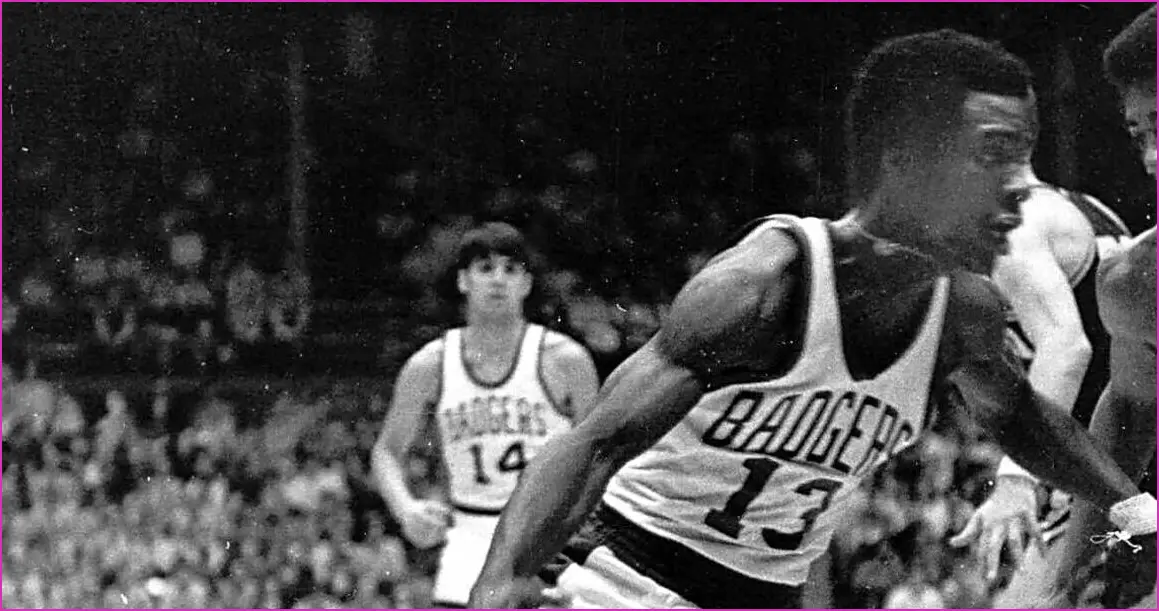
John Powless, coach of the University of Wisconsin men’s basketball team, was willing to run a short-handed squad during a game in the 1967-68 season to impart a critical lesson on the players.
Powless was substituting for the Badgers’ freshman team that season, and his center, Glen Richgels, was a walk-on who had only recently been recruited for student tickets by assistant coach Dave Brown. Despite not receiving any offers after high school, a newspaper mentioned him as an All-American.
This recognition made Richgels the sixth All-American on the freshman team, joining prominent players like Clarence Sherrod. However, his performance wasn’t treated with the same regard, especially during one instance when Powless called a timeout after a below-par play, immediately pulling Richgels out of the game.
Powless emphasized the importance of swift gameplay, telling Richgels, “You pass the ball, and get down the other end as fast as you can.” The game continued with only four Badgers on the court, making it imperative that Richgels kept up, underscoring the fast-paced style of play the Badgers were known for, regardless of their success record.
The 2024-25 Wisconsin team achieved a scoring average of 80.1 points per game, the highest in over half a century. Despite this, they fell short of the 1970-71 squad, which Richgels was a part of, averaging 86.3 points. Surprising to many from that era, despite impressive figures, they finished with a 9-15 record that season.
Sherrod was the standout player, averaging 23.8 points per game — a school record set without a three-point line. Though he did not play on many winning teams, his scoring prowess remains noteworthy. After Sherrod’s recent passing, conversations about his legacy have intensified, prompting reflection on the recognition he deserves from the current fanbase.
Richgels felt a deep sense of regret upon learning of Sherrod’s death, reflecting on their time together and wishing for more acknowledgment of Sherrod’s contributions to the program. He believes Sherrod’s achievements deserve to be celebrated just as much as those of today’s stars.
