


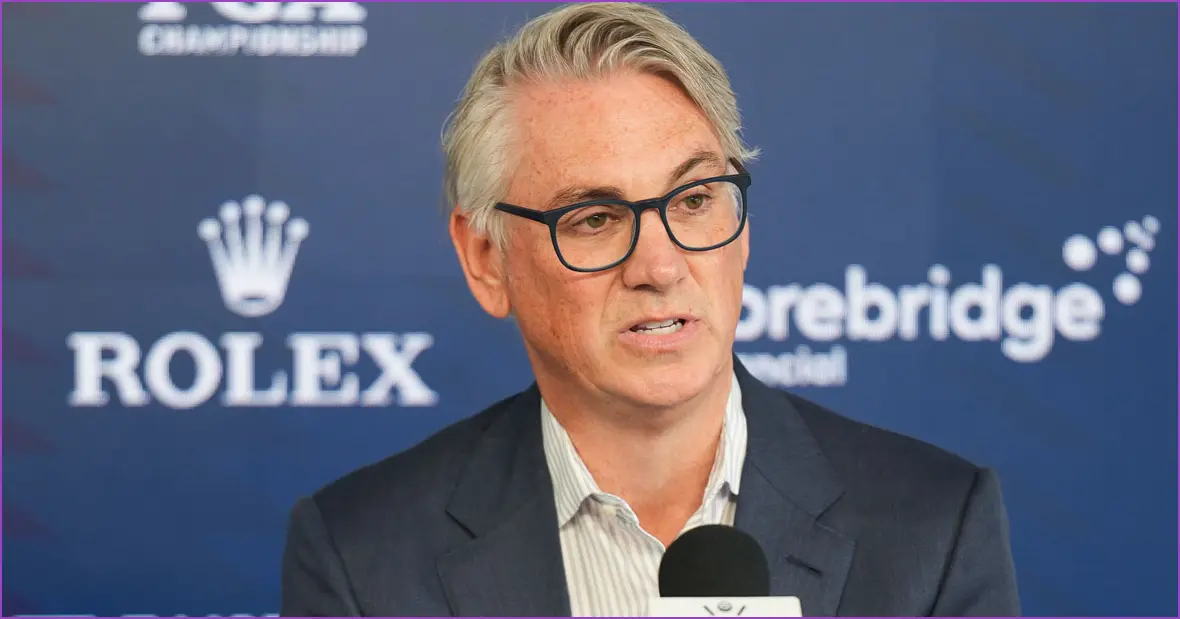
With less than a day until the first tee time of the PGA Championship, the PGA of America held its annual press conference. As speculated, not all leadership members took the stage; notably, Don Rea Jr., the PGA of America President, was absent, as he continues his two-year term behind the scenes. Instead, PGA CEO Terry Clark and Chief Championships Officer Kerry Haigh represented the organization.
During the press conference, they addressed various topics, including the championship’s schedule, potential international venues, and equipment changes. Here are three key takeaways from their discussion.
On the Timing and Venue of the PGA Championship
Clark expressed confidence in the May timing of the championship. “I believe we have a strong position in May,” he remarked, dismissing suggestions to revert to an August schedule. He cited Olympic scheduling as another reason to maintain the current date, noting, “I like that we don’t have to think about changes for the Olympic years.”
Haigh acknowledged agronomic challenges with a May date, like limited grass growth in the Northeast. However, he highlighted milder weather and lower storm risks as benefits enhancing the spectator experience. Overall, it seems the PGA of America is content with the current schedule. “I don’t see that as a change I’m pushing for right now,” Clark added.
On Managing the Ryder Cup
Clark conveyed confidence in the organization’s ability to enhance their premier assets, particularly the Ryder Cup. “I feel very confident that the PGA of America can improve these significant assets in the world of golf,” he stated, emphasizing ongoing investments in the event.
Haigh acknowledged past behavioral issues at events and confirmed that the PGA of America has updated its protocols to improve conduct. While selling or licensing the Ryder Cup is a potential option, no indications from the press conference suggested it’s a top priority.
On Equipment Rollbacks
Clark spoke about the ongoing discussions surrounding the golf ball rollback. “We remain focused on advocating for the recreational golfer and avoiding changes that could negatively impact their enjoyment,” he stated. He did not take a firm position on whether the rollback would affect recreational play, noting, “We don’t know that.”
Despite the uncertainty, he clearly reiterated the PGA of America’s opposition to bifurcation, stating, “We’re not in favor of bifurcation.” Overall, Clark’s comments represented a shift from the more confrontational tone of previous leadership, signaling a potential for greater collaboration among golf’s governing bodies moving forward.
