


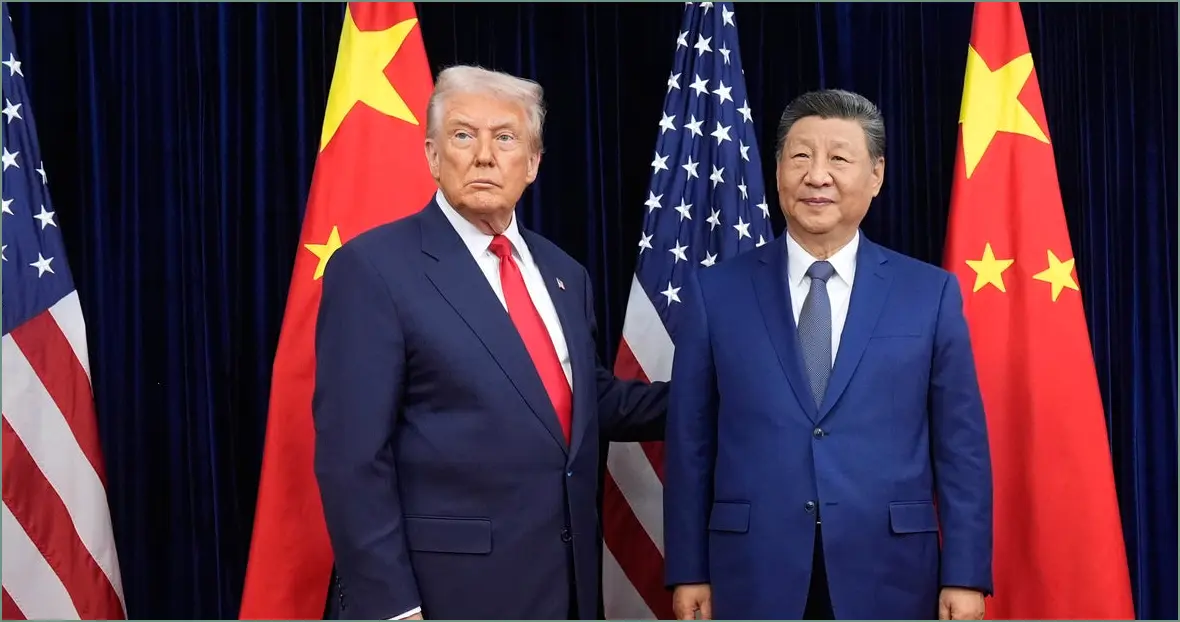
Washington — President Trump is traveling to China for a much-anticipated summit with Chinese President Xi Jinping, following a delay due to the ongoing conflict in Iran.
Mr. Trump departed from the White House on Tuesday and is set to arrive in Beijing on Wednesday morning, Eastern Daylight Time, as Beijing is 12 hours ahead of Washington.
Trade is expected to be a key topic for the two leaders, along with the precarious situation in Iran and supply chain issues in the Persian Gulf. The president noted that they would also cover energy and Taiwan. Xi aims to fully integrate Taiwan under Beijing’s authority without U.S. intervention.
Prior to the meeting, Mr. Trump praised Xi, saying, “He’s a great gentleman. I find him to be an amazing, amazing man.” He further emphasized his positive relationship with Xi, highlighting their mutual economic cooperation.
Among those accompanying the president to Beijing are Tesla CEO Elon Musk, Nvidia CEO Jensen Huang, filmmaker Brett Ratner, and Fox News commentator Sean Hannity. The White House indicated a broader invite list that included notable figures like Tim Cook from Apple and Larry Fink from BlackRock.
Stabilizing U.S.-China Relations
Experts note that both the U.S. and China are keen to stabilize their relationship, avoiding escalation. Zongyuan Zoe Liu from the Council on Foreign Relations stated that the primary concern is to ensure ongoing engagement without accidental militarization of the conflict.
The Influence of the Iran Conflict
Henrietta Levin from the Center for Strategic and International Studies pointed out that China felt confident going into the summit, with some belief that they had prevailed in earlier trade disputes. The ongoing conflict in Iran may enhance China’s confidence, viewing the U.S. as distracted from pressing issues in Asia.
President Trump indicated that he and Xi would address Iran during their talks, noting that China’s oil supply is significantly affected by the Strait of Hormuz. However, China has shown little public desire to assist the U.S. in this matter, especially after recent U.S. sanctions targeting Chinese companies.
Trade Talks and Taiwan
Trade discussions are expected to dominate the agenda, particularly given the easing tensions since the initial trade disputes in 2025. While the U.S. focuses on quick commercial agreements, China aims for broader strategic outcomes that could shape the future of Asia.
Regarding Taiwan, Mr. Trump acknowledged that it would likely arise in their discussions, as it always does. However, he noted that their last meeting did not touch on the subject, which surprised many in the foreign policy community. Beijing hopes to steer Trump to adopt its stance on Taiwan as a domestic issue.
Levin stressed the significance of Taiwan, highlighting its critical role in the global economy and semiconductor production. The situation in Taiwan will serve as a reflection of the U.S.’s commitment to its allies in Asia and beyond.
