


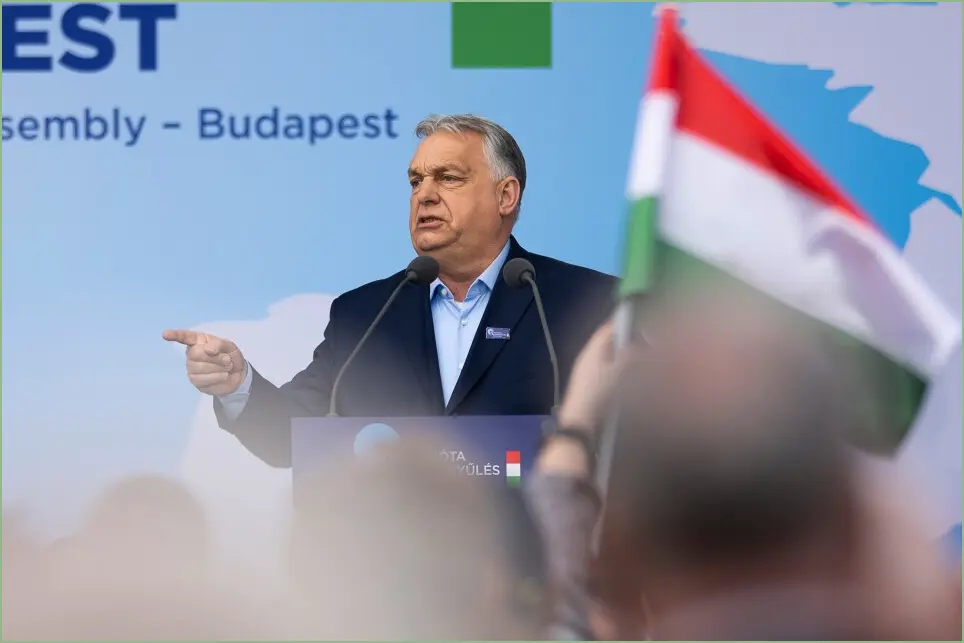
BUDAPEST, Hungary (AP) — On April 12, Hungary will hold elections that may have significant repercussions, particularly as many within the European Union are hopeful for the ousting of nationalist Prime Minister Viktor Orbán, who is perceived as a threat to the future of the 27-nation bloc.
As the longest-serving leader in the EU, Orbán has been falling behind in the polls. His 16-year tenure has challenged the EU’s governance model, which was designed to promote peace through economic and political integration following the world wars. His opponent, Péter Magyar, stated that he aims to mend Hungary’s ties with the EU if elected.
The EU faces numerous formidable challenges, including the rise of right-wing populism, ongoing conflicts in Ukraine and the Middle East, Russian sabotage attempts, Chinese economic expansion, and a U.S. administration that is disrupting decades of transatlantic cooperation.
Orbán’s use of veto power has hindered the EU’s ability to respond effectively. Experts contend that he has adeptly used his veto rights and an understanding of EU funding mechanisms to solidify his power and exert considerable influence by obstructing decisions for personal gain.
From Optimism to Frustration in Hungary
Initially, Hungary’s accession to the EU in 2004—part of the bloc’s largest expansion—was met with optimism. However, after economic downturns, Orbán rose to power by promising wealth to both the affluent and the needy. He also formed alliances with conservative politicians throughout the EU.
Orbán began to vilify the EU, likening Brussels to the Soviet Union, despite benefiting from substantial EU financial support while resisting calls to reverse democratic declines. From 2014 to 2022, Hungary was among the top beneficiaries of EU funds, navigating the system to extract money while engaging in controversial political maneuvers.
Frustration within the EU has mounted due to Orbán’s reluctance to uphold judicial independence and media freedoms, leading to the freezing of billions in funding in response to violations of the rule of law. Following Russia’s invasion of Ukraine, Orbán frequently vetoed measures intended to assist Kyiv and impose sanctions on Russia, revealing his close ties with President Vladimir Putin.
Orbán and the EU’s Design Flaw
Orbán’s actions have highlighted a critical flaw in the EU’s unanimity requirement for major decisions, which critics argue prevents the bloc from addressing urgent issues effectively. Reports indicate that Orbán has exercised his veto power more than any previous leader, prompting discussions about reforming foundational treaties to combat future authoritarianism.
As discussions continue, potential measures include reducing the number of matters that require unanimous consent, allowing for decisions to be made by simple majority, or imposing sanctions for specific EU rule violations. Proposals have even been made to invoke Article 7 of the Treaty of the EU, which could strip Hungary of its voting rights, although such actions would necessitate the support of all EU leaders.
The European Commission has not approved Hungary’s request for approximately €16 billion ($18.4 billion) earmarked for enhancing defense capabilities. If Orbán secures reelection, this funding could be leveraged in negotiations to extract concessions from him, although future vetoes remain a concern.
Reevaluating EU Membership Criteria
Orbán’s behavior has sparked a reassessment of the EU’s processes for admitting and monitoring member states. Ongoing talks with Moldova, Montenegro, and Ukraine about EU membership are increasingly influenced by Hungary’s turbulent experience. European Commissioner for Enlargement Marta Kos recently indicated that there must be safeguards to ensure new members adhere to the Union’s principles.
She emphasized that any regression on democracy and rule of law needs to result in concrete consequences for member states, asserting that clear standards must be upheld to prevent the entry of “Trojan horses.”
