


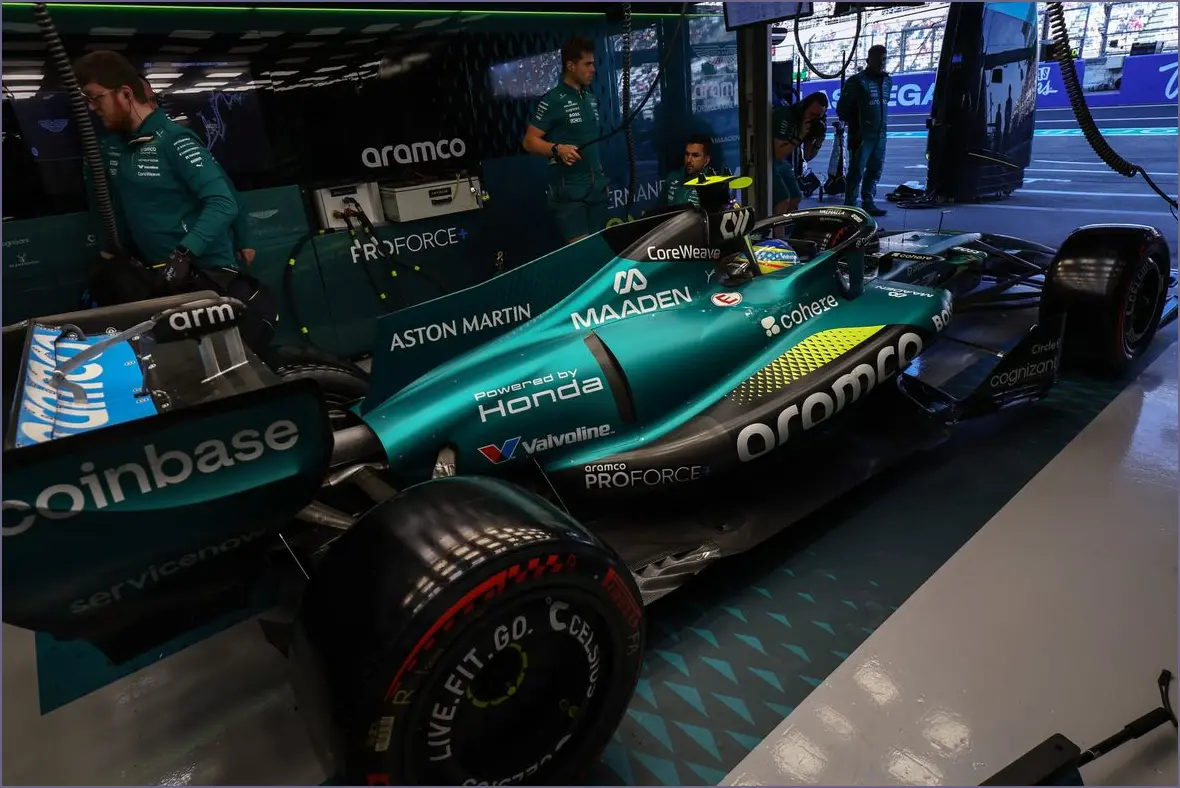
Criticism Surrounds Honda’s Performance in Formula 1
Honda’s engine has faced significant backlash following a disappointing debut season with Aston Martin in Formula 1. While Aston Martin’s car performance is equally lacking, the team acknowledges it must be candid about contributing to the AMR26’s difficulties early in 2026.
Aston Martin’s Struggles
The engine issues are well-documented, including low power and reliability problems; however, these do not fully account for Aston Martin’s 3.5 seconds deficit relative to the fastest qualifiers. Team chief Mike Krack pointed out deficiencies in high-speed cornering and that the car is not reaching the weight limit.
Performance Shortcomings
This beleaguered package lags in cornering speed, handling, and acceleration. Aston Martin showed minimum speeds up to 20 km/h (12 mph) slower than competitors in recent qualifiers, indicating the need for cautious driving even before approaching corners.
Future Development Potential
Adrian Newey, the team’s technical director, suggested prior to the season that they had a capable chassis that could rank in the top 10 under different engine circumstances. While he recognizes the current position as subpar, he remains optimistic about the car’s development prospects.
Evaluating Responsibility
As the season progresses, Aston Martin appears to trail midfield rivals like Alpine by 2-2.5 seconds, raising doubts about Newey’s initial claims regarding chassis qualifying potential. Analysts speculate that both the car and engine could share similar proportions of the performance deficit, though some even believe the car’s issues may be more significant.
Integration Challenges
With the evolving dynamics of F1 in 2026, separating car performance issues from engine deficiencies has become increasingly complex. Honda has adapted to Aston Martin’s requests for a more compact engine design, which could have inadvertently affected engine integrity and performance.
Looking Ahead
Lead driver Fernando Alonso has indicated that while major overhauls might not be feasible right now, improvements are expected in the future. He and Newey both maintain there is untapped potential in the AMR26, which could come to light with further development and testing. April offers a crucial window for the team to make meaningful progress, though Krack cautions that impactful changes will take time.
