


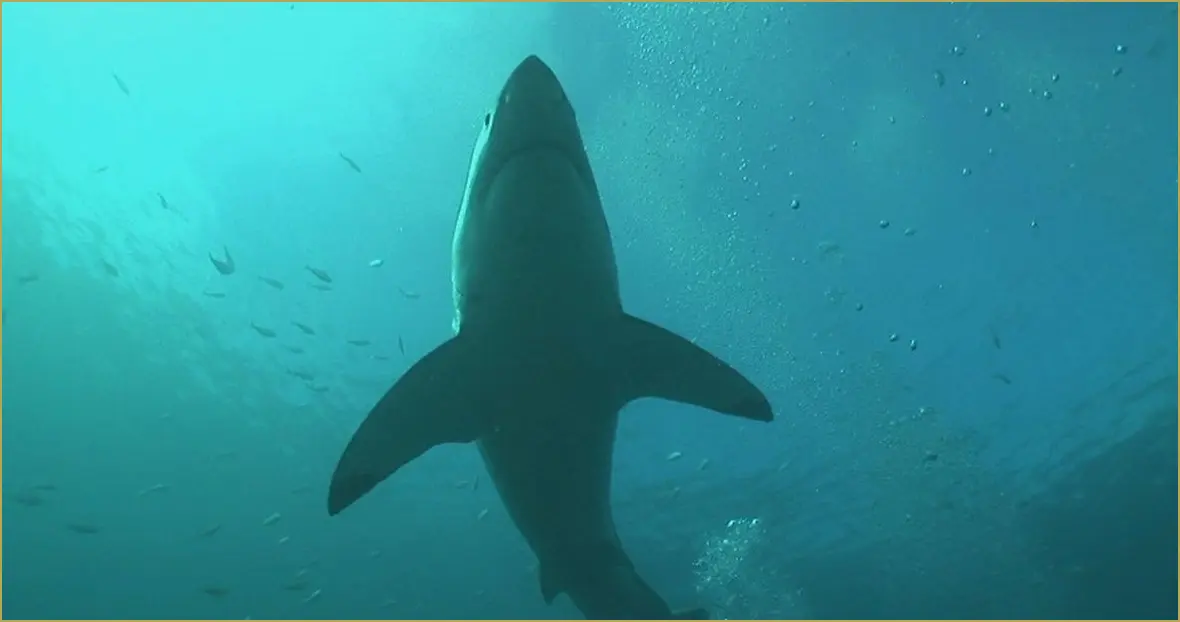
The disappearance of great white sharks from the coastal waters of Cape Town, South Africa, has left scientists and conservationists puzzled.
In 2010, when 60 Minutes correspondent Anderson Cooper dived with these sharks, the area thrived with marine life, including seals and smaller sharks, making it a popular spot for great whites.
However, just a few years later, the sharks began to vanish, creating confusion among experts. While South Africa was the first nation to protect great white sharks in 1991, there are growing concerns that it may soon face a local extinction of this population.
Renowned wildlife photographer Chris Fallows witnessed a drop from 250-300 great whites seen annually to none. This decline sparked intense debates among scientists and conservationists about the underlying causes.
Investigating the Disappearance
Marine biologist Alison Kock received a lead in 2015 when divers sent images of smaller shark carcasses with unusual cuts. Initially believing human intervention was responsible, Kock later discovered orcas, or killer whales, in the area, leading to a “light bulb” moment.
As Kock and her team further investigated, they found orcas feeding on great white sharks, specifically targeting their livers, the most energy-rich organ within the sharks.
Emerging Predatory Behavior
Tour operator David Hurwitz spotted two male orcas, dubbed Port and Starboard, hunting sharks for their livers, making them both famous and infamous due to their unique behavior. Recent drone footage has shown the orcas working in teams to hunt great whites.
While Kock suggests that the great white population remains stable, concerns persist. Marine biologist Enrico Gennari argues that the decline in great whites is largely due to human activities, particularly commercial fishing.
Human Impact on Shark Populations
Gennari and Fallows have been documenting the negative impacts of commercial fishing on the smaller shark species that great whites rely upon for food. They believe that the fishing practices are detrimental, leading to a food shortage for great whites.
Furthermore, they argue that shark nets and baited hooks used for human safety also contribute to the decline in great white numbers. Gennari calls for more humane alternatives to protect both swimmers and shark populations.
Paths to Conservation
Gennari proposes that instead of lethal methods, South Africa should explore non-lethal options such as underwater magnetic fields to keep sharks away from swimming areas. He believes the loss of the great white would signify a failure to protect marine ecosystems.
Fallows highlights the successful recovery of humpback whales in South Africa as a model for conservation, citing government efforts and public awareness as key factors for their resurgence.
This maintains the core information of the original article while using different phrasing and structure.
